Online
Painting
Classes
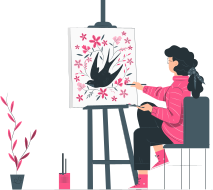
In the online painting course, you will learn to work in different techniques, create your own paintings, and bring your creative ideas to life!






Trial Lesson
If you want to book a trial painting lesson, you need to schedule and pay $8.00.
The trial lesson is conducted individually and lasts for 45 minutes.

Subscription
If you enjoyed the trial lesson, you can purchase a subscription by making a prepayment for at least 4 lessons.
The price of a 4-lesson subscription is $60.00 (the cost of one lesson is $15.00).
Payment must be made at least 24 hours before the lesson's start time.

Discounts
When you purchase 8 lessons or more, a discount applies. The more lessons, the more you save!
Course Overview
The online painting course is designed for children ages 5 and older, as well as adults. During the course, students learn to create bright and expressive artwork using different techniques and styles while also developing an understanding of color theory and composition. The program includes four levels: Preparatory, Beginner, Intermediate, and Advanced.
Each painting lesson lasts 45 minutes and is taught one-on-one. Our teachers speak Russian, Ukrainian, and English, allowing students to choose the language they feel most comfortable using. Lesson schedules are arranged individually according to each student’s availability and preferences.
Online painting lessons are held via Google Meet and Zoom. Our teachers have university-level art education and extensive teaching experience. Many are practicing artists who participate in exhibitions, plein air sessions, and master classes.
Lesson frequency is flexible and can be adjusted individually. We recommend taking two lessons per week to maintain consistency and avoid long breaks between classes, which helps students retain and build on what they have learned.
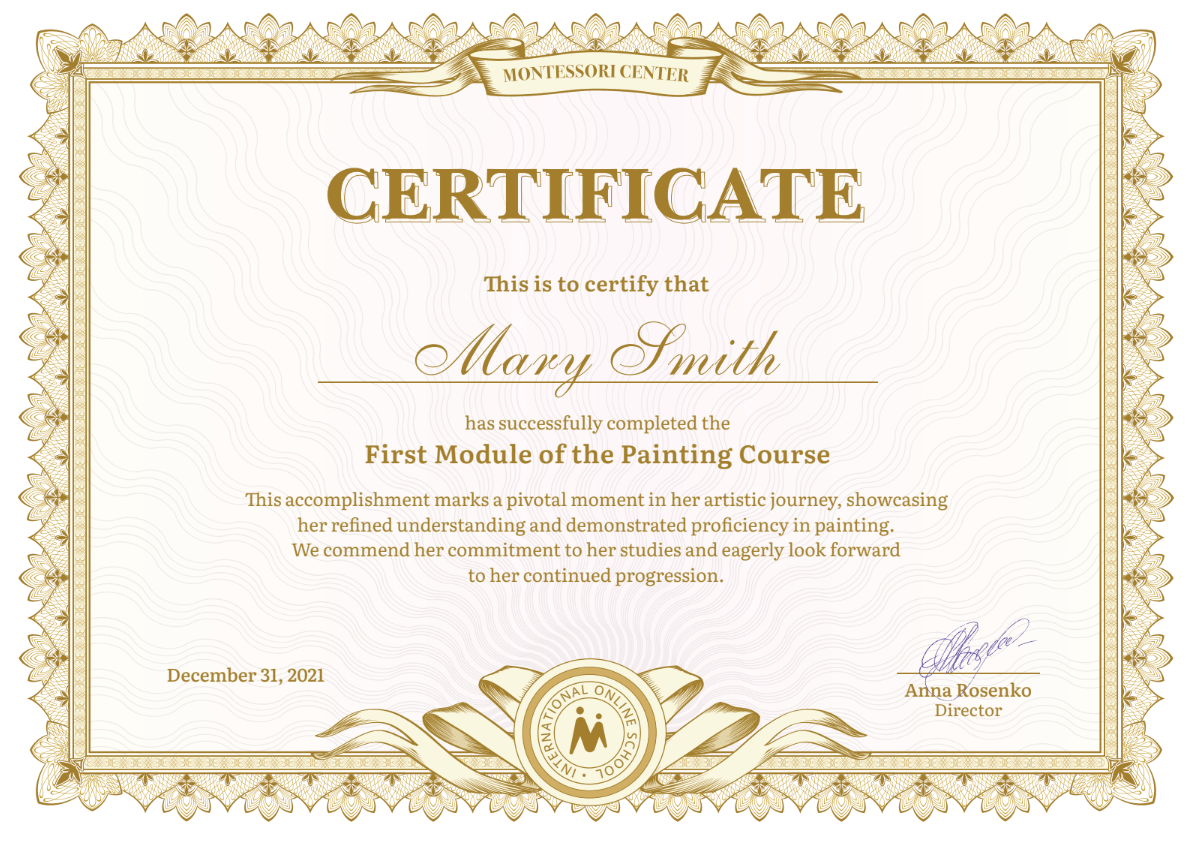
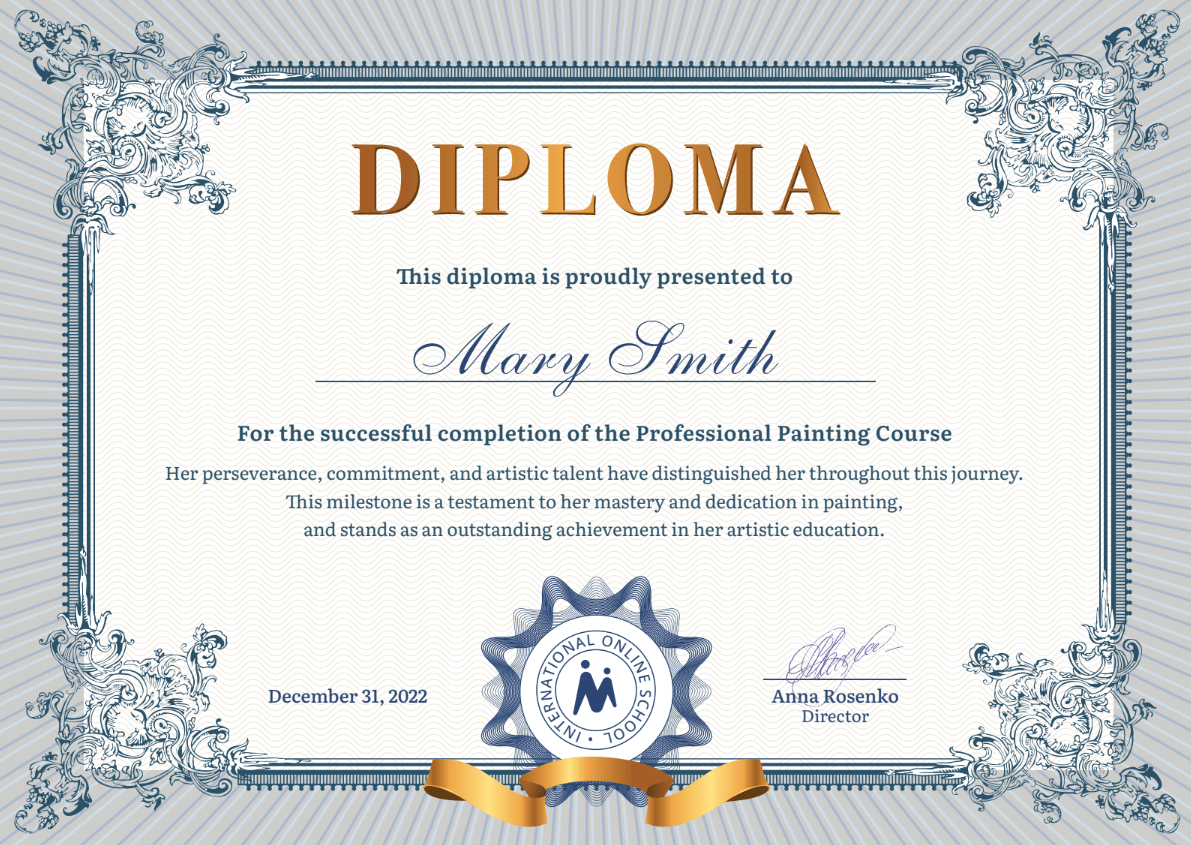
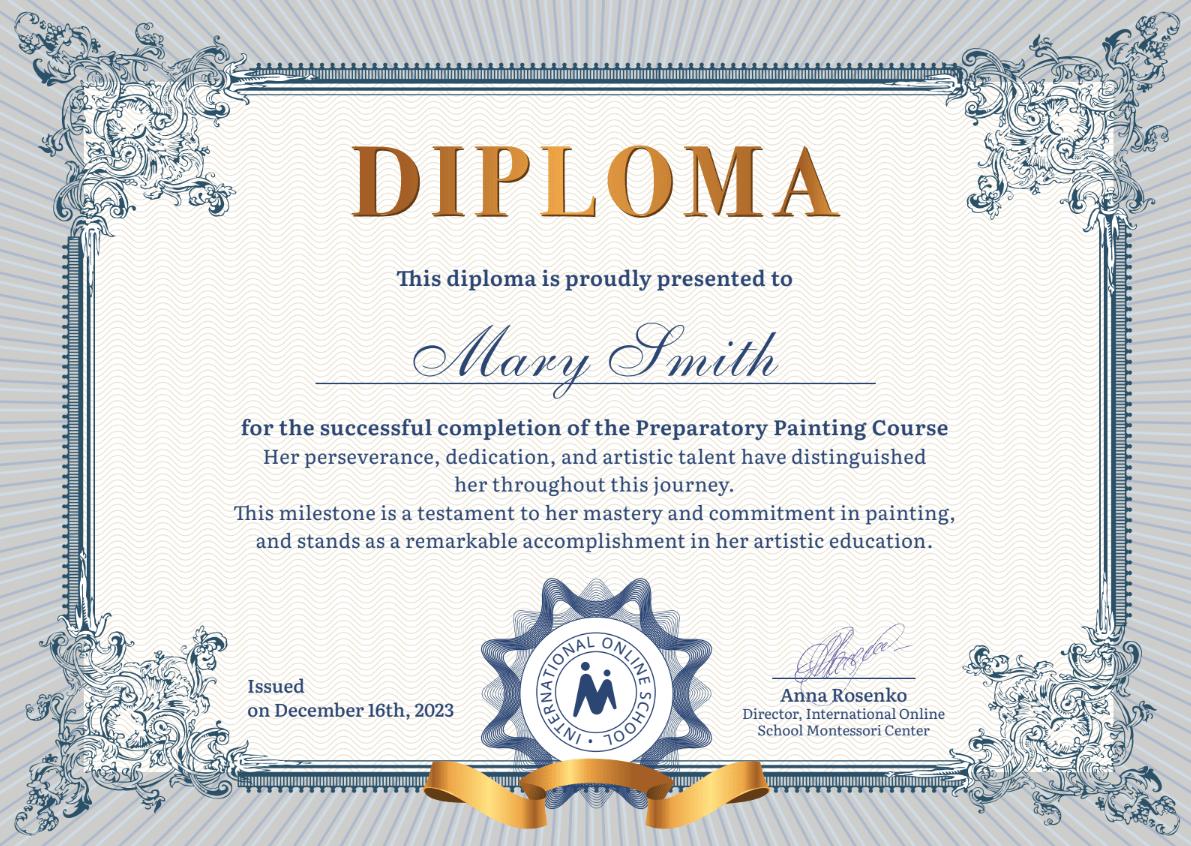
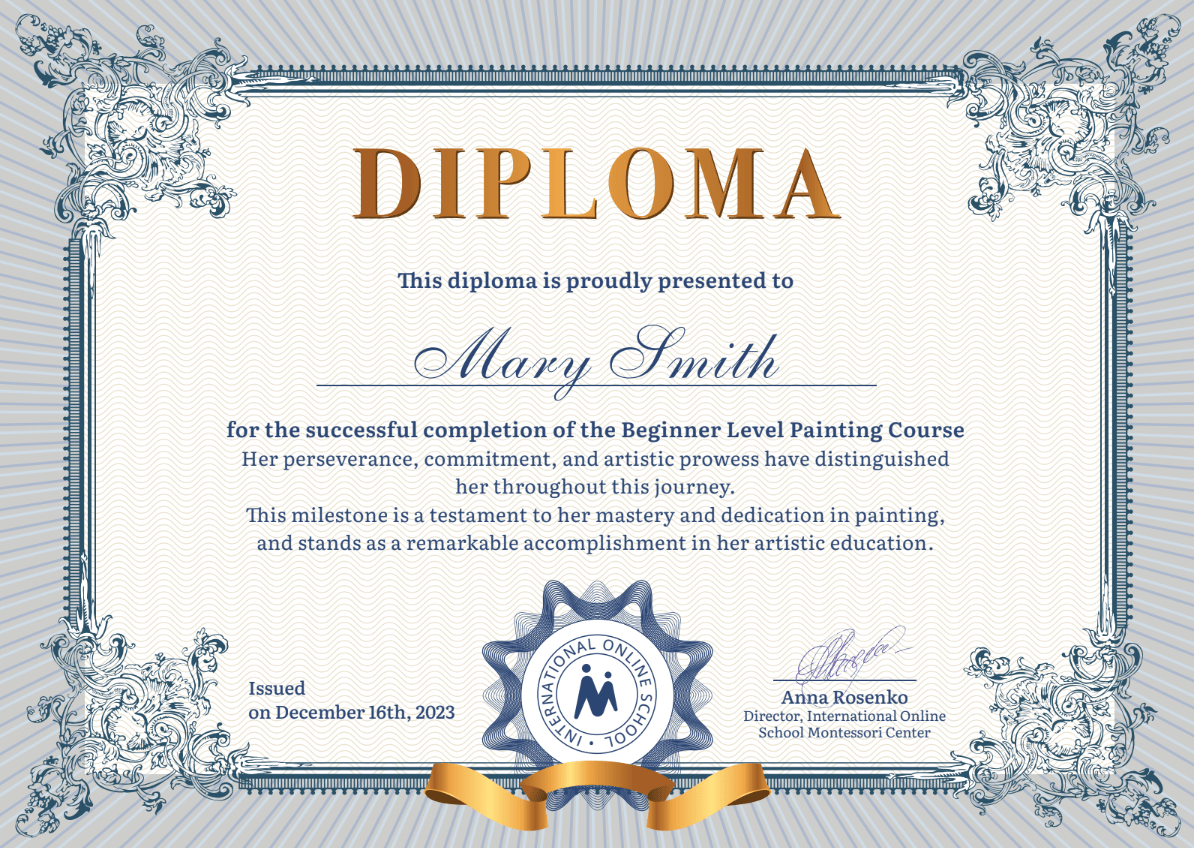
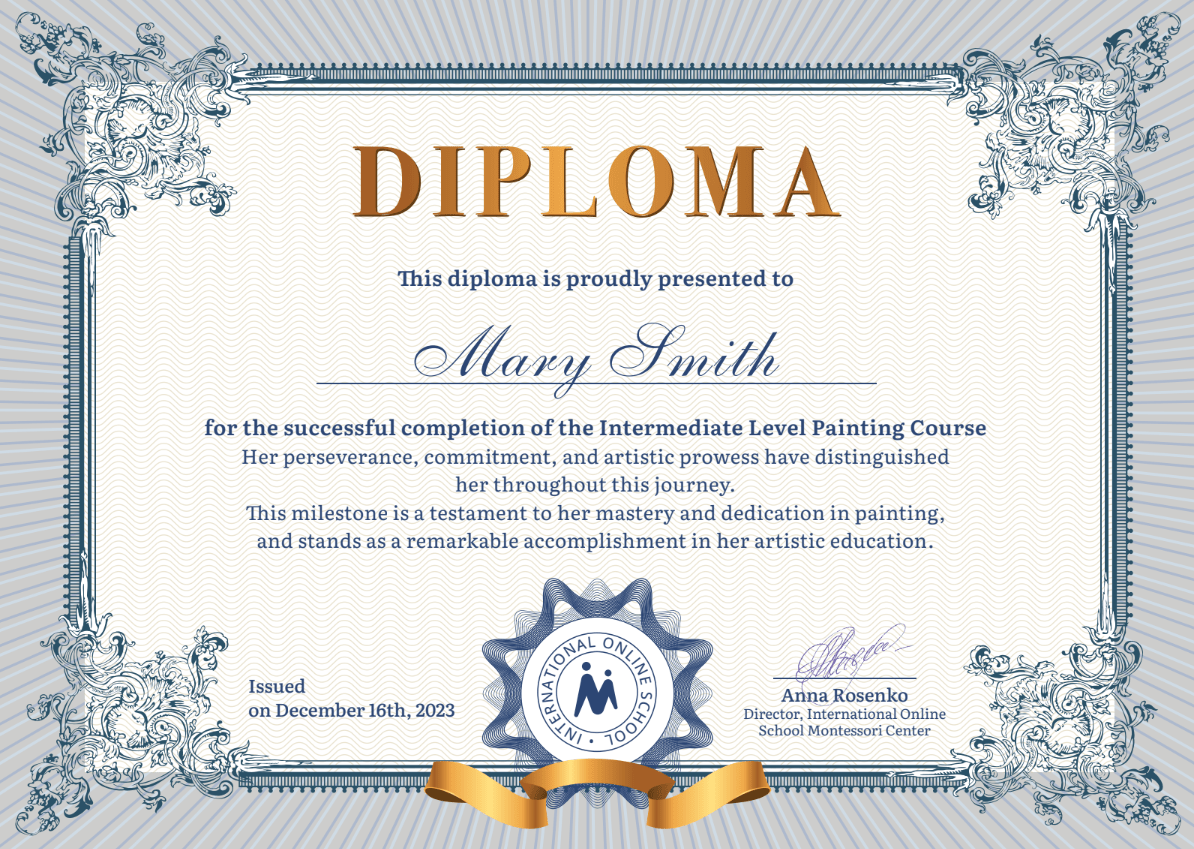
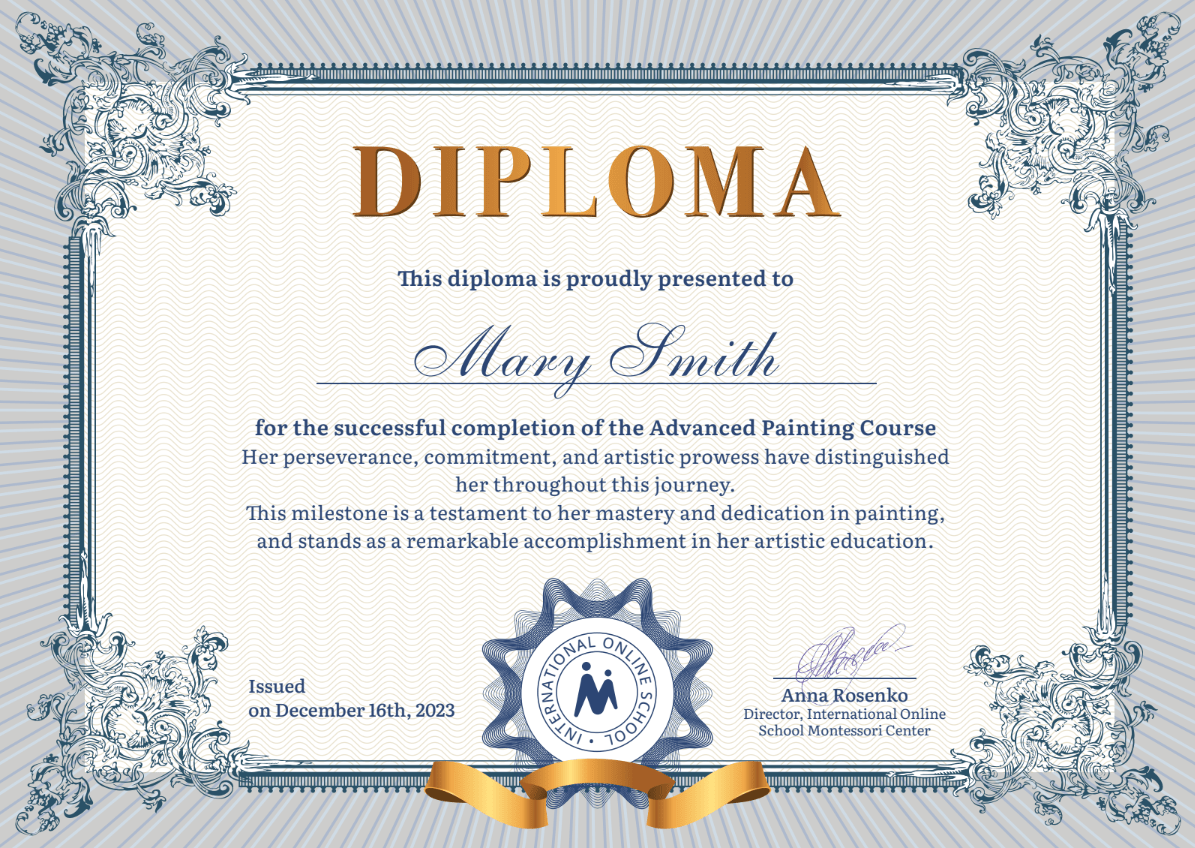
Students at our school take part in exhibitions, competitions, and master classes, where they may receive diplomas and certificates recognizing their participation and achievements. Students also receive certificates after completing each module and level.
Teaching Method
Our painting method is an original Montessori Center program designed around each student’s individual progress and suitable for both children and adults. From the beginning of the course, students work toward specific artistic goals, including learning different painting techniques and styles. Skills are also evaluated through participation in exhibitions and competitions.
Benefits of the Method
Clear goals: students understand what they are working toward and have clear milestones for developing their painting skills.
Flexible learning: the program allows students to progress according to their individual pace and the speed at which they develop new skills.
Practical experience: participation in exhibitions and competitions gives students an opportunity to apply their skills in practice.
Suitable for different ages: the method can be adapted for both children and adults.
Continuous development: after reaching the main course goals, students can continue their lessons and further improve their artistic skills.
Preparatory Level
The Preparatory painting program is designed for children ages 5–6. During online lessons, young artists learn how colors can be mixed, how to use brushes and paints correctly, and how to create their first pieces of artwork. The lessons gradually introduce basic drawing and painting techniques while developing imagination, a sense of color, and an interest in creativity. An early introduction to painting provides a strong foundation for further artistic development.
Beginner Level
At the Beginner level, students are introduced to the basics of color theory and composition and learn to work with different art materials and tools. During lessons, they practice mixing colors, create simple compositions, and explore different painting techniques. By the end of the level, students can complete simple pieces of artwork independently using the knowledge and skills they have developed.
Intermediate Level
At the Intermediate level, students move on to more complex artwork and continue improving their painting technique. Greater attention is given to working with paint, composition, details, and conveying mood through a painting. Students gradually become more confident in developing their own ideas and making their work more expressive.
Advanced Level
At the Advanced level, students work with more complex techniques and artistic styles, refine their composition skills, and learn to express their own ideas more precisely. Special attention is given to individual artistic style, expression, and the creation of complete independent works.
By the end of the course, students can independently create more complex artwork, plan the composition and color scheme, and communicate their own artistic ideas. They confidently use the techniques and methods they have learned and know how to work with details and expression. Over time, each student develops a more individual artistic approach and greater technical confidence. Throughout the course, the teacher also introduces students to the basics of art theory and art history, helping them understand works of art more deeply and recognize elements of style, composition, and artistic intent.
Course Goals
One of the main goals of the course is to teach students to work confidently with art materials and master the basic techniques of painting. Students develop a sense of color, form, and composition and learn how to convey volume, mood, and their own ideas through their artwork.
Independent work is an important part of the course. Students learn to plan compositions, choose color combinations, evaluate the result, and make changes to their work when necessary.
Another goal is to give students experience creating finished pieces for exhibitions and art competitions. This helps them become more comfortable presenting their work, recognize their own progress, and set new creative goals.
The main focus is not on comparing students with others, but on developing their own skills, artistic taste, and individual style.
Benefits of Painting Lessons
Developing creative thinking: During lessons, students come up with their own ideas and subjects, choose colors, experiment with materials, and learn to turn their ideas into drawings and paintings.
Developing fine motor skills: Working with pencils, brushes, and other art materials helps develop hand coordination and precision. This is especially useful for children. Drawing also encourages students to pay closer attention to shape, color, light, proportions, and small details.
Relaxation and emotional well-being: Creative activities can help students take a break from everyday routines, focus on the process, and spend time doing something enjoyable. Completing a piece of artwork also provides a sense of achievement.
Developing observation and attention to detail: Drawing requires attention to small details. Students learn to observe the world around them more carefully and notice subtle differences in shape, color, and light. This develops attentiveness, helps them appreciate everyday details, and improves their ability to analyze what they see.
Building confidence: Creating original artwork and participating in exhibitions and competitions can help students feel more confident in their abilities. Each completed piece is a personal achievement that encourages further progress. Positive feedback from friends and family can also strengthen confidence.
Developing creativity: Painting lessons encourage students to experiment with different techniques and materials and find new ways to express their ideas. Creative thinking can be useful not only in art but in many other areas of life.
Social interaction: Painting lessons, especially in a group setting, can help develop social skills. Students can exchange ideas, learn to interact with others, and become more comfortable receiving feedback. Creating art together also encourages communication and provides another way to express thoughts and emotions.
Learning about art: During lessons, students discover different artists, styles, and movements in painting. They learn to understand works of art more deeply and gradually develop their own artistic taste.
Patience and independence: Not every piece works out perfectly on the first try. Painting teaches students to take their time, correct mistakes, complete what they have started, and look for solutions independently.
Painting lessons are suitable for both children and adults. They help develop artistic skills, imagination, observation, and gradually encourage students to discover their own style. Through color, composition, and subject matter, students can express their thoughts, mood, and personal view of what they are creating.
News


How Painting Lessons Are Conducted
Equipment: Tfor online lessons, you will need a computer, tablet, or smartphone with internet access and a camera.
Internet: a stable connection is important. We recommend checking your internet speed before the lesson to help avoid interruptions during class.
Zoom or Google Meet: lessons are held on one of these platforms. Please install the required app in advance and check that your camera and microphone are working before class.
Sound: if possible, use headphones with a microphone. This will make it better to hear the teacher and reduce background noise during the lesson.
Lighting and workspace: your work area should be well lit so the teacher can clearly see your work. Position the light so that it illuminates the workspace without creating glare on the paper.
Lesson link: we will send the lesson link in advance by email or messenger. We recommend checking that you have received it no later than the day before the lesson.
Art materials: prepare a pencil, eraser, and paper. For painting, it is best to use heavier paper that will not warp when wet. Regular paper is suitable for drawing with pencils, markers, or colored pencils. You can also use any other art materials you plan to work with during the lesson.
For painting: prepare a container of water, two or three brushes of different sizes, and a palette. If you do not have a palette, any smooth, nonporous surface can be used for mixing paints.
Workspace: position your device so that the teacher can clearly see you and your work area. This allows the teacher to follow your work and give feedback as you go.
Before the lesson: 10–15 minutes before the lesson starts, open Zoom or Google Meet using the link you received and check your camera, microphone, and internet connection.
This preparation will help you start the lesson smoothly and avoid technical distractions during class.
During the lesson: the teacher explains painting techniques and the principles of composition while demonstrating how to work with the materials. Throughout the lesson, you receive feedback on your work.
Questions: you can ask the teacher questions at any time or ask them to demonstrate a technique again.
Practical work: most of the lesson is devoted to hands-on practice. You work on your painting or assignment while the teacher follows your progress and suggests what can be corrected or improved.
Technique demonstrations: the teacher demonstrates individual steps and artistic techniques so that you can apply them directly to your own work.
At the end of the lesson: you review the completed work and the material covered together. If needed, the teacher assigns practice work and decides what you will focus on in the next lesson.
Materials for independent practice: the teacher will provide recommendations, examples of artwork, and additional materials for practice between lessons.
The online format allows you to study from a convenient location, practice regularly, and receive guidance from your teacher at every stage of learning!
Painting Teachers

Victoria Grigoryeva
Painting, Modeling and Sculpture, Computer Graphics

Elena Stupak
Painting, Modeling and Sculpture, Computer Graphics, Animation

Anastasia Oleynikova
Painting, Modeling and Sculpture

Kateryna Bozhko
Painting

Kateryna Romaniuk
Painting, Modeling and Sculpture, Computer Graphics

Valeria Moskvitina
Painting, Modeling and Sculpture
Painting Course Program
 Preparatory
level
Preparatory
level
Age: 5 - 6 years
Modules
Creating simple works using gouache.
Practice mixing paints. Creating various shades and color patches.
Drawing simple objects from imagination: trees, flowers, animals, fairy-tale characters.
Creating simple competition pieces and participating in a contest or exhibition.
 Beginner
level
Beginner
level
Age: 7 years and older
Modules
Creating simple works using various materials and techniques (gouache, watercolor, pastel, pencils).
Learning the basics of color theory. Practice in mixing paints, focusing on creating various shades, with emphasis on warm and cool tones.
Drawing basic geometric shapes, placing figures in space considering perspective and shadows.
Drawing from life, memory, and imagination of simple natural objects: trees, flowers, animals, fairy-tale characters.
Creating a series of compositional works on the theme of nature.
Creating competition pieces and participating in a contest or exhibition.
 Intermediate
level
Intermediate
level
Age: 10 years and older
Modules
Studying key eras and styles in art. Practice drawing, imitating various styles and techniques.
Creating a series of works in the style of a chosen era.
Learning the basics of still life drawing, concepts of composition, form, and volume. Studying the technique of chiaroscuro in still life. Creating a series of still lifes with various materials and techniques.
Creating competition pieces and participating in a contest or exhibition.
 Advanced
level
Advanced
level
Age: 12 years and older
Modules
11 Studying the principles of composition, perspective, and chiaroscuro in landscape. Working on landscapes of various types. Creating a series of landscapes reflecting different seasons, times, and places.
12 Learning the basics of drawing portraits and the human figure. Creating a series of portraits and figures in various styles and techniques.
13 Studying abstract art, its main principles and notable artists. Experiments with color, form, and composition in the context of abstract art. Practice creating abstract works and developing one's own style.
14 Preparing and conducting an exhibition. Creating a portfolio of works. Organizing and conducting a personal exhibition at the art school. Participating in competitions and exhibitions.
The painting course program covers all key aspects of art from beginner to advanced levels, providing students with the opportunity to develop skills in various techniques and styles. The inclusion of theoretical and practical elements, as well as the opportunity to participate in exhibitions and competitions, ensures comprehensive and in-depth training. This program not only fosters technical mastery but also stimulates creative and critical thinking in students, preparing them for advanced levels of artistic creation and self-expression.
Start your learning journey! Sign up for a trial lesson today!
Course Schedule
We teach every day, including weekends
To coordinate the day of the week and the time for your lesson, please write to us, and the administrator will arrange a convenient schedule for you!Contact Us



Leila

Victor
Thomas
Ольга
Review language: Russian
Эмма С.
Review language: Russian
Татьяна Мороз
Review language: Russian
Дмитрий
Review language: Russian
Елена Олейник
Review language: Russian
Каріна
Review language: Ukrainian
Олеся
Review language: Ukrainian
Frequently Asked Questions (FAQ)
Helpful Articles
Portrait Painting for Beginners: Essential Techniques and Approaches
Portrait painting is an art that requires not only the ability to draw but also a deep understanding of human...
How to Choose Materials for Academic Drawing: A Complete Guide
Selecting the right materials for academic drawing is the first step in mastering this art form. For beginner artists, it's...
Fundamentals of Composition in Academic Drawing
Composition in academic drawing is not just about placing objects on a piece of paper; it is the foundation on...
Secrets of Mastery: Interviews with Professional Anime Artists
Anime is not just a popular genre; it's an entire culture with unique artistic techniques and traditions. We spoke with...
How to Master the Art of Creating Anime Characters: A Step-by-Step Guide
Creating anime characters is an exciting process that requires not only artistic skills but also a deep understanding of storytelling,...
The Evolution of Sketching: From Hobby to Profession
Sketching has long evolved from a simple hobby for amateurs into a full-fledged profession, sought after in various fields from...
How to Improve Your Watercolor Painting Skills Through Online Courses
Watercolor painting is a unique art form that requires finesse and attention to detail. Online courses can be an excellent...
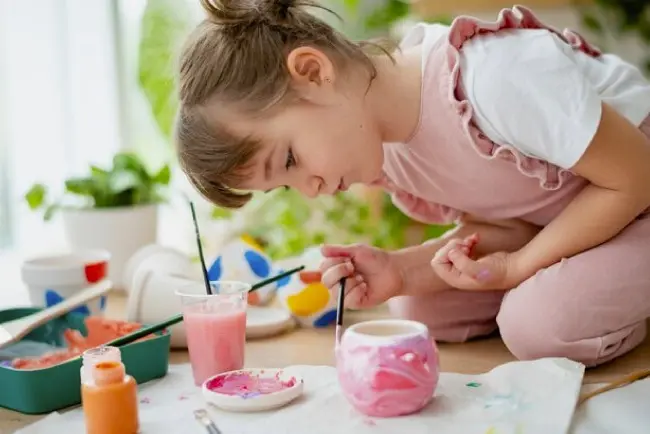
10 Best Drawing Techniques for Beginners in Academic Drawing
Academic drawing forms the foundation of visual arts and aids artists in developing keen observation and precision skills. For beginners,...
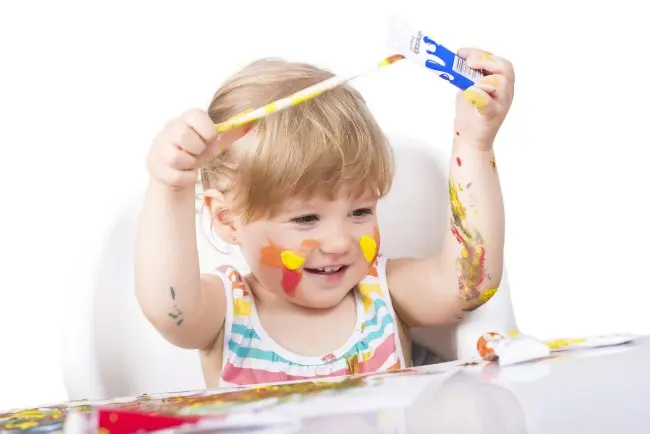
Using Digital Tools in Creating Traditional Artwork
Lately, an increasing number of traditional artists are turning to digital technologies to enhance their artwork. The use of digital...