Online
Contemporary Dance
Classes
One-on-one online contemporary dance lessons for children and adults — at a time that suits you!


Trial Lesson
To book a trial lesson, sign up and pay $8.00.
The trial lesson is one-on-one and lasts 45 minutes.

Lesson Package
If you enjoyed the trial lesson, you need to purchase a lesson package by prepaying for at least 4 lessons.
The price of a 4-lesson package is $60.00 (one lesson costs $15.00).
Payment must be made at least 24 hours before the lesson starts.

Discounts
When you purchase 8 lessons or more, a discount applies. The more lessons, the more you save!
Course overview
Our online contemporary dance course is suitable for adults and for children aged 5 and over. You can start from scratch, return after a break or work on techniques you already know. The program includes hip-hop, jazz-funk, contemporary and other styles.
The course includes preparatory, beginner, intermediate and advanced levels. Your teacher will help you choose where to start based on your experience and what you want to learn.
One-on-one lessons last 45 minutes and take place live via Google Meet or Zoom. We agree on the schedule in advance. For lessons, you will need a device with a camera and enough clear space to stand and move freely.
Our teachers have university degrees in choreography and experience working with children and adults.
We recommend taking lessons twice a week. Between lessons, you can practice familiar movements and sequences assigned by your teacher. We discuss how much time to spend practicing at home based on the student’s level and schedule.
Teaching approach
The teacher develops the program after getting to know the student. They find out which movements are already familiar, what the student finds difficult and what they want to achieve: learning a particular style, improving technique or preparing a dance routine. They then select exercises and music accordingly.
During practice, the teacher observes body position, arm and leg movements, rhythm and transitions. They explain what to change in the performance and help the student put corrections into practice. The completed tasks help the teacher decide what to add to the program and what needs more time.
Benefits of our approach
A clear focus: the teacher explains what you are working on during the lesson — remembering a sequence, refining movements or learning to hear musical accents.
Learning at your own pace: we spend more time on difficult elements, while easier material can be covered more quickly.
Corrections during practice: the teacher observes your movements and suggests how to adjust your body position or perform a sequence.
Age and interests: we use play-based activities with younger children and choose music, styles and choreography for each student.
Repetition: we use familiar movements in different combinations, dance routines and improvisation.
Preparatory level
The preparatory level is suitable for children aged 5 and over. Children learn to copy the teacher’s movements, move in time with the music and distinguish between fast and slow tempos. They practice simple steps, turns and arm movements.
Games help children remember sequences and convey the mood of the music. They learn short dance sequences, practice balancing and coordinate their arm and leg movements. The difficulty of the tasks depends on the child’s level.
Beginner level
At the beginner level, children and adults are introduced to the foundations of dance technique. They learn to pay attention to body position, perform basic arm, leg and torso movements, and connect them without unnecessary pauses.
They learn short combinations to music, remembering the order of the elements and the transitions between them. They try performing the same sequence at different tempos, emphasizing accents, and starting and finishing the dance with the music.
Intermediate level
Students move on to longer sequences, traveling steps and changes of direction. They work on transitions between elements and learn to maintain rhythm and control their movements as the tempo changes.
They pay more attention to expressive performance and to the features of their chosen style. They try improvising with familiar elements, help create sections of choreography and rehearse complete routines.
Advanced level
Experienced students refine their technique through more complex combinations. They work on coordination, balance and varying the way they move, and try combining elements from different dance styles.
In their routines, they focus on character, structure, facial expressions and musical accents. Together with the teacher, they refine the choreography and work on the details of the performance. If they wish, they prepare solo routines for online concerts and competitions.
Course aims
Dance technique: learn the main movements, connect them into sequences and pay attention to body position while performing.
Rhythm and coordination: move in time with the music, hear accents and coordinate arm, leg and torso movements.
Exploring dance styles: understand the features of different styles and recognize differences in technique and performance.
Physical conditioning: work on flexibility, strength and endurance through exercises selected for the student’s age and level.
Expression: convey the mood of the music through movement and facial expressions, and choose a way of performing that suits each routine.
Improvisation: use familiar elements to dance without previously learned choreography and try different combinations to music.
Preparing for performances: learn choreography, practice difficult sections and rehearse complete routines. Take part in online concerts and competitions if you wish.
Benefits of online contemporary dance lessons
Lessons at home: you can learn at home at a convenient time. Clear enough space in advance and position the camera so that the teacher can see the student’s whole body.
An agreed schedule: we arrange lesson times to suit your availability and time zone.
Communication with your teacher: during the lesson, you can ask the teacher to repeat a movement, clarify an arm position or demonstrate a transition again. The teacher can see your performance and explain what to do.
Dancing for yourself and for performances: you can focus on a style that interests you, work on technique or prepare a routine. Participation in concerts and competitions is discussed separately and remains optional.
During the trial lesson, we will get to know you or your child, discuss your interests and suggest where to begin.
News


How Contemporary Dance Lessons Are Conducted
Device for lessons: have a computer or tablet with a camera and microphone ready. A large screen makes it easier to follow your teacher’s movements. Place the device on a stable surface so your teacher can see you from head to toe.
Internet connection: before the lesson, check the connection in the room where you’ll be dancing. A stable connection will help you see your teacher’s movements and hear the music clearly.
Lesson platform: lessons take place on Zoom or Google Meet. Open the link before the lesson, install the app if needed and allow access to your camera and microphone.
Sound: you can use built-in or external speakers during dance lessons. Check that you can hear the music and your teacher’s voice clearly. At the start of the lesson, adjust the volume together.
Practice space: clear enough room for steps, turns and arm movements. Remove any unnecessary objects and cables from the floor. Make sure the floor isn’t slippery and there’s no furniture nearby that you could bump into while dancing.
Lesson link: we’ll send it in advance by email or via a messaging app. If you haven’t received the message or the link won’t open, contact our administrator.
Clothing and mat: choose comfortable clothing that allows you to move freely, and have an exercise mat ready for floor exercises.
Before the lesson:
Choosing exercises: at your first lesson, the teacher asks about your dance experience and interests. They give you simple exercises to assess your level and decide where to start.
Warm-up: you begin the lesson with warm-up exercises. The teacher chooses them to suit your age and level.
Explaining the movements: the teacher demonstrates the movements and explains what to focus on. You follow the teacher’s example, and they help you correct mistakes in your body position and arm and leg movements.
Questions: if a movement or transition is unclear, ask to see it again. The teacher can demonstrate a difficult section more slowly and break it down into smaller parts.
Dance practice: you learn movements and combine them into sequences. You practice them to music, working on rhythm, coordination and expression.
Lesson review: together with your teacher, you discuss what’s going well and which sections need more practice. The teacher explains what you can practice at home and how to do it.
Home practice: your teacher will suggest which familiar movements and sections of the dance to practice on your own. Discuss with them how much time you can set aside for the exercises.
Feedback: the teacher will explain what has improved and what still needs work. Parents can discuss their child’s progress and any difficulties with them.
Future lessons: the teacher selects new movements and combinations to suit the student’s level. If certain sequences are still difficult, they devote more time to them in later lessons.
In online contemporary dance lessons, your child learns at home with guidance from a teacher. The teacher helps them learn movements and dance sequences, while parents help them prepare for lessons and make time to practice.
Contemporary Dance Teachers

Anastasiia Ilienko
Contemporary Dance, Ballet, Yoga
Contemporary Dance Course Program
 Preparatory
level
Age: 5–6 years

Modules
Introduction to dance: we learn to move in time with the music and distinguish between fast and slow tempos. We follow the teacher’s movements and complete rhythm exercises.
Basic movements: we learn steps, turns and simple jumps. We combine them into short dance sequences.
Flexibility and coordination: we do simple stretching and balance exercises. We learn to coordinate our arm and leg movements and pay attention to posture.
Musical games: we learn to express the mood of the music through gestures and movement. We learn a short dance to perform for parents.
 Beginner
level
Age: 7 years and older

Modules
Basic technique: we learn the basic movements of jazz, hip-hop and pop dance. We learn to perform them precisely and coordinate our arm and leg movements.
Dance sequences: we memorize the order of movements and the transitions between them. We perform them to music at different tempos.
Moving to music: we learn to hear the rhythm and musical accents. We explore changing our movements, making them smooth or sharp to match the music.
Flexibility and fluidity: we do exercises to stretch and strengthen our muscles. We work on moving smoothly and learn to pay attention to body position.
Performance practice: we work on facial expressions and expressive movement. We learn to perform a dance in front of an audience.
Preparing a dance routine: we learn the choreography, practice difficult sections and rehearse the whole dance. We get ready to perform.
 Intermediate
level
Age: 10 years and older

Modules
Dance styles: we learn the characteristic movements of jazz, hip-hop and contemporary dance. We explore how technique and performance style differ in each genre.
Dance combinations: we learn more complex sequences and practice transitions and changes of direction. We learn to move precisely as the tempo and mood of the music change.
Improvisation: we create movements to music without set choreography. We experiment with expressing different moods and combining our own movements into a short dance.
Preparing for a performance: we learn a dance routine and work on performing it expressively. Lessons also include exercises for flexibility, strength and stamina, selected by the teacher to suit each student’s level.
 Advanced
level
Age: 12 years and older

Modules
Technique and physical training: we gradually progress to more complex movements and sequences, working on balance and body control. We do strength, flexibility and stamina exercises suited to our level.
Combining styles: we learn elements of contemporary dance, breakdancing and hip-hop. We explore combining them in a single routine and varying our performance style.
Improvisation and artistry: we combine the elements we have learned with movements we create ourselves. We develop a character for the dance and work on facial expressions and conveying mood.
Preparing for performances: we help create choreography and learn solo routines. We rehearse the entrance, transitions and ending of the dance. We can also prepare for online competitions and concerts if desired.
On the modern dance course, children gradually progress from simple movements to more complex sequences and dance routines. During lessons, they work on technique and flexibility, learn to convey the mood of the music and practice improvisation.
Book a trial lesson in modern dance!
Course Schedule
We teach every day, including weekends
To coordinate the day of the week and the time for your lesson, please write to us, and the administrator will arrange a convenient schedule for you!Contact Us


Student Reviews of the Course
Masha

Artem
Vera Sands
Марина
Review language: Russian
Сергей М.
Review language: Russian
Дарья Н.
Review language: Russian
Ксения Л.

Review language: Russian
Анастасия Р.
Review language: Russian
Ірина
Review language: Ukrainian
Світлана
Review language: Ukrainian
Frequently Asked Questions (FAQ)
Helpful Articles
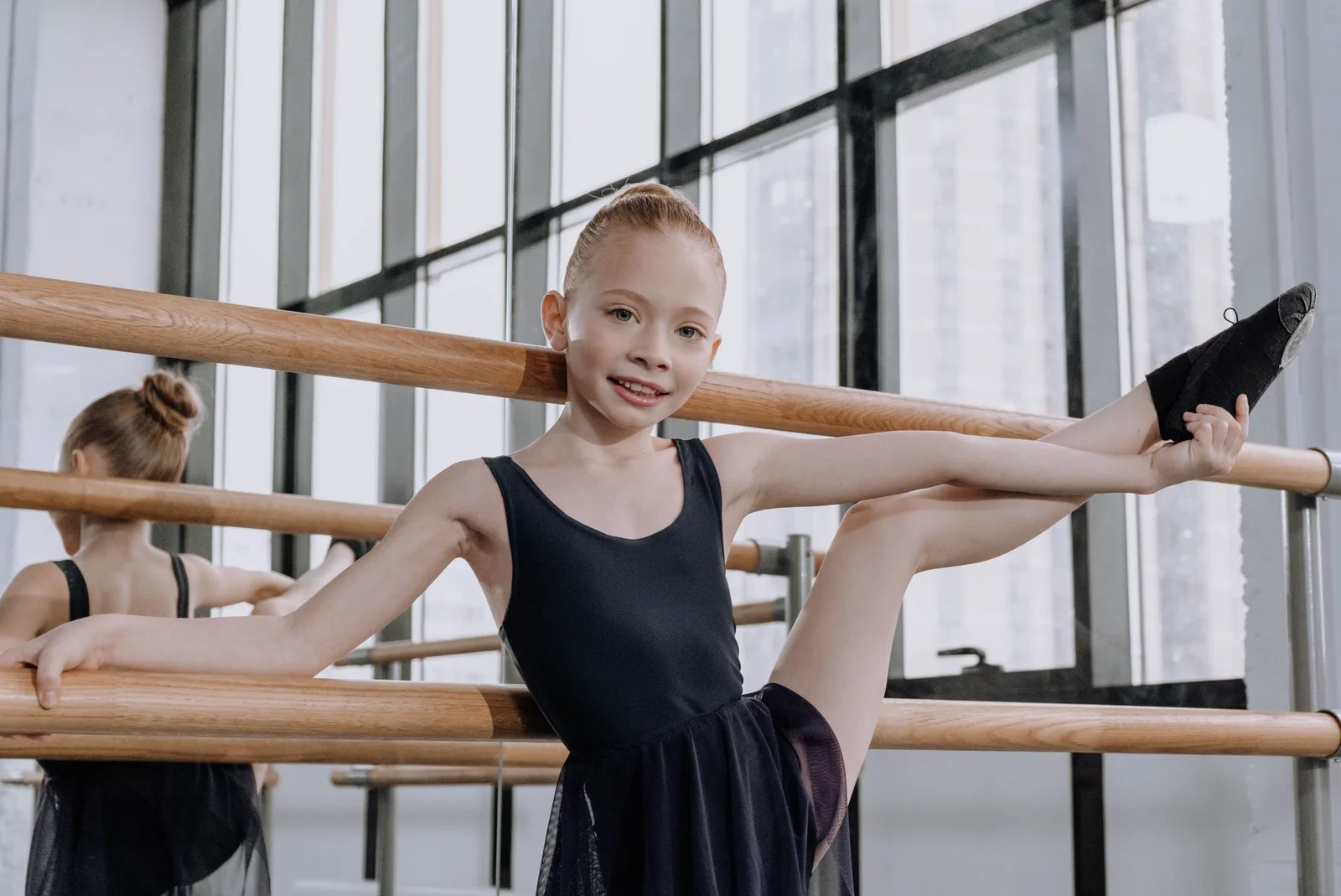
Stretching for Dance: Exercises for Beginners
Stretching helps dancers move more freely and feel their bodies better. But stretching is a skill too, and doing it...

Contemporary Dance: A Style Built on Self-Expression
Contemporary dance is now one of the leading genres for professionally trained dancers around the world, and it is especially...

Modern Dance for Children: Benefits and How to Choose a Style
“Modern dance” usually means several styles at once: hip-hop, jazz-funk and contemporary. Below is how they differ, what age to...

How to Organize Home Workouts for Modern Dance
Home practice helps you lock in what you learned in class. Below is how to set up your space, how...

Modern Dance for Adults: It’s Never Too Late to Start
You can start dancing at any age: our contemporary dance course is for children and adults alike, with one-on-one lessons...

Dance Improvisation: How to Create Your Own Moves
Improvisation means a dancer makes up the movement while dancing, without choreography learned in advance. Here is where it came...

Dance Battles: How Breaking Competitions Work
A battle is a dance duel in which dancers or crews take turns showing what they can do. Here is...

Modern Dance and Music: How to Choose the Right Track
The same dance sequence can be set to music that helps you or to music that is awkward to dance...

Hip-Hop, Jazz-Funk, Contemporary: How the Styles Differ
“Contemporary dance” is often used as an umbrella name for many styles with different histories and manners. Here is where...
Gallery