How to Choose Materials for Academic Drawing
· Updated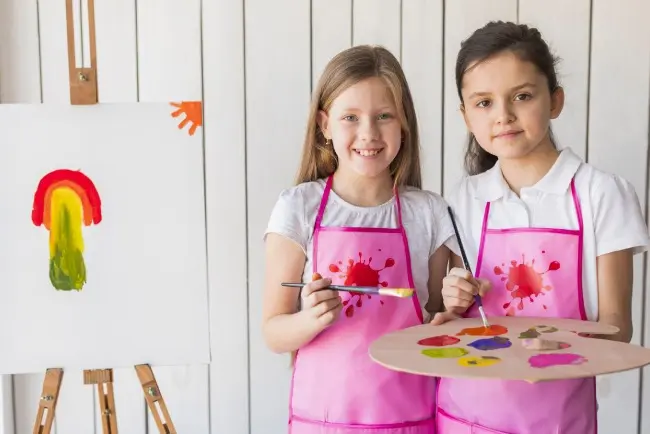
Academic drawing does not take much: paper, pencils of different hardness, erasers, and later charcoal and sanguine. Below is what to choose and why, a starter kit for a child and what can wait until later.
Pencils
Pencil hardness is marked with letters: H for hard (hardness), B for soft and dark (blackness), with F and HB in between; an ordinary writing pencil is HB. Some makers have as many as twenty grades between 9H and 9B. There is no shared standard, though: pencils with the same marking from different brands can leave a different tone.
A hard pencil is handy for construction because its line is light and thin; a soft one is for dark tones and shadows.
Paper
Paper weight is given in grams per square meter (gsm). For drawing, pick a sheet that survives erasing and layer after layer of hatching. Charcoal works better on paper with a rougher surface, which holds it more firmly.
Erasers and Blending
- Kneaded eraser. A soft, moldable eraser found in almost every artist’s kit; it lifts graphite and charcoal without smearing them across the sheet.
- Regular eraser. For larger areas and cleaning the margins.
- Blending stump. A rolled paper stick for spreading tone; a finger works too.
Charcoal and Sanguine
Charcoal comes compressed, bound with gum or wax, or as sticks of twigs burned without air; vine charcoal is a long, thin stick made from grapevine. There are also charcoal pencils, which are compressed charcoal in a wooden casing. Charcoal clings loosely to paper, so it is easy to erase and blend. Sanguine is red chalk, used in drawing as a red pigment.
Fixative
Fixative is a protective spray for drawings in dry media such as charcoal, chalk and pastel. It goes over the finished work so the drawing does not flake off or smudge.
A Starter Kit for a Child
For the first lessons in our painting course, paper, a plain pencil and an eraser are enough, and the sketch can be filled in with whatever you have at home: paints, markers or colored pencils. Painting also calls for two or three brushes in assorted widths, a palette and a jar of water.
How Not to Overspend
- Start with the minimum. Two or three pencils of different hardness, a kneaded eraser and a pack of paper.
- Add as needed. Charcoal and sanguine when you start working with tone on large sheets; fixative once you have work you want to keep. How these materials are used in a portrait is explained in Portrait Painting for Beginners: Techniques and Approaches.
- A big set is not essential. Markings differ between brands, and a beginner gains more from learning to work with two or three pencils. Where to start with drawing itself is covered in 10 Best Drawing Techniques for Beginners in Academic Drawing.
How to Get Started
In our painting course, students learn to work confidently with brushes, paints and other materials, study the basics of color theory, try different styles and find their own, and finished work can be shown at exhibitions and competitions. Lessons are open to students from age 5. A trial lesson costs $8.00: it is individual and lasts 45 minutes. More about the course is on the Painting page.


