Online
Ukulele
Classes
In our ukulele course, you’ll learn your favorite melodies, practice chords and song accompaniments, and prepare to perform in online concerts!



Trial Lesson
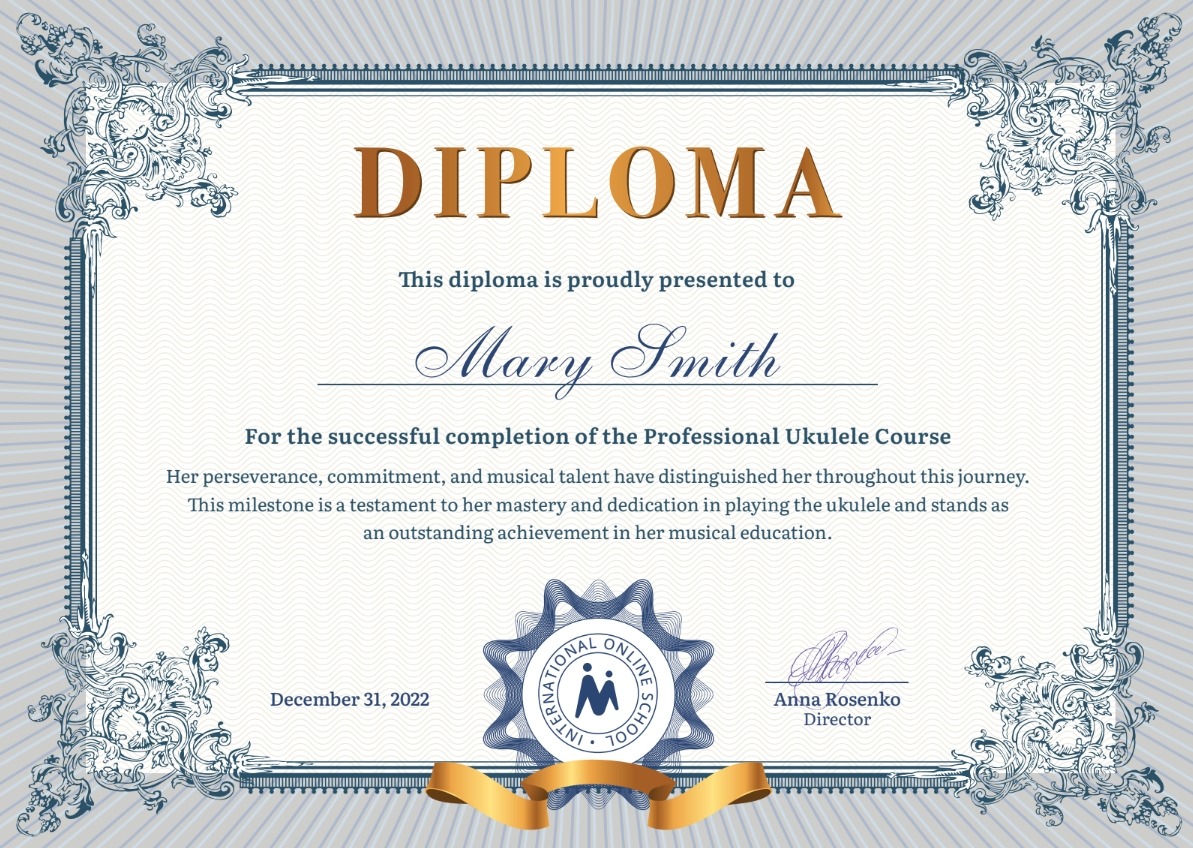
To book a trial lesson, sign up and pay $8.00.
The trial lesson is one-on-one and lasts 45 minutes.

Lesson Package
If you enjoyed the trial lesson, you need to purchase a lesson package by prepaying for at least 4 lessons.
The price of a 4-lesson package is $60.00 (one lesson costs $15.00).
Payment must be made at least 24 hours before the lesson starts.

Discounts
When you purchase 8 lessons or more, a discount applies. The more lessons, the more you save!
Course Overview
In our online ukulele course, you will learn melodies, play chords and work out accompaniments to songs. You can start with no musical experience or continue learning if you already know the instrument. Your teacher will help you choose pieces you enjoy that suit your level.
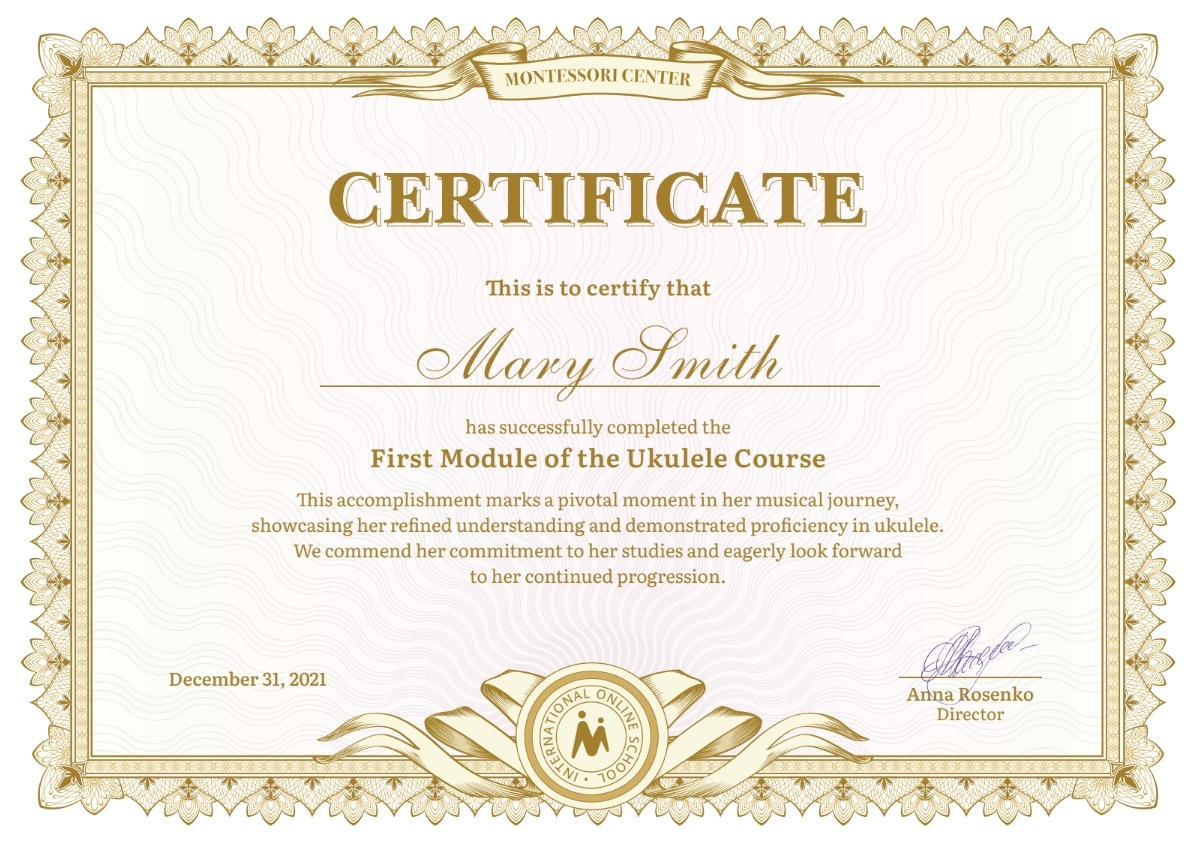
The course is designed for children aged 5 and above, as well as adults. The program includes preparatory, beginner, intermediate and advanced levels. The youngest students are introduced to the instrument through short melodies and playing on open strings. The beginner level is suitable for those starting from scratch, while the intermediate and advanced levels are intended for students with experience. The school awards a certificate after each module and a diploma after each level.
Lessons take place online with a teacher in real time. You watch the teacher’s hand movements, listen to musical examples and try playing yourself. The teacher notices when a string fails to sound or you play a wrong note and explains how to correct it. We agree on the lesson schedule before you begin.
During lessons, you learn to read sheet music, tablature and chord diagrams, and develop playing techniques. You explore theory through the songs and pieces you have chosen. You also learn to tune your ukulele and check its sound before playing.
Instead of taking tests and exams, students perform in online concerts and participate in competitions. Together with your teacher, you can prepare a solo piece or a song with your own accompaniment.
Teaching Approach
At the start of the course, your teacher asks what music you listen to, what you would like to play and whether you have taken lessons before. The first tasks help determine where to begin: individual notes and simple rhythms, familiar chords or a more challenging piece.
Learning a piece is broken down into small tasks. For example, you first read the melody or work through the chord progression, then practice the movements and rhythm. You repeat an awkward transition or a difficult bar separately at a slow tempo before putting the whole piece together.
Your teacher demonstrates different ways of playing, explains fingering and helps you play each note correctly. You progress to the next level as you complete the program. Between lessons, you practice selected exercises, then, at your next lesson, discuss what you managed independently and where you need help.
Benefits of Our Approach
Clear tasks: your teacher explains what to focus on when learning a piece and selects exercises to help you work through difficult passages.
Time to learn: if a new technique requires more practice, your teacher will spend more time on it and provide additional exercises.
Theory connected to music: note values, chords and musical markings are studied directly through the pieces you play.
Clear demonstrations: your teacher can slow down a movement, show finger placement and play a passage again so that you can repeat it.
Repertoire matched to your interests: songs, melodies and tasks are selected for children and adults according to their age and level.
Performance practice: after rehearsing with your teacher, you can present a piece you have learned at an online concert or competition.
Continued learning: after completing all the modules, you can continue studying with our teachers and move on to more challenging repertoire.
Preparatory Level
Age: 5 and above. Children become familiar with the ukulele and learn how to hold the instrument and position their hands correctly. In their first lessons, they try playing on open strings, repeating rhythms after the teacher and performing short melodies.
Tasks gradually become more challenging: children learn to press down the strings, find the notes they need and combine them into musical phrases. The teacher alternates exercises for aural skills, rhythm and hand coordination, introducing the first notes and simple accompaniment patterns.
Beginner Level
Age: 7 and above. Students can start this level with no previous experience. They learn hand positioning and how to read sheet music, tablature and chord diagrams. They practice simple melodies, chord changes, and basic strumming and fingerpicking patterns.
The program includes short pieces and songs with manageable accompaniments. Lessons focus on clear sound, steady rhythm and transitions between passages. By the end of the level, students can prepare a piece they have learned for an online concert.
Intermediate Level
Age: 10 and above. This level is intended for students who have already learned the basic chords and playing techniques. Students learn more complex melodies and accompaniments, practice changing chords without stopping and explore a wider variety of rhythmic patterns.
In solo pieces, they learn to bring out the melody against the chords, shape phrases and vary dynamics. When accompanying songs, they learn to choose strumming or fingerpicking patterns that suit the music. Prepared pieces can be performed at an online concert or competition.
Advanced Level
Age: 12 and above. Students work on challenging pieces and arrangements that combine melody, chords and rhythmic accompaniment. They refine their technique, plan fingering, phrasing and dynamics, and learn to maintain expression in technically demanding passages.
The program includes improvisation: creating short musical phrases based on familiar scales and chord progressions. The teacher helps students develop these ideas and combine them into complete passages.
Particular attention is given to preparing a concert program: playing pieces from beginning to end, maintaining a steady tempo and making transitions between sections. After the performance, students discuss the result with their teacher and choose goals for further work.
Course Goals
Playing technique: learn to hold the ukulele and position your hands correctly, strum and fingerpick, change chords and produce a clear sound from the strings.
Reading music and tablature: read sheet music, tablature and chord symbols, understand musical markings and work through simple melodies independently.
Accompaniment: learn different rhythmic patterns and choose an accompaniment that suits the song.
Solo performance: learn pieces that combine melody and chords, and work on phrasing and dynamics.
Music theory: become familiar with scales, keys and chord construction, and see how they are used in the music you are learning.
Improvisation: try creating your own melodies and accompaniment patterns using the techniques you have learned.
Independent practice: learn to organize your practice time, repeat difficult passages and identify mistakes in your playing.
Performance experience: prepare pieces for online concerts and competitions, learn to play for an audience and manage performance nerves.
Benefits of Online Ukulele Lessons
A musical ear: students compare their playing with the teacher’s demonstration, gradually learning to notice wrong notes and hear how the melody fits with the accompaniment.
A sense of rhythm: strumming, fingerpicking and metronome exercises help students maintain tempo, observe note values and play without unnecessary pauses.
Hand coordination: one hand presses down the strings and changes chords, while the other plays the melody or accompaniment. Simple exercises help students learn to coordinate these movements.
Musical memory: learning a song involves remembering its melody, chord progression and rhythmic pattern. Over time, familiar pieces can be played from memory.
Independence: home practice helps students build a practice habit, choose a specific task and work toward a result, such as mastering a difficult passage.
Playing and singing: once you have learned an accompaniment, you can sing along with your own playing or accompany another singer.
Exploring different styles: popular songs, jazz melodies, blues and other pieces offer opportunities to explore different approaches to playing.
Music for yourself and those close to you: you gradually build a repertoire that you enjoy returning to at home, among friends or at an online concert.
How to Organize Home Practice
Choose a small task: start with an exercise or passage your teacher has recommended practicing. This makes it easier to recognize what you have improved during the session.
Listen before playing: a recording of the piece will help you remember the melody and imagine how it should sound. Use the sheet music or tablature selected by your teacher to learn it.
Take your time: play difficult transitions slowly at first. Increase the tempo once your movements become more confident and you can play without mistakes.
Record yourself: a short video or audio recording can help you hear uneven rhythm, a missed note or an unclear chord. You can discuss these passages during your lesson.
Check your instrument’s tuning: use a tuner before practicing. If you still find it difficult to tune the instrument yourself, ask your teacher to demonstrate the steps again.
At your first lesson, tell your teacher which songs and melodies you enjoy. If you already play, perform a familiar piece. If you are picking up a ukulele for the first time, your teacher will help you get comfortable with the instrument, and you will start learning your first melody.
News





How Ukulele Lessons Are Conducted
Equipment: You will need a ukulele as well as a computer, tablet, or smartphone with internet access and a camera for video calls.
Internet Connection: Ensure your connection is stable and fast, as this is crucial for the quality of the video lesson.
Video Conference Platform: We use Zoom or Google Meet for online ukulele lessons. Please download and install the necessary app on your device if you have not already done so.
Sound: Use headphones for better sound quality. This will help minimize background noise and improve communication with your instructor.
The link to the lesson will be sent to you in advance by email or through a messaging app.
Sheet music for the lesson, if needed, will also be sent to you beforehand.
Print out the sheet music before the lesson begins.
Set up your device so that the instructor can see not only your face but also your hands and the instrument.
Log into the Zoom or Google Meet app using the lesson link a few minutes before the start time to address any technical issues that might arise.
Instructions and Feedback: Your ukulele instructor will give you specific directions on proper posture, performing exercises, and mastering your first melodies.
Questions: Feel free to ask your teacher questions at any time during the lesson if something is unclear.
Practice: A major part of the lesson will be dedicated to playing. You will play while the instructor observes you, listens, and demonstrates.
Instructor Demonstration: Your teacher will demonstrate specific passages, helping you better understand how they should be performed.
Lesson Conclusion: At the end of the lesson, you and your teacher will discuss the material covered, homework assignments, and plans for the next lesson.
Your teacher will provide you with study materials for independent practice at home: sheet music, recordings, textbooks, links, and other resources that will help you prepare for your next lesson.
In online ukulele lessons at Montessori Center, you will work on music you enjoy and learn to play the instrument with your teacher.
Ukulele Teachers

Artem Ostroverkh
Ukulele, Classical Guitar, Electric Guitar, Bass Guitar

Igor Yaremenko
Ukulele, Classical Guitar, Electric Guitar, Bass Guitar

Anzhelika Udod
Ukulele, Classical Guitar, Electric Guitar, Bass Guitar

Nikita Demidov
Ukulele, Classical Guitar, Electric Guitar, Bass Guitar
Ukulele Course Program
 Preparatory
level
Age: 5 years and older

Modules
Getting to know the ukulele: learning to hold the instrument, position the hands and play on open strings. Learning your first short melodies.
Repeating simple rhythms after the teacher. An introduction to your first chords and simple song accompaniments.
 Beginner
level
Age: 7 years and older

Modules
Hand positioning and ukulele playing techniques. Learning to press down the strings and produce clear notes and chords.
Simple strumming and fingerpicking patterns. Working on steady rhythm, chord changes and song accompaniments.
Music notation basics, reading tablature and chord diagrams. Learning simple melodies. From age 8 — an introduction to keys, harmony and chord construction.
Learning easy pieces and songs in different styles. Working on rhythm and conveying the character of the music.
Exercises for hand coordination and finger dexterity. Gradually increasing the tempo while maintaining precise movements and a clear sound.
Preparing a solo piece or a song with your own accompaniment. Rehearsing and performing in an online concert.
 Intermediate
level
Age: 10 years and older

Modules
Working on phrasing and dynamics. Learning to convey the character of a piece and bring out the melody against the chords.
Learning intermediate pieces. Exploring new chords and a wider variety of strumming and fingerpicking patterns.
Developing song accompaniments: choosing a suitable rhythm, practicing chord changes and transitions between verse and chorus.
Preparing a solo piece or a song with your own accompaniment for an online concert or competition. Working on playing it from beginning to end.
 Advanced
level
Age: 12 years and older

Modules
Developing finger dexterity and precise movements. Working on difficult transitions and maintaining a clear sound at a fast tempo.
Learning challenging pieces and arrangements that combine melody and chords. Choosing fingering and working on phrasing and dynamics.
Improvising with familiar scales and chords. Creating your own musical phrases and variations on song accompaniments.
Preparing and rehearsing a concert program. Performing in an online concert or competition and discussing the results with your teacher.
The ukulele course is suitable for children aged 5 and above and adults of any age. The program includes preparatory, beginner, intermediate and advanced levels. The preparatory level for children aged 5 and above introduces the instrument through first melodies and rhythm exercises. Students with no experience start with the basics, while those who already play receive guidance from their teacher in choosing a level that matches their skills. The school awards a certificate after each module and a diploma after each level.
Book a trial lesson to meet your teacher and try playing your first melody on the ukulele. If you already play, perform a favorite piece — together, you will decide what to work on next.
Course Schedule
We teach every day, including weekends
To coordinate the day of the week and the time for your lesson, please write to us, and the administrator will arrange a convenient schedule for you!Contact Us



Student Reviews of the Course
Tony

Nataliya
Camila
Виктория
Review language: Russian
Александра Филоненко
Review language: Russian
Лиза К.
Review language: Russian
Ира
Review language: Russian
Іван
Review language: Ukrainian
Наталя
Review language: Ukrainian
Анжеліка
Review language: Ukrainian
Frequently Asked Questions (FAQ)
Helpful Articles

Ukulele Chords for Beginners: The First Four
The ukulele has four strings, and its first chords take just one, two or three fingers. As with the guitar,...

Modern Ukulele Playing Techniques: What You Need to Know
A ukulele has four nylon strings. In its most common tuning, G–C–E–A, the G string sits an octave above where...

Ukulele Tuning: High G, Low G, D Tuning and the Baritone
A ukulele has only four strings, yet it can be tuned in several ways, and the tuning shapes both its...

The History of the Ukulele: From Hawaii to the Global Stage
The ukulele is thought of as a Hawaiian instrument, but its roots are Portuguese. Here is how this small four-string...

How the Ukulele Helps Children Develop Musical Skills
The ukulele is showing up more and more in music education, sometimes taking the place of the recorder as a...

Ukulele as an Instrument for Family Music-Making
The ukulele is a handy instrument for making music as a family: it is compact, has four nylon strings, and...
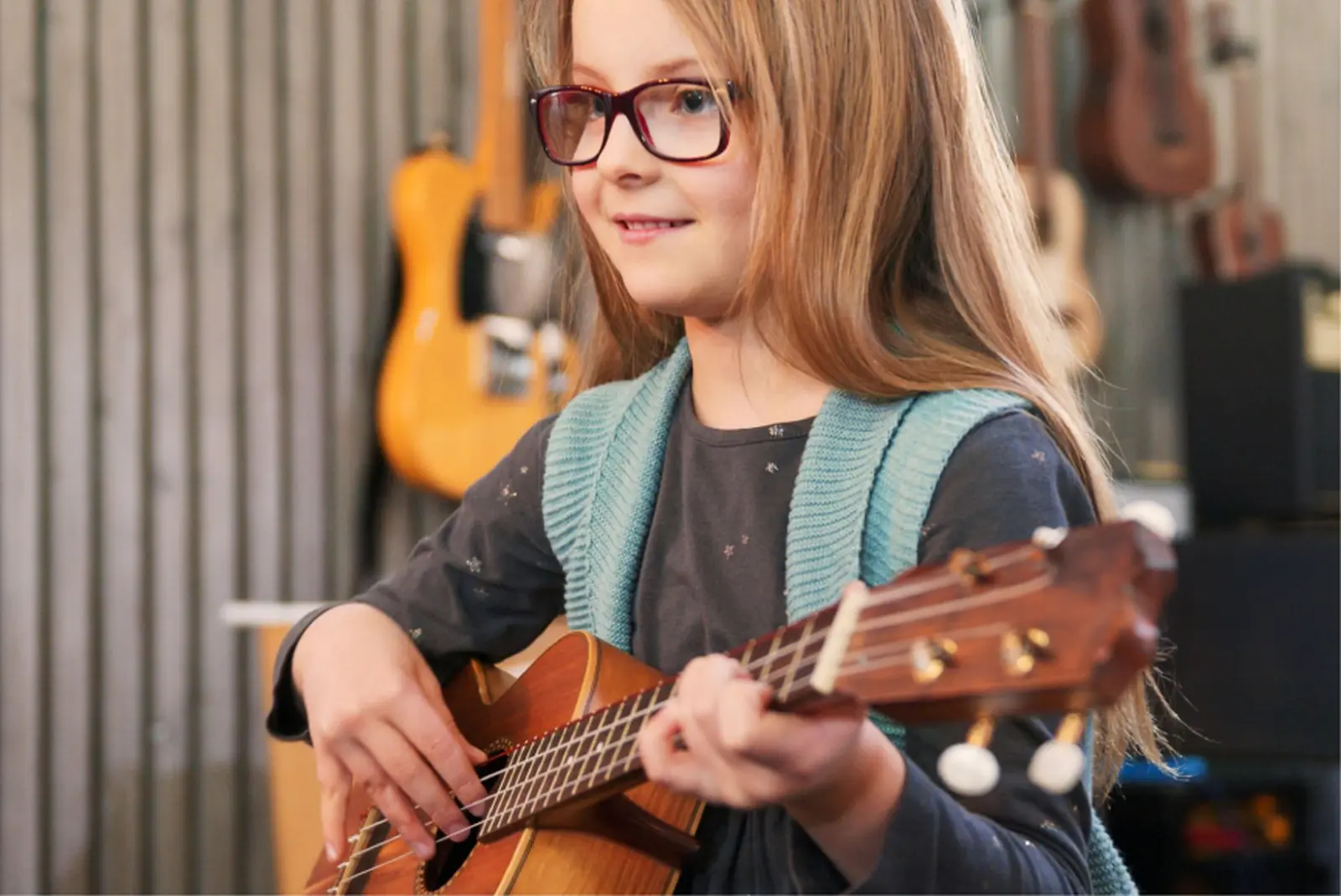
How to Choose the Perfect Ukulele for Beginners
A first ukulele should not be chosen on looks alone: pick the instrument up, press down on the strings and...

Top 10 Popular Songs to Play on the Ukulele
The ukulele has a bright, easy sound, which makes it great for well-known songs. Here are ten popular songs, from...
Famous Ukulele Players and Their Contributions to Music
The ukulele took shape in Hawaii in the 1880s, modeled on small Portuguese instruments brought over by immigrants from Madeira...
Gallery