Online
Mathematics
Classes
We help students understand math and learn to solve problems on their own.






Trial Lesson
To book a trial lesson, sign up and pay $8.00.
The trial lesson is one-on-one and lasts 45 minutes.

Lesson Package
If you enjoyed the trial lesson, you need to purchase a lesson package by prepaying for at least 4 lessons.
The price of a 4-lesson package is $60.00 (one lesson costs $15.00).
Payment must be made at least 24 hours before the lesson starts.

Discounts
When you purchase 8 lessons or more, a discount applies. The more lessons, the more you save!
Course Overview
At Montessori Center, preschoolers and schoolchildren study math online. Our teachers help them learn to count, understand topics covered at school, solve problems and prepare for tests and exams.
Lessons are one-on-one with a teacher in real time. Each lesson lasts 45 minutes.
Teaching Approach
Our approach to teaching math is based on the school curriculum of the country where the child studies. We work with materials from Ukrainian and American schools, as well as schools in EU countries.
During the lesson, the teacher explains a topic and works through examples with the student. The child then completes similar tasks independently.
Benefits of Our Approach
Addressing gaps in knowledge: we revisit essential rules when they are needed to understand a new topic.
Individual pace: we spend more time on challenging tasks and move on when the student understands the material.
Learning from mistakes: we identify the step where a mistake occurred and help students learn to spot it when checking a solution.
Visual aids: we use diagrams, tables, graphs and worked examples that the child sees on screen.
Preparatory Level
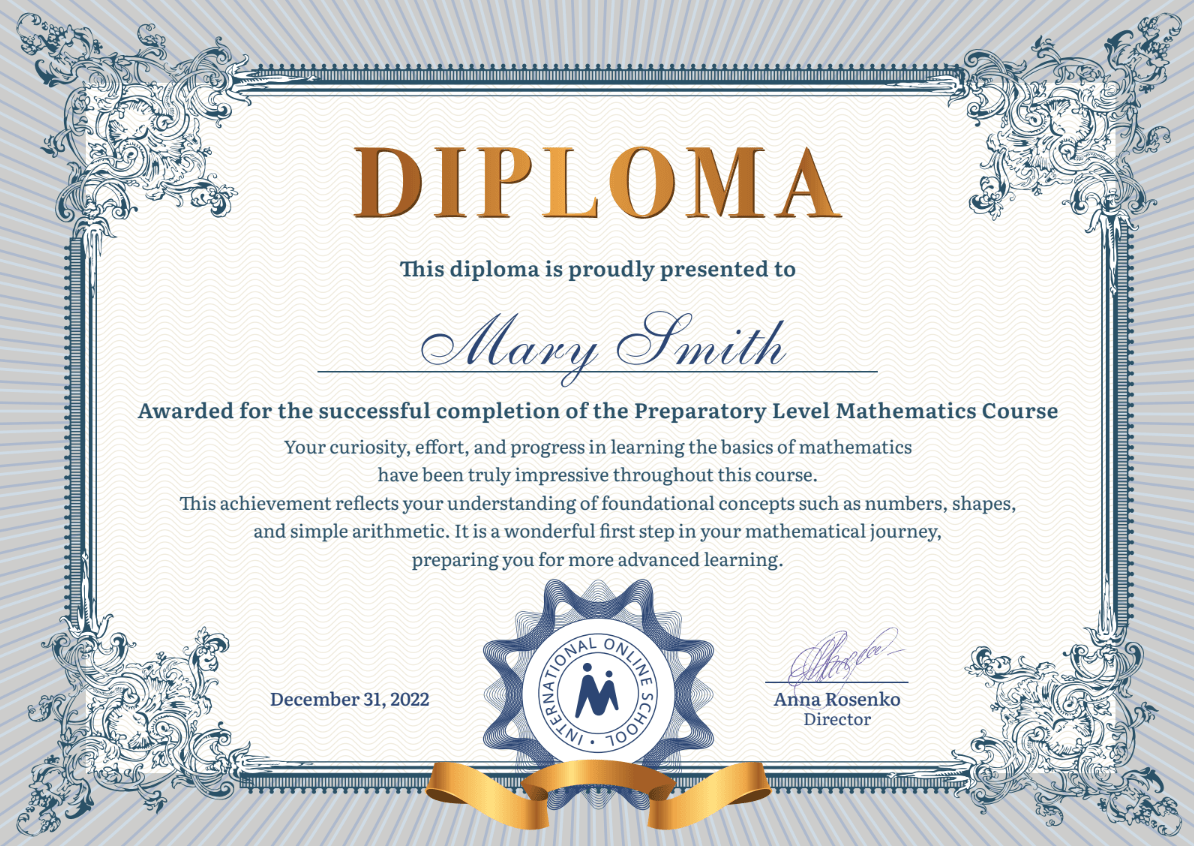
The preparatory level is designed for preschoolers. Children explore numbers and learn to count, compare quantities, recognize shapes and identify simple patterns. We explain concepts through games and visual examples.
Beginner Level
At the beginner level, students learn arithmetic: addition, subtraction, multiplication and division. As their skills develop, they move on to fractions, percentages and word problems. The teacher helps them understand what each operation means and determine the order of operations.
Intermediate Level
The intermediate level is suitable for students who are already familiar with arithmetic and are studying algebra and geometry. We work with expressions, equations, geometric shapes and their properties. Students learn to interpret problem statements, draw diagrams and justify their solutions.
Advanced Level
The advanced level is designed for high school students. We study algebra and geometry topics in greater depth, work with functions, equations and inequalities, and solve problems requiring several steps. Lesson content depends on the student’s school curriculum and goals: understanding a challenging topic, deepening their knowledge or preparing for an exam.
Course Goals
Master the school curriculum: understand the basic rules, fill gaps in knowledge and reinforce what has been learned.
Develop logical thinking: identify patterns, compare solution methods and explain the reasoning behind a solution.
Prepare for tests and exams: review relevant topics, work through typical tasks and learn to manage your time when answering them.
Learn to solve problems independently: understand what a problem is asking, choose a solution method and check the answer.
Apply knowledge in practice: use the rules and formulas learned to solve problems with different conditions.
Benefits of Online Math Lessons
No travel to lessons: the child studies at home, saving time for other lessons and rest.
Scheduling across time zones: we agree on lesson days and times based on the student’s location and school schedule.
Communication with the teacher: during lessons, students can ask questions, request another explanation or work through a difficult example in more detail.
Support between lessons: the teacher can answer questions about the material, and an administrator can help with scheduling and payments. We communicate through messaging apps and email.
News




How Mathematics Lessons Are Conducted
Watch Lesson Video
Equipment: make sure you have a computer, tablet or smartphone with a camera and microphone.
Internet connection: you’ll need a stable internet connection for lessons.
Joining the lesson: lessons take place on Zoom or Google Meet. Install the app in advance if needed. Before your first lesson, check your camera, microphone and sound.
Headphones: we recommend using them to hear the teacher more clearly and reduce unwanted noise during the lesson.
Lesson link: we’ll send it in advance by email or through a messaging app.
Learning materials: have your child’s textbook, notebook and pen ready. If the teacher has asked you to print any worksheets, do so before the lesson.
Device placement: place it on a stable surface so the teacher can see your child’s face and your child can comfortably view the screen and write in their notebook.
Joining the lesson: open the link a few minutes before the lesson starts and check your camera, microphone and sound.
Explaining the topic: the teacher explains the rules and works through examples with the student.
Questions: your child can ask the teacher to repeat an explanation or go over a difficult task in more detail.
Practice: the student completes exercises independently and explains their reasoning. The teacher gives them time to think and helps when needed.
Reviewing mistakes: the teacher helps identify errors in the solution, correct them and check the answer.
End of the lesson: the teacher and student review what they have covered and discuss homework and plans for the next lesson.
After the lesson, the teacher sends assignments for independent practice and, if needed, additional materials on the topic covered.
At Montessori Center, your child takes individual online math lessons with a teacher.
We work through challenging topics and help your child learn to solve problems independently.
Mathematics Teachers

Victoria Shevchenko
Math, Algebra, Geometry, Pre-K and Kindergarten
Math Course Curriculum
 Preparatory
level
Age: 5–6 years
Modules
Numbers and counting: we learn about numbers and how to count objects.
Addition and subtraction: we solve simple problems using toys and pictures.
Geometric shapes: we identify circles, squares and triangles and find objects with similar shapes.
Comparing quantities: we use games to compare groups of objects and identify which have more, fewer or the same number.
 Beginner
level
Age: 7–12 years
(Grades 1–6 in Ukraine, Grades 1–7 in the USA)
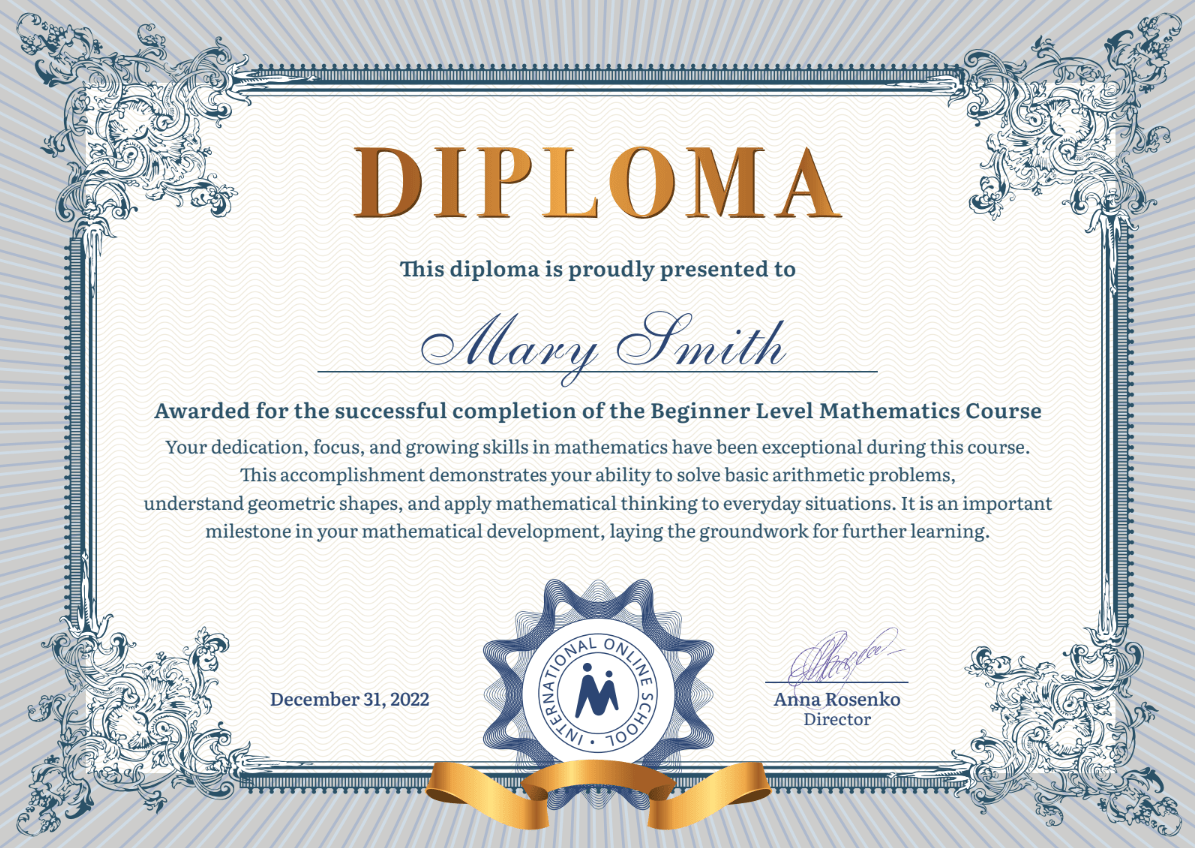
Modules
Arithmetic: we learn addition, subtraction, multiplication and division. We practice following the order of operations.
Logic problems: we spot patterns, continue number sequences and explain our reasoning.
Word problems: we break down the information given, choose the operations and check the answer. We solve problems involving time, cost and distance.
Fractions: we learn about fractions and decimals, compare them and practice calculating with them.
Geometry and measurement: we study the properties of shapes, measure length and calculate perimeter and area.
Test and exam preparation: we review the relevant topics and work through typical questions.
 Intermediate
level
Age: 13–14 years
(Grades 7–8 in Ukraine, Grades 8–9 in the USA)
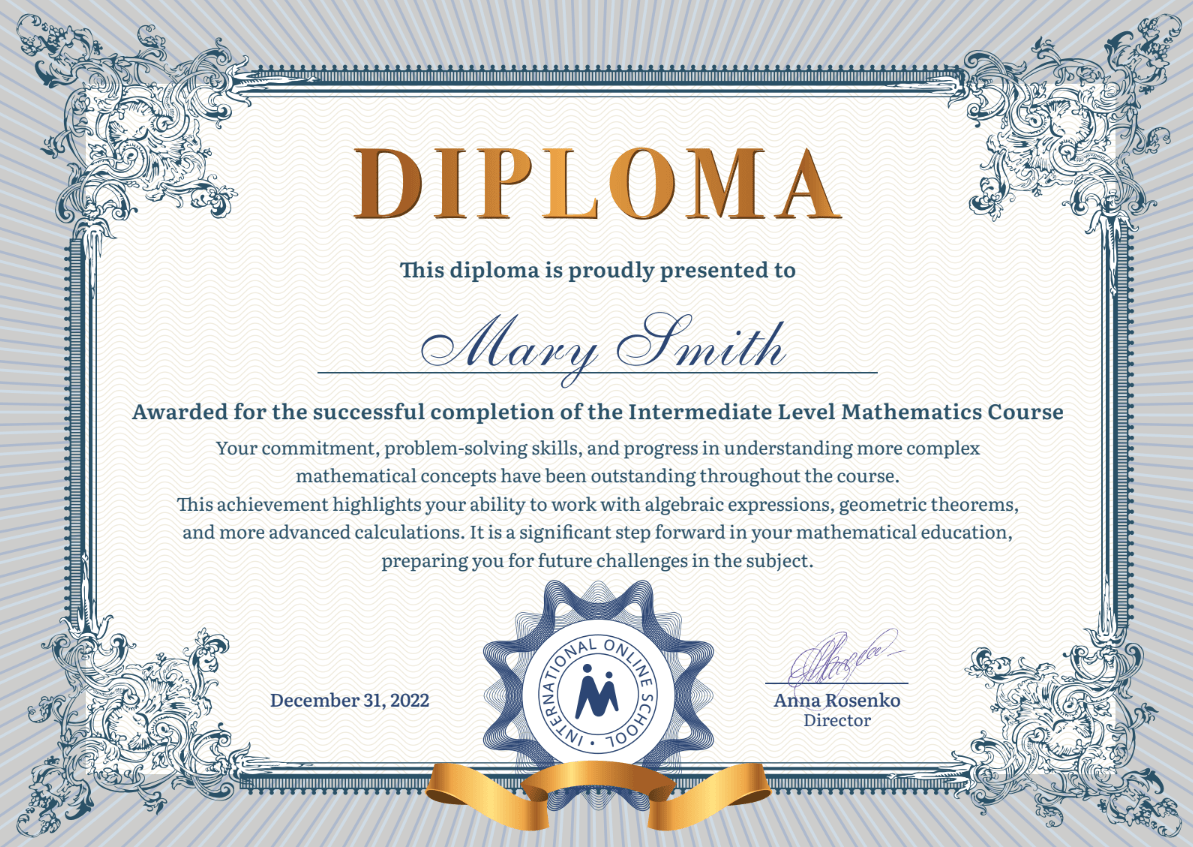
Modules
School curriculum: we work through current topics based on the student’s grade level and learning materials.
Addressing learning gaps: we revisit anything that is still unclear and work through additional examples.
Problem solving: we learn to choose an approach, explain our steps and check the answer.
Test and exam preparation: we review the relevant material and complete practice exercises.
 Advanced
level
Age: 15–17 years
(Grades 9–11 in Ukraine, Grades 10–11 in the USA)
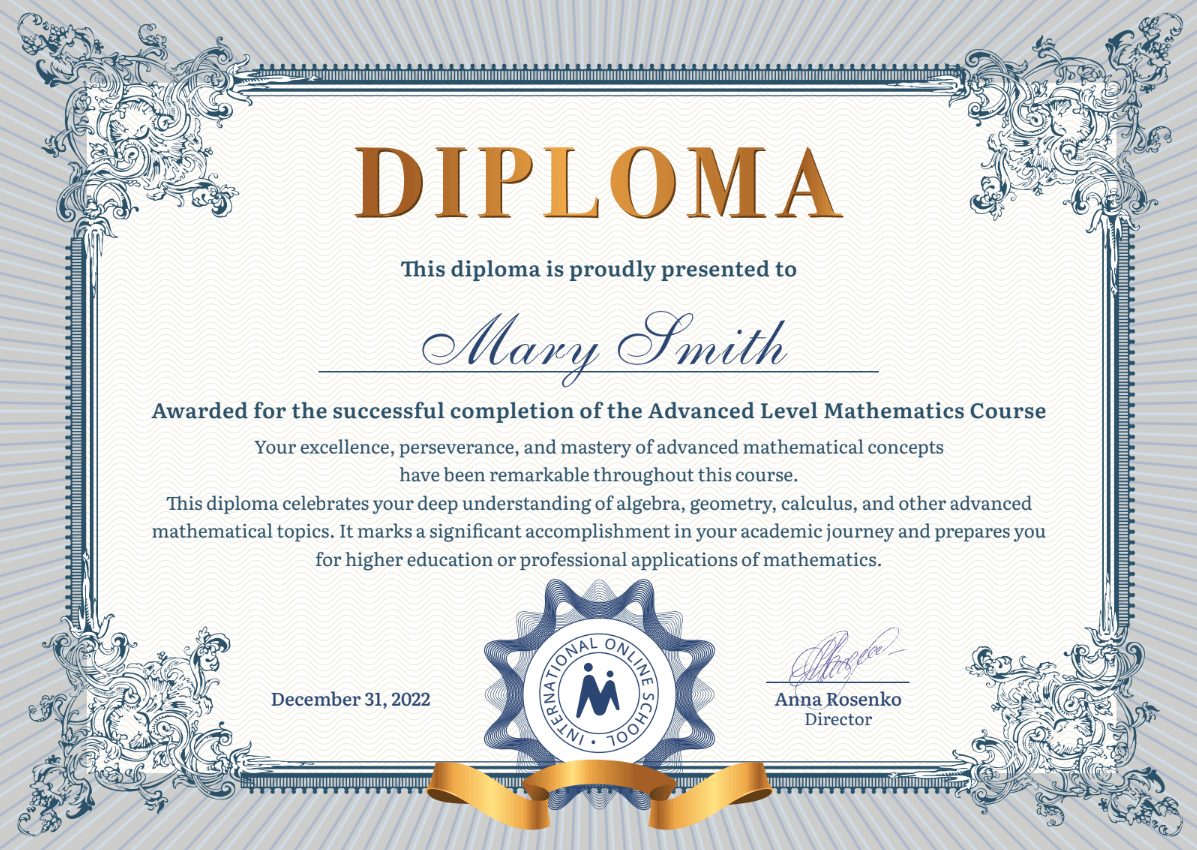
Modules
School curriculum: we work through current topics using the student’s school textbooks and materials.
Challenging problems: we learn to plan our solutions and apply knowledge from different areas of math.
Showing our work: we learn to present our reasoning step by step and justify our approach.
Exam preparation: we become familiar with question formats, take practice tests and learn to manage our time.
Our math course is designed for children from preschool through high school. We choose topics and adjust the difficulty of exercises to suit each child’s age and current level. For school students, we follow their school’s curriculum and use its learning materials. We help students understand difficult topics, learn to solve problems independently and prepare for tests and exams.
Start learning with a trial lesson!
Course Schedule
We teach every day, including weekends
To coordinate the day of the week and the time for your lesson, please write to us, and the administrator will arrange a convenient schedule for you!Contact Us



Student Reviews of the Course
Anna

Ivan
Rita
Анна П.
Review language: Russian
Оля
Review language: Russian
Волкова Таисия
Review language: Russian
Ольга

Review language: Russian
Ольга
Review language: Ukrainian
Соня
Review language: Ukrainian
Олексій
Review language: Ukrainian
Frequently Asked Questions (FAQ)
Helpful Articles

Fractions for Kids: How to Explain Them Simply
Fractions are often the topic where students first feel lost in math. The easiest way to explain them is with...

How to Motivate a Child to Learn Math Online
A child usually wants to do math once they understand what they are doing and see their own progress. Punishment...

The Benefits of Online Math Lessons for Schoolchildren
How does an online math lesson differ from a class at school, and who is it for? Instead of generalities,...
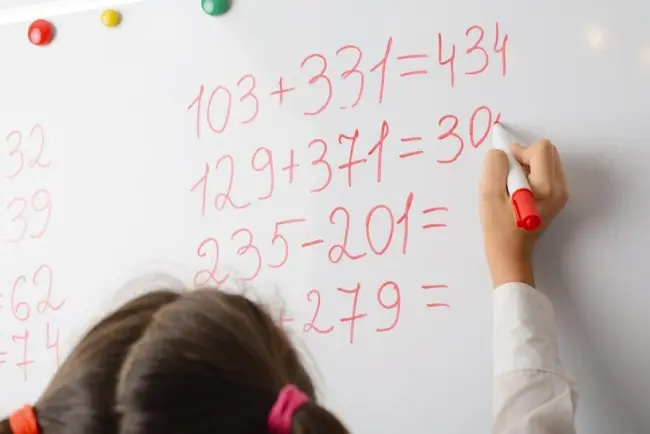
The Role of Online Math Tutors in Exam Preparation
Before final exams, many families look for a math tutor. Here are the two exams our students meet most often,...

Online Math Lessons at Home: How to Organize Learning
A calm online math lesson does not need much at home: working equipment, a study spot and a familiar routine....

Wolf, Goat and Cabbage and the Tower of Hanoi: Logic Puzzles
Old puzzles are a good way to build logical thinking: there is no hard arithmetic in them, but you have...

Your Child’s Safety in Online Lessons: What Parents Should Know
An online lesson is a video call, so parents need to know who takes part in it and how to...

The Multiplication Table: Its History and How to Learn It
Children learn their times tables in elementary school, and parents often help them commit the table to memory. Here is...

Parent Reviews of Online Math Courses
Parents are the best judges of how lessons go. Below are reviews left by our students’ parents on the math...