Online
Ballet
Classes
Learn ballet online — one-on-one lessons for children and adults!


Trial Lesson
To book a trial lesson, sign up and pay $8.00.
The trial lesson is one-on-one and lasts 45 minutes.

Lesson Package
If you enjoyed the trial lesson, you need to purchase a lesson package by prepaying for at least 4 lessons.
The price of a 4-lesson package is $60.00 (one lesson costs $15.00).
Payment must be made at least 24 hours before the lesson starts.

Discounts
When you purchase 8 lessons or more, a discount applies. The more lessons, the more you save!
Course Overview
At Montessori Center, children aged 5 and older, as well as adults, can take ballet lessons online. The course is suitable for beginners and those who have studied classical ballet and would like to continue their training.
The program covers arm and foot positions, body alignment, coordination exercises and stretching. As students progress, they move on to dance combinations, turns, jumps and choreographed routines.
Teaching Approach
Lessons take place online with a teacher in real time. The teacher demonstrates movements, explains what to focus on and watches the student perform. If an exercise proves difficult, it is broken down into smaller parts and practiced again.
Lessons combine technical exercises with short dance sequences. The teacher helps students remember the movements and understand how to perform them to music.
Benefits of the Teaching Approach
Clear objectives: Students know what they are working on during each lesson, whether it is maintaining balance, memorizing a combination or practicing a turn.
Gradual progression: New elements are introduced as students master the previous ones. More challenging exercises receive as much practice time as each student needs.
Appropriate intensity: Exercises are selected with the student's age, fitness and dance experience in mind.
Working on a complete dance: Individual movements are combined into a routine. Students learn to connect the elements and perform the piece from beginning to end.
Preparatory Level
The preparatory level is designed for children aged 5 and older. Through short, playful activities, children discover arm and foot positions, learn to recognize musical tempo and repeat simple movements. Lessons include exercises for balance, coordination and flexibility.
Beginner Level
The beginner level is suitable for children and adults with no previous ballet experience. Students learn pliés, battements and relevés while working on posture and precision. The program includes exercises with and without support, floor exercises and short dance combinations.
Intermediate Level
The intermediate level is for students with a foundation in ballet. They learn longer combinations and practice grand battements, adagio, turns and jumps. Particular attention is given to smooth transitions, stability and movement to music.
Advanced Level
The advanced level is designed for students with a confident command of classical ballet technique. The program includes ballet variations, more complex turns and jumping combinations. Students work with the teacher on the finer details of their performance, expression and the character of the chosen piece. Pointe work is introduced according to the student's level of preparation.
Course Goals
Classical ballet technique: learn to perform movements precisely and maintain correct body alignment.
Musicality: hear the rhythm, recognize changes in tempo and convey the character of the music through dance.
Coordination: coordinate arm and leg movements and maintain balance when changing positions and direction.
Physical fitness: develop flexibility, strength and stamina through regular exercise.
Artistic expression: convey mood and character through poses, gestures and movement.
Independent practice: remember exercise sequences, recognize mistakes and apply the teacher's feedback.
Benefits of Online Ballet Lessons
No travel to school: take lessons at home at a convenient time.
A convenient schedule: we agree on lesson times in advance so students can fit ballet around school, work and other activities.
Lessons wherever you live: study with a Montessori Center teacher regardless of your city or country.
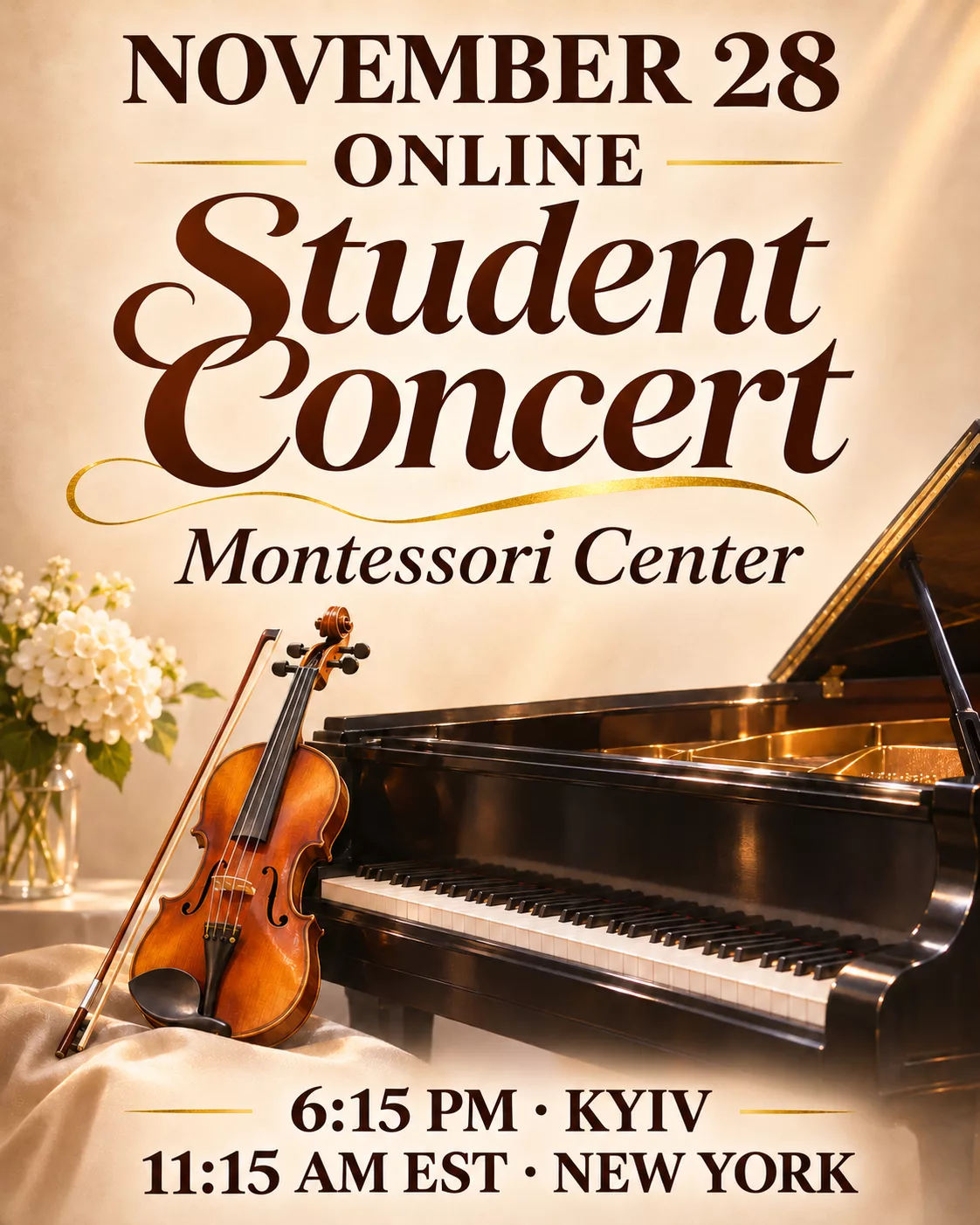
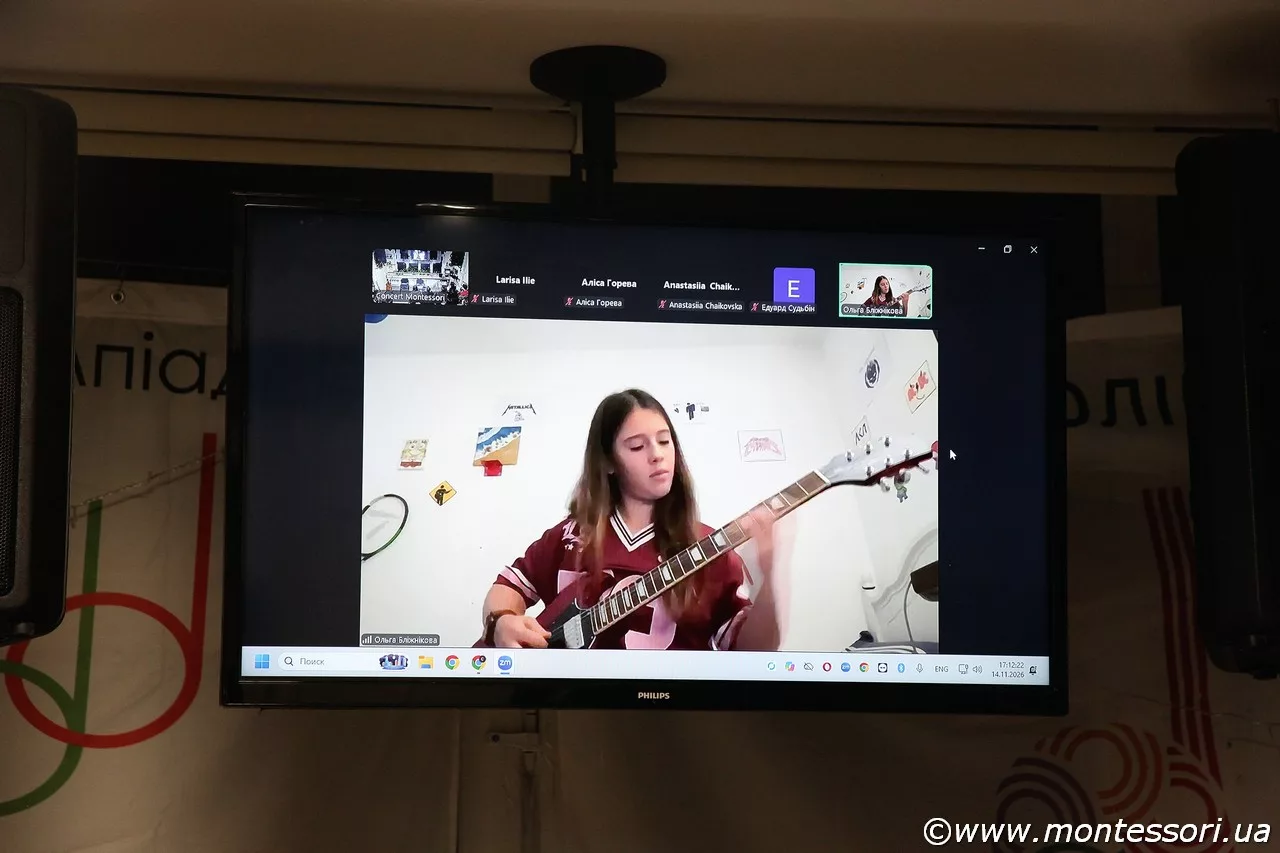
Online performances: students can take part in online concerts and competitions. Participation is optional, and students prepare a solo dance with their teacher.
News


How Ballet Lessons Are Conducted
Device for lessons: set up a computer or tablet with a camera and microphone. A larger screen makes it easier to follow the teacher’s movements. Place the device on a stable surface and position the camera so the teacher can see your whole body.
Internet connection: check the connection beforehand in the room where you will be taking lessons. A stable connection will help you see the teacher’s movements and hear the music clearly.
Lesson platform: lessons take place via Zoom or Google Meet. Before the lesson, open the link, install the app if needed and allow access to your camera and microphone.
Sound: use your device’s built-in speakers or external speakers so you can move freely during the lesson. At the start of the lesson, check with the teacher that you can hear the music and their voice clearly, and adjust the volume.
Space for lessons: clear enough space for the exercises and remove unnecessary objects and cables from the floor. Make sure the floor is not slippery and there is no furniture nearby that you could bump into. Adjust the lighting so the teacher can see your movements clearly.
Lesson link: we will send it in advance by email or through a messaging app. If you haven’t received the message or the link won’t open, contact the administrator.
Clothing, footwear and mat: prepare clothing that allows you to move freely: leggings and a T-shirt or a leotard. Discuss suitable footwear — ballet slippers or soft gymnastics shoes — with your teacher. You will need an exercise mat for floor work.
Before you begin:
Choosing exercises: during the first lesson, the teacher asks about your dance experience and goals. They suggest simple exercises to assess your level and decide where to begin.
Warm-up: the lesson begins with warm-up exercises. The teacher selects them to suit the student’s age and level.
Explaining movements: the teacher demonstrates exercises and explains what to focus on. You follow along, and the teacher suggests how to adjust the position of your torso, arms and legs.
Questions: if a movement or transition is unclear, ask the teacher to demonstrate it again. You can work through a difficult section more slowly and practice it in smaller parts.
Practice: you perform exercises and link the movements you have learned into combinations to music. You work on rhythm, balance and smooth movement.
Lesson review: together with the teacher, you discuss your progress and anything you still find difficult. The teacher suggests familiar exercises for home practice and explains what to focus on when practicing on your own.
Practice at home: the teacher will suggest familiar exercises and sections of the dance to practice on your own. Parents can help their child choose a time for home practice and prepare a suitable space.
Feedback: the teacher will explain what has improved and what still needs work. Parents can discuss their child’s progress and difficulties with the teacher, ask questions and get advice.
Upcoming lessons: the teacher selects new exercises based on how the student performed in previous lessons. They return to difficult movements and spend more time on them. Students and parents can discuss their preferences for the program with the teacher.
In online ballet lessons, your child learns at home with guidance from a teacher. The teacher helps them learn movements and dance sequences, while parents help them prepare for lessons and make time for ballet.
Ballet Teachers

Anastasiia Ilienko
Ballet, Contemporary Dance, Yoga

Olena Tseplova
Ballet, Contemporary Dance, Yoga
Ballet Course Program
 Preparatory
level
Age: 5–6 years

Modules
Introduction to ballet: we learn to pay attention to posture and body position. We copy the teacher’s movements and practice simple coordination and balance exercises.
First ballet movements: we explore basic arm and foot positions and learn simple steps. We practice moving smoothly and connecting movements into short sequences.
Warm-up and flexibility: we do simple warm-up, stretching and strengthening exercises. The teacher chooses games and activities to suit the child’s level.
Music and dance: we learn to move in time with the music, distinguish between fast and slow tempos and convey the mood of the music. We learn a short dance that the child can perform for their parents.
 Beginner
level
Age: 7 years and older

Modules
Basic ballet technique: we learn plié, relevé and other fundamental movements. We practice exercises with support and learn to perform them accurately and smoothly.
Body position and coordination: we pay attention to posture and the position of the torso, arms and legs. We learn to maintain balance and coordinate our movements.
Musicality: we learn to hear the rhythm and express the character of the music through movement. We try performing the same combination at different tempos.
Flexibility and strength: we do stretching and strengthening exercises. The teacher sets the intensity to suit the student’s age and level.
Dance combinations: we link familiar movements into short sequences and practice transitions. We memorize the order of the movements and perform the dance to music.
Preparing for a performance: we work on expressive movement and facial expressions and learn to dance in front of an audience. If the student wishes, we prepare a routine for an online concert or competition.
 Intermediate
level
Age: 10 years and older

Modules
Ballet technique: we practice exercises with and without support. We work on stability, accurate positioning and smooth movement.
Dance combinations: we learn longer sequences and practice transitions and changes of direction. We learn to vary the tempo and quality of our movements while maintaining precision.
Jumps and turns: we practice preparing for jumps, landing and maintaining balance during turns. The teacher chooses elements to suit the student’s level.
Physical conditioning and performances: we work on strength and endurance through exercises for the legs, back and core. We learn a dance routine and, if the student wishes, prepare it for an online concert.
 Advanced
level
Age: 12 years and older

Modules
Ballet technique: we refine our jumps and turns, linking them into more complex combinations. We learn to maintain precision and balance throughout each sequence.
Expressive performance: we work on arm movements, poses and facial expressions. We discuss the character we are portraying and learn to convey their personality through dance.
Preparing for pointe work: we do foot and ankle exercises and work on stability. We discuss the possibility of pointe training separately after the student’s readiness has been assessed.
Repertoire and performances: we learn excerpts from classical variations, as well as solo routines. We refine the details of the performance and rehearse the whole dance. If the student wishes, we prepare for online concerts and competitions.
On the ballet course, children learn the foundations of classical dance and gradually progress to more complex movements and routines. During lessons, they work on technique, flexibility and expressive performance.
Book a trial lesson in ballet!
Course Schedule
We teach every day, including weekends
To coordinate the day of the week and the time for your lesson, please write to us, and the administrator will arrange a convenient schedule for you!Contact Us


Student Reviews of the Course
Anna Vetrova

Lena
Tony
Anastasiya

Наталья С.
Review language: Russian
Вика О.
Review language: Russian
Артем
Review language: Russian
Елена Голушко
Review language: Russian
Зоя П.
Review language: Russian
Ангеліна
Review language: Ukrainian
Roman
Review language: Ukrainian
Frequently Asked Questions (FAQ)
Helpful Articles

Ballet and Culture: How Classical Dance Began and Changed
Ballet first appeared in fifteenth-century Italy, during the Renaissance, and grew into a stage art in France and Russia. Now...

How to Choose a Ballet School for Your Child
A good ballet school is above all a teacher who sees your child and protects their health. Below is what...

Ballet and Self-Confidence: What the Research Says
You often read that ballet makes children more self-confident. Let us look at what research says about this, and what...

Ballet and Self-Expression: Telling a Story Without Words
In ballet, no one speaks or sings: the story, the character and their feelings are conveyed through movement. Here is...

Ballet for Beginners: Positions, Barre and First Exercises
Classical dance starts with the basics: how to place your feet, how to hold your back, how to work at...

The Benefits of Ballet for Physical and Mental Health
Ballet is both an art and a workout. What is known about dance’s benefits for body and mood, where ballet...

Ballet and Music: How Music Shapes a Ballet Class
Classical ballet is usually danced to classical music, and in class, too, the music is more than background. Here is...

How to Prepare for a Ballet Performance
A first performance is a big event for a child, even if the audience watches online. In our course, students...

Ballet for Children: What Age to Start
Is it too early to start your child in ballet, or too late? Here is what age our course starts...
Gallery