Online
Bass Guitar
Classes
In our bass guitar course, you will learn the bass parts of your favorite songs, work on rhythm and playing technique, and prepare to perform in online concerts!



Trial Lesson
To book a trial lesson, sign up and pay $8.00.
The trial lesson is one-on-one and lasts 45 minutes.

Lesson Package
If you enjoyed the trial lesson, you need to purchase a lesson package by prepaying for at least 4 lessons.
The price of a 4-lesson package is $60.00 (one lesson costs $15.00).
Payment must be made at least 24 hours before the lesson starts.

Discounts
When you purchase 8 lessons or more, a discount applies. The more lessons, the more you save!
Course Overview
The online bass guitar course is designed for children aged 10 and above, as well as adults. During lessons, you will learn the bass parts of your favorite songs, develop playing technique and explore music theory. The repertoire includes rock, pop, blues, funk and jazz. Your teacher will suggest material based on your experience and musical interests.
You can start from scratch. The program includes beginner, intermediate and advanced levels. If you already play, your teacher will listen to your performance during the first lesson and help identify which skills to develop next.
Lessons take place online with a teacher in real time. You work through bass parts, learn different techniques, practice exercises and play along with backing tracks. Your teacher demonstrates hand movements, listens to your playing and explains how to correct mistakes. We agree on the schedule before you begin.
Particular attention is given to the role of bass in music: you learn to listen to the drum part, follow changes in harmony and maintain the rhythm. You also become familiar with bass amplifier settings and, when needed, the effects used in your chosen songs.
You can prepare the parts you have learned for an online concert or competition. Your teacher will help you choose a song for the performance and rehearse it from beginning to end with accompaniment.
Teaching Approach
You begin by choosing a song and working through its bass part. Your teacher explains the rhythmic pattern, helps you read the sheet music or tablature and suggests suitable fingering. New techniques are first practiced through exercises and then applied to the music.
You practice difficult passages separately at a slow tempo. Once your movements become more confident, you try playing the entire part. Working with a metronome and backing track helps you check whether you can maintain the tempo, come in on time and observe rests accurately.
Music theory is connected to practice: scales, keys and chord construction are explored through the parts you are learning. You gradually begin to understand why particular notes are used in a bass line and how they fit with the other instruments.
Your pace of learning depends on how you progress through the material. If a technique needs more work, your teacher selects exercises and explains how to practice at home. You move to the next level after completing the program.
Benefits of Our Approach
Clear tasks: your teacher identifies what needs improvement in your bass part and explains how to work on it.
Focus on rhythm: during lessons, you learn both to play the correct notes and to perform your part with accompaniment.
Learning at your own pace: you can spend as much time as you need to master a new technique or a difficult passage.
Repertoire selection: the music reflects your preferences, while the difficulty of the parts matches your skill level.
Feedback while you play: your teacher notices inaccuracies, demonstrates the technique you need and encourages you to correct mistakes straight away.
Performance instead of exams: you can perform your prepared part with accompaniment at an online concert or competition.
Continued learning: after completing the program, you can keep taking lessons, expand your repertoire and refine your technique with our teacher.
Beginner Level
Age: 10 and above. This level is suitable for students with no playing experience. You become familiar with the instrument, learn to hold the bass guitar and position your hands correctly, and connect it to an amplifier. You learn to play with your fingers, are introduced to using a pick and try your first simple bass parts.
The program includes music notation basics, reading tablature, rhythm exercises and an introduction to scales. Your teacher explains how to find notes on the fretboard and choose comfortable fingering. Exercises help you coordinate both hands and produce the correct sound.
Through simple songs, you learn to hear the bass in a recording, repeat rhythmic patterns and play with accompaniment. By the end of the level, you can prepare a bass part for an online concert.
Intermediate Level
Age: 13 and above. This level requires basic playing skills. Bass parts become more challenging, with more varied rhythms, position shifts and fast passages. You work on finger dexterity, accuracy and maintaining a steady tempo.
Greater attention is given to techniques associated with different styles, accents and dynamics. Playing along with backing tracks, you learn to coordinate your bass part with the drums and follow the song’s structure — its introduction, verses, choruses and other sections.
You also try improvising with familiar scales and chords, creating short musical phrases. Your teacher helps you prepare your chosen song for an online concert or competition.
Advanced Level
Age: 15 and above. At the advanced level, you learn challenging bass parts and solos, refine your technique and focus on performance details. You plan your fingering, phrasing, dynamics and tone to suit the style of the music.
Improvisation work includes creating your own bass solos over a given chord progression. You try different rhythmic and melodic ideas, discuss them with your teacher and choose the most effective ones.
Preparing a concert program involves rehearsing with accompaniment, playing songs from beginning to end and working on difficult passages. After an online concert or competition, you discuss the result with your teacher and decide what to focus on in future lessons.
Course Goals
Playing technique: learn hand positioning and bass guitar techniques, develop finger dexterity, and work on precise movements and a clear sound.
Reading music and tablature: learn to read sheet music and tablature, understand rhythmic patterns and musical markings, and work through bass parts independently.
Rhythm and accompaniment: maintain a steady tempo, come in accurately and understand how the bass part relates to the drums.
Music theory: become familiar with scales, keys and chord construction, and learn to understand the harmonic foundation of the songs you are studying.
Repertoire: play parts in different styles and recognize the distinctive rhythms, sounds and playing techniques of each.
Using equipment: learn to connect your bass guitar, use the controls on the instrument and amplifier, and choose settings for practice.
Improvisation: create your own musical phrases and bass solos based on familiar harmony.
Performance experience: prepare bass parts to play along with backing tracks, perform in online concerts and competitions, and learn to manage performance nerves.
Benefits of Online Bass Guitar Lessons
A sense of rhythm: metronome exercises and playing with accompaniment help you notice when you speed up or slow down, play rhythmic patterns more accurately and observe rests.
A musical ear: you learn to distinguish the bass part in a recording, hear changes in harmony and notice wrong notes in your own playing.
Hand coordination: when playing, one hand presses the strings against the fretboard while the other produces the sound. Exercises help you learn to coordinate both hands and play bass parts accurately.
Understanding music: as you work through a song, you discover how the bass supports the harmony and interacts with the drum rhythm. You begin to hear more detail in familiar songs, paying attention to individual instrumental parts.
Musical memory: learning a part involves remembering the notes, rhythm, sequence of sections and hand movements. Gradually, you can play familiar parts from memory.
Independence: home practice teaches you to choose a task, divide your time between exercises and repertoire, and assess your playing by ear.
Performance experience: preparing for online concerts helps you learn to play a song from beginning to end for an audience and manage performance nerves.
Time for your favorite music: lessons give you the opportunity to learn parts you have always wanted to play and gradually build your own repertoire.
How to Practice Between Lessons
Follow your teacher’s assignment: start with the exercises and passages selected during the lesson. Make a note of anything you still find difficult so you can revisit it with your teacher.
Learn at a slow tempo: first get the notes and rhythm right, then gradually increase the tempo. After working on difficult passages, try playing the entire part.
Use a metronome: choose a tempo at which you can play without stopping. Your teacher will explain how to use a metronome when practicing a particular part.
Record your playing: a short recording can help you hear things you missed while playing. You can discuss it at your next lesson.
Listen to the bass in music: pay attention to its rhythm and sound in different songs. During lessons, discuss with your teacher examples of parts you would like to learn.
At your first lesson, you will meet your teacher and discuss the music you want to play. If you already have experience, you can perform a familiar bass part. If you are starting from scratch, your teacher will show you how to hold the instrument and position your hands, and help you learn your first simple bass guitar part.
News





How Bass Guitar Lessons Are Conducted
Equipment: have your bass guitar, bass amplifier and instrument cable ready. A computer or tablet with a camera and microphone is suitable for video calls. Both hands and the neck of your instrument should be visible on camera.
Internet connection: check your connection before the lesson. A stable connection will help you hear your teacher’s explanations and playing clearly.
Lesson platform: lessons take place on Zoom or Google Meet. Open the lesson link in advance and install the app if needed. Allow access to your camera and microphone.
Sound: headphones will help you hear your teacher and musical examples more clearly. Play a few notes at the start of the lesson so your teacher can check how your bass guitar sounds. Adjust the amplifier volume if needed so that both your instrument and your voice can be heard.
Lesson link: we will send it in advance by email or through a messaging app. Before the lesson, check that you have received the message and that the link opens.
Sheet music and tablature: you will receive the materials you need before the lesson. Print them out or open them on screen so you can easily read your bass part while playing.
Setting up your practice space: sit with your bass guitar in front of the camera. Check that your face, both hands and the neck of the instrument are visible. Place the amplifier within easy reach so you can adjust the volume.
Joining the lesson: open the Zoom or Google Meet link 5–10 minutes before the lesson starts. Check your camera and microphone, and connect your bass guitar to the amplifier — this will leave time to resolve any technical issues.
Teacher’s guidance: your teacher will help you develop proper playing posture and hand positioning, choose exercises and explain how to learn a bass part. As you play, they will suggest where to refine the rhythm, change the fingering or practice a difficult transition.
Questions: if you find a technique difficult or an assignment unclear, pause and ask your teacher. You can explore it in more detail and try again.
Practice: you spend most of the lesson playing — doing exercises, learning bass parts and practicing individual passages. When you are ready, you will try playing the whole part with a backing track.
Technique demonstrations: your teacher will play a passage, drawing your attention to finger movements, rhythm and sound. If needed, they will demonstrate it slowly to make it easier for you to follow.
Wrapping up: together with your teacher, you will discuss what went well and what still needs practice. Your teacher will set tasks for home practice and explain how to work on them.
For home practice, your teacher will select sheet music, tablature and recordings of the pieces you are learning, and explain which exercises and passages to practice before the next lesson. If needed, they will suggest videos demonstrating bass guitar techniques.
Try playing the bass part of your favorite song! Your teacher will help you choose a version that suits your level, work through the notes and rhythm, and gradually prepare to play the part with a backing track.
Bass Guitar Teachers

Artem Ostroverkh
Bass Guitar, Classical Guitar, Electric Guitar, Ukulele

Igor Yaremenko
Bass Guitar, Classical Guitar, Electric Guitar, Ukulele

Anzhelika Udod
Bass Guitar, Classical Guitar, Electric Guitar, Ukulele

Nikita Demidov
Bass Guitar, Classical Guitar, Electric Guitar, Ukulele
Bass Guitar Course Program
 Beginner
level
Age: 10 years and older

Modules
Getting to know the bass guitar: connecting the instrument to an amplifier, hand positioning, and playing with fingers and a pick.
Learning simple bass parts. The basics of reading sheet music and tablature, and an introduction to rhythm, scales and chord construction.
Exercises for hand coordination and finger dexterity. Working on precise movements and a clear sound.
Learning to move between strings and shift positions on the fretboard. Playing along with a metronome and backing tracks, and working on a steady tempo.
Learning parts suited to your skill level in different styles: rock, pop, blues, funk and jazz. Exploring the role of the bass in each song.
Preparing to play a complete bass part with accompaniment. Rehearsing and performing in an online concert.
 Intermediate
level
Age: 13 years and older

Modules
Playing along with backing tracks: learning bass parts with recorded accompaniment. Working on rhythm, accents and accurate entries.
Learning intermediate bass parts. Working on position shifts on the fretboard, accents and dynamics.
Learning more complex rhythmic patterns and fast passages. Taking the first steps in improvisation using familiar scales and chords.
Preparing bass parts and solo passages for performance with accompaniment. Performing in an online concert or competition.
 Advanced
level
Age: 15 years and older

Modules
Learning bass parts in different styles. Developing advanced playing techniques through selected songs.
Working on challenging parts and solos: choosing fingering, shaping phrases, and developing dynamics and expression.
Preparing a concert program. Rehearsing with backing tracks, playing songs from beginning to end and building confidence before performing.
Performing in an online concert or competition. Discussing the performance with your teacher and choosing repertoire for future lessons.
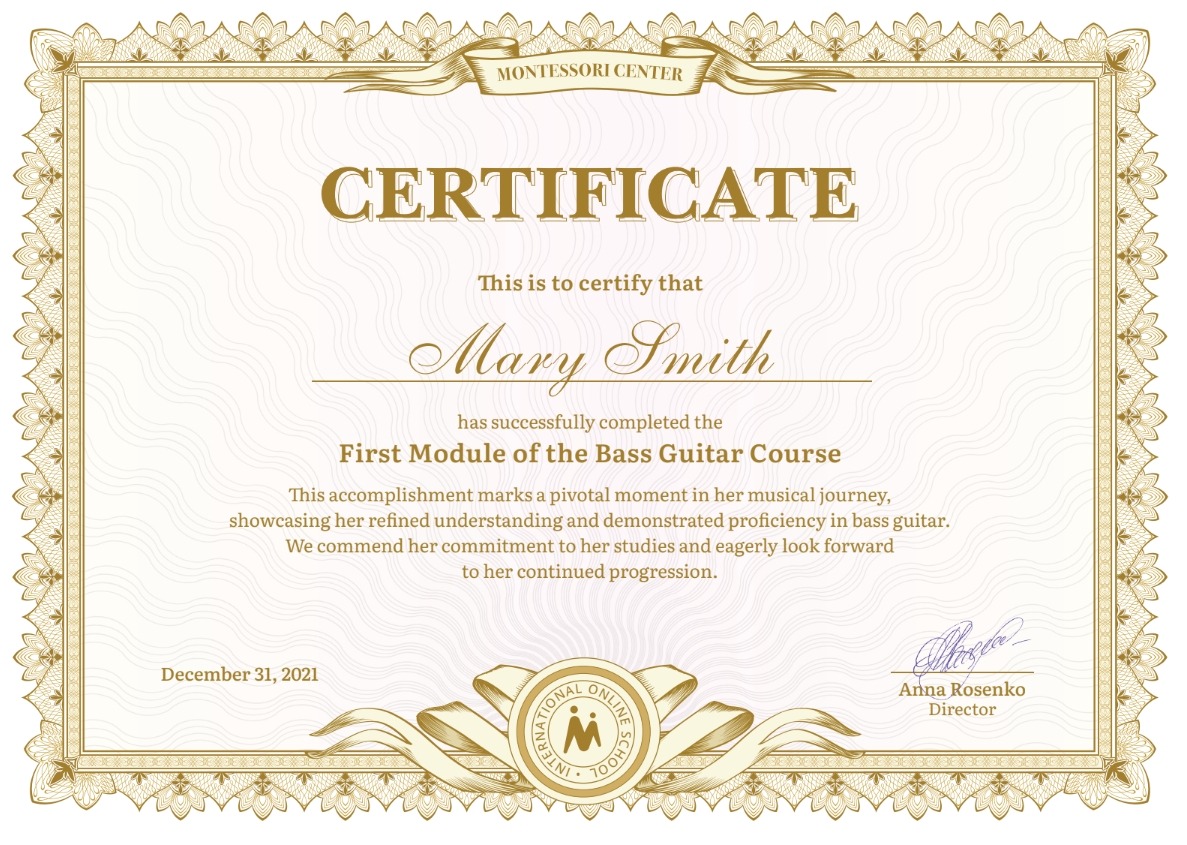
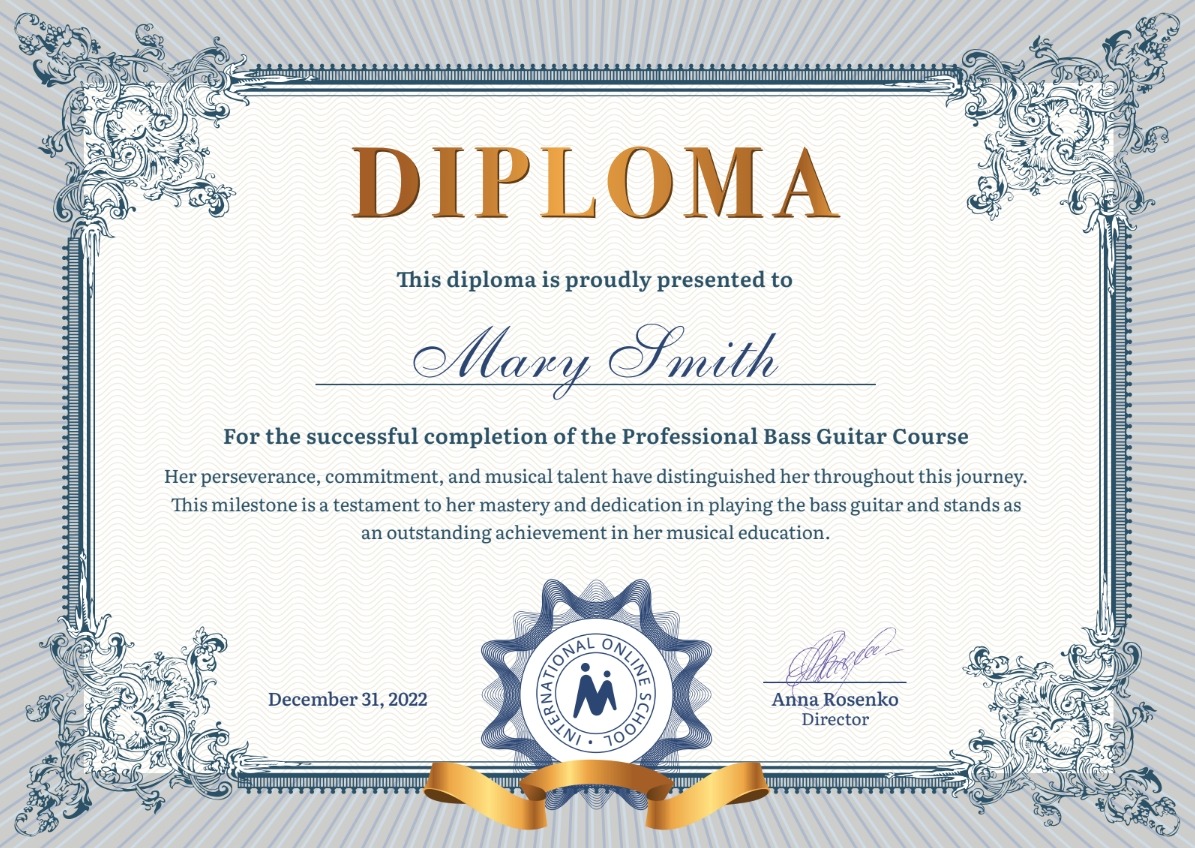
The bass guitar course is suitable for children aged 10 and above and adults of any age. The program includes beginner, intermediate and advanced levels. At the beginner level, you can start from scratch with no musical experience. If you already play, your teacher will help you choose a level that matches your skills. The school awards a diploma upon completion of each level.
Book a trial lesson to meet your teacher and start learning your first bass part. If you already play, perform a familiar song and discuss which skills you would like to develop next.
Course Schedule
We teach every day, including weekends
To coordinate the day of the week and the time for your lesson, please write to us, and the administrator will arrange a convenient schedule for you!Contact Us


Student Reviews of the Course
Olga

Marta
Natella
Alona

Альбина Е.
Review language: Russian
Мама Валентины
Review language: Russian
Анастасия Л.
Review language: Russian
Рената
Review language: Russian
Оля Тоненька
Review language: Russian
Ira
Review language: Ukrainian
Frequently Asked Questions (FAQ)
Helpful Articles
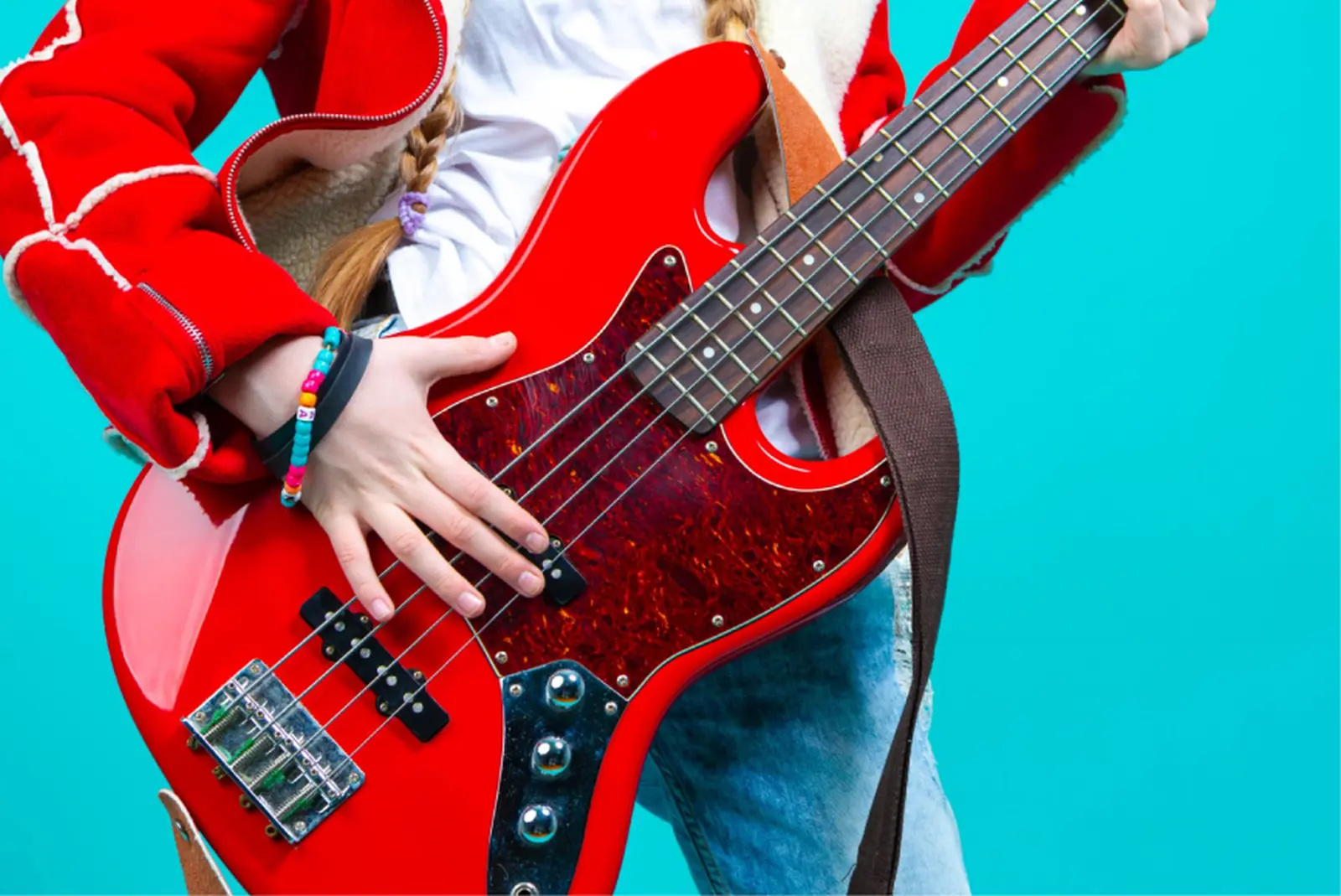
Famous Bassists and Their Contributions to Music
The bass is rarely in the spotlight, yet bassists give a song its rhythm and foundation. Below are ten bassists...
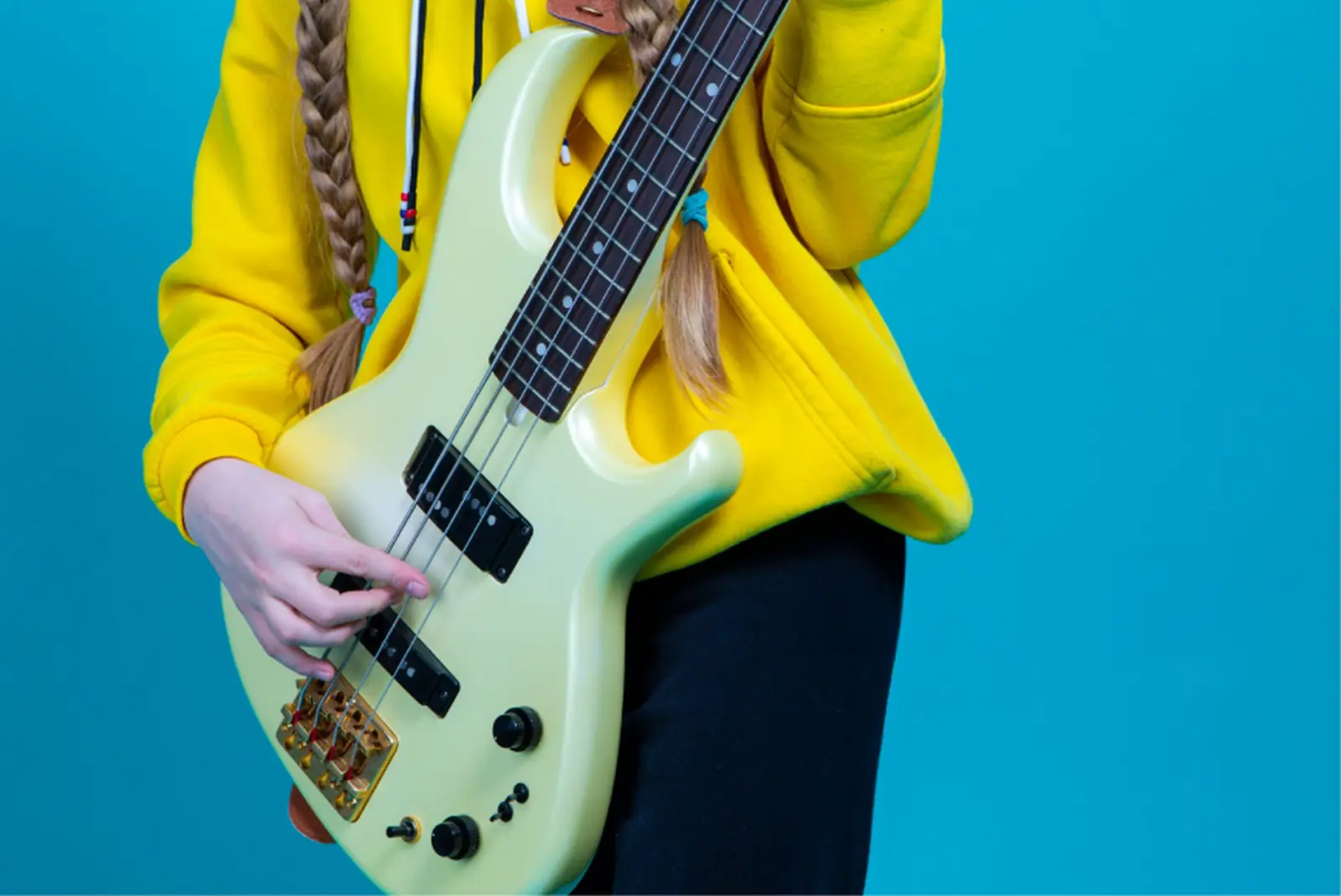
The Basics of Playing the Bass Guitar: First Steps for Beginners
The bass guitar gives a song its rhythm and harmonic foundation. Below are the first steps for complete beginners: how...
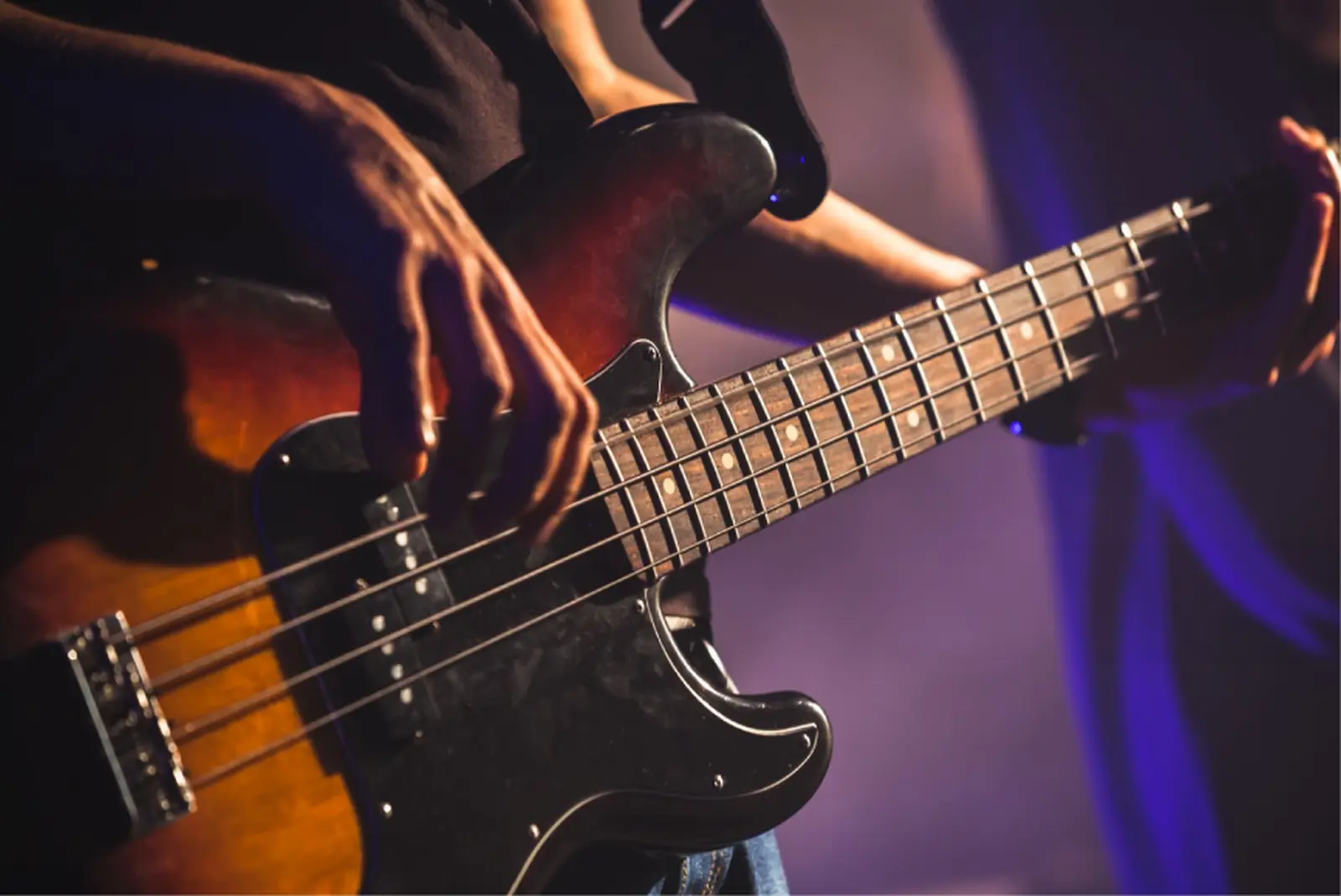
Modern Bass Guitar Techniques: What You Need to Know
The bass guitar appeared in the 1950s, and within a few decades bassists had developed a whole range of techniques...
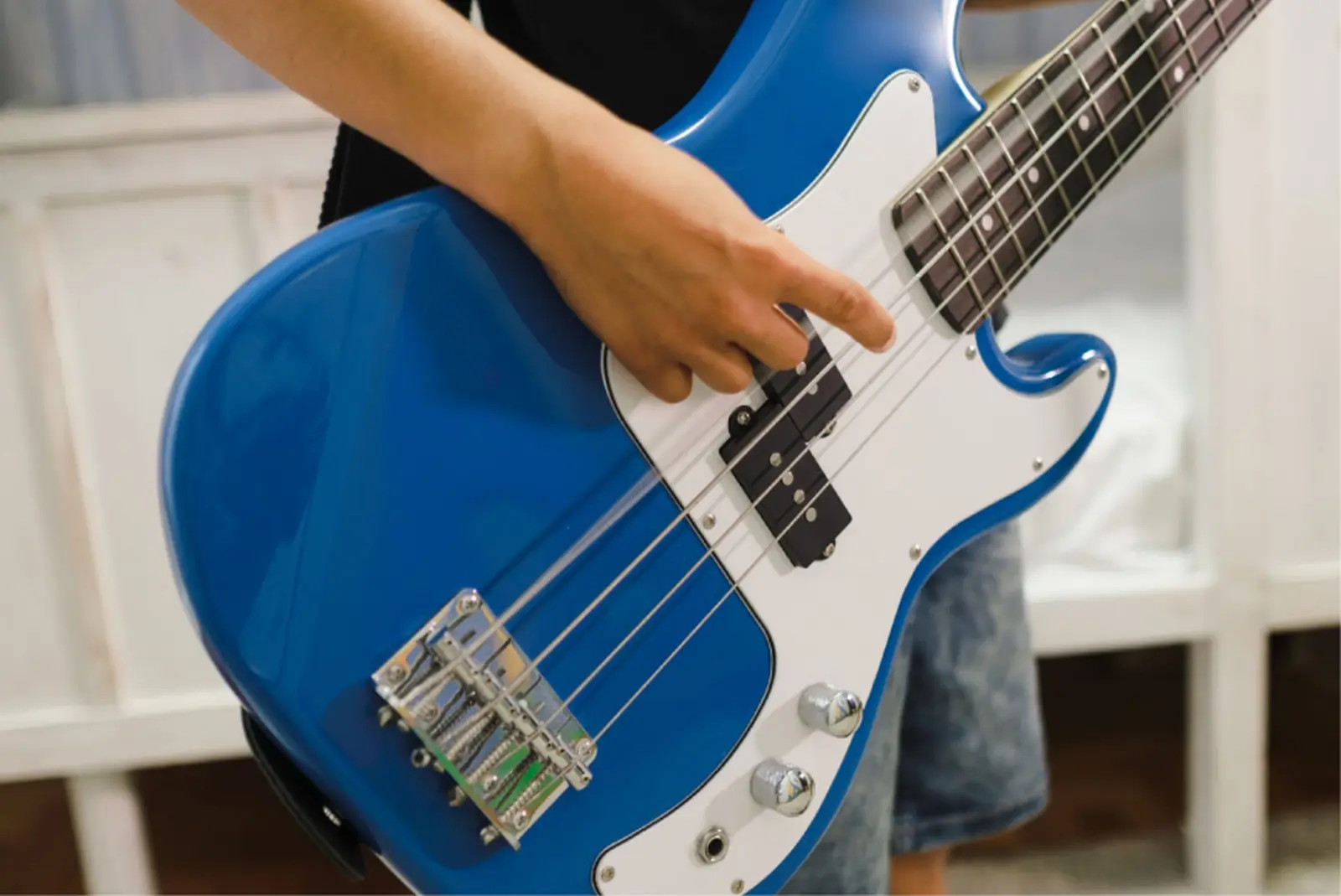
What a Bassist Plays in Rock, Funk, Jazz, and Reggae
In every style, the bass has its own job: sometimes it holds the foundation steadily with the drums, sometimes it...
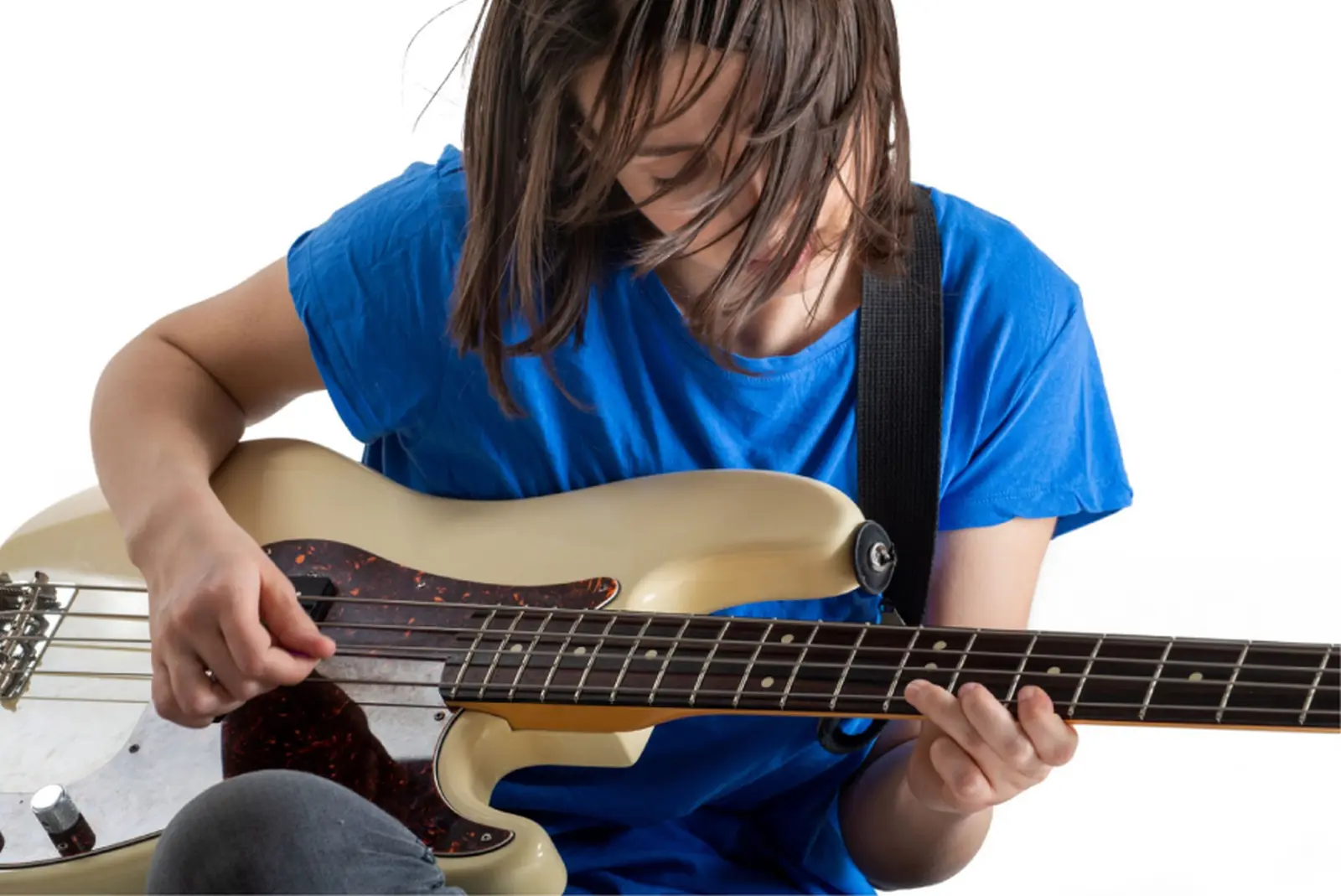
Bass Guitar for Kids: What Age to Start and How to Begin
The bass guitar connects the drums and the harmony in a song. When a child wants to play it, parents...
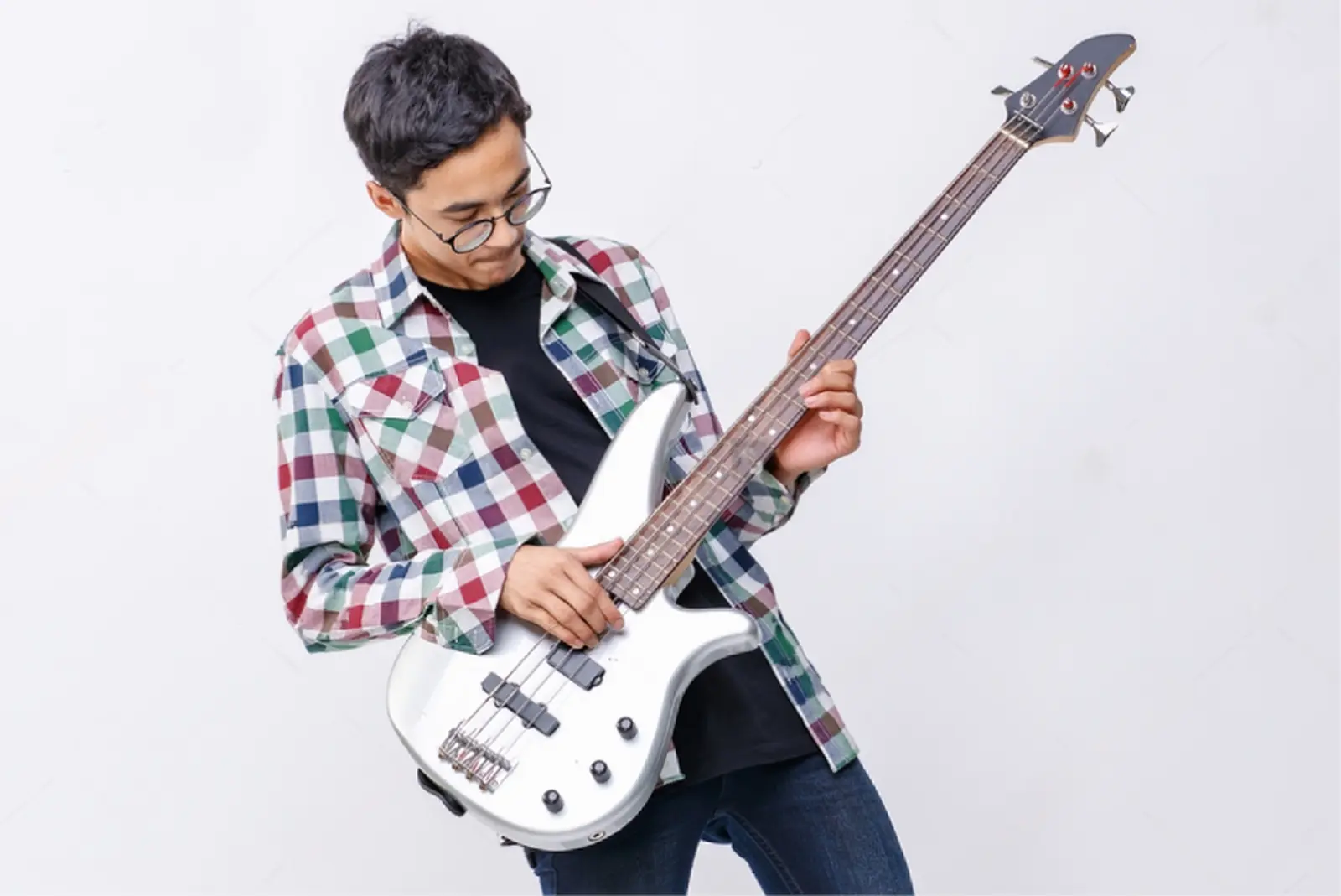
Choosing Your First Bass Guitar: Tips for Beginners
Choose your first bass for comfort: an awkward instrument makes regular practice hard. Below is how many strings you need,...
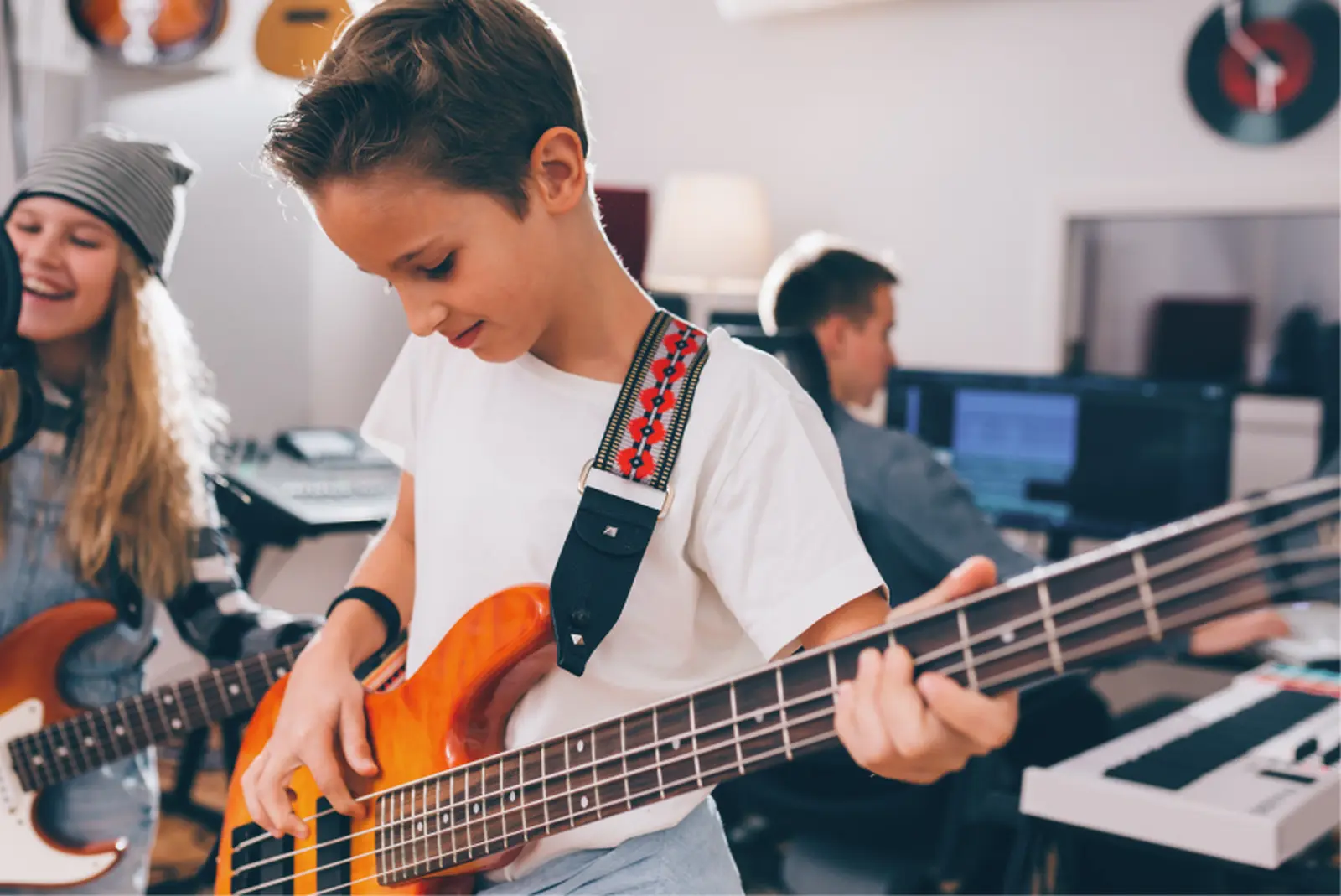
10 Famous Bass Guitars Every Beginner Should Know
Here are ten famous bass guitars, from the first Fender Precision to the headless Steinberger: when they appeared, what sets...
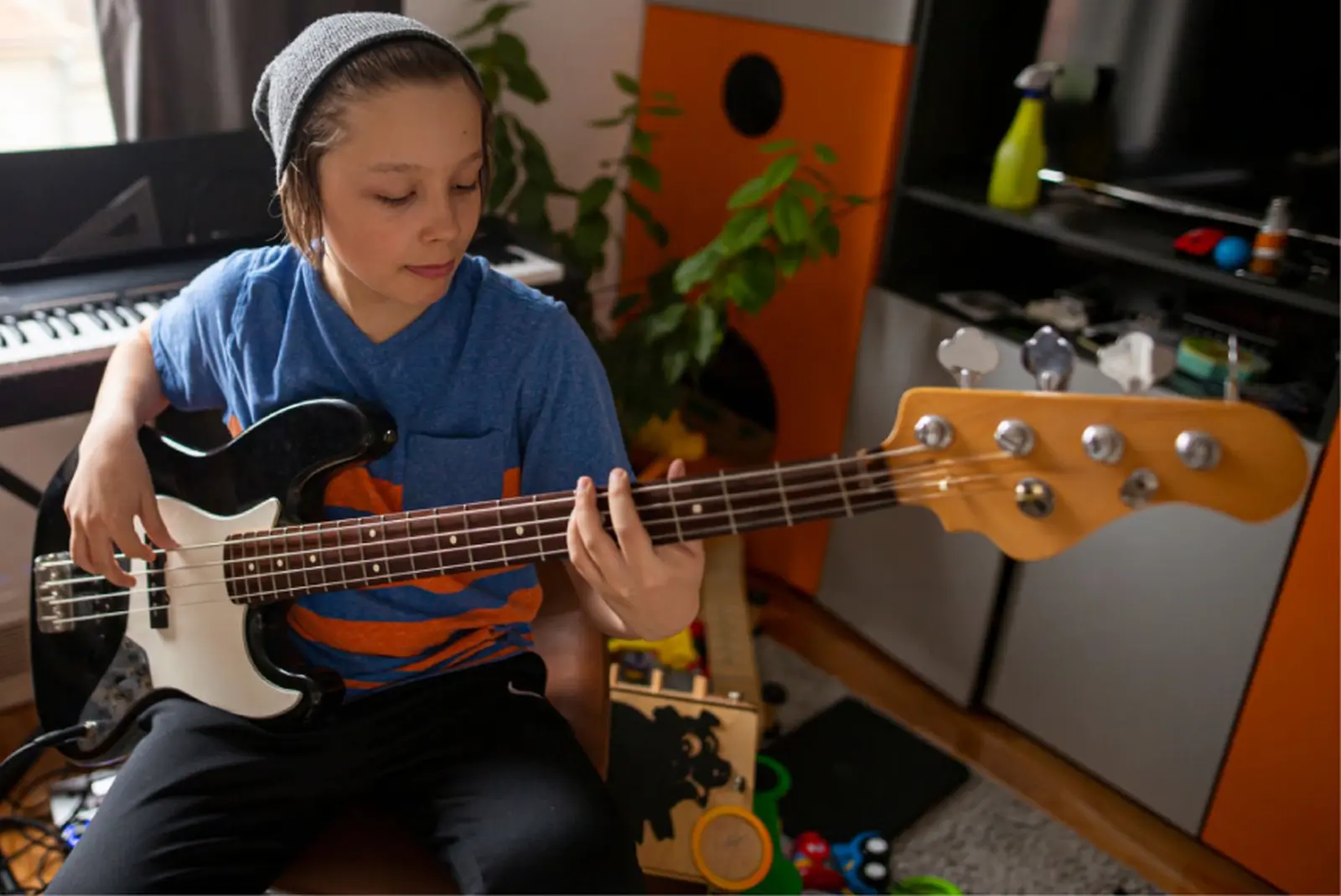
Rhythm and Groove: Playing Bass Together with a Drummer
The bass guitar is responsible for both harmony and rhythm: the bassist plays the root notes of the chords and,...
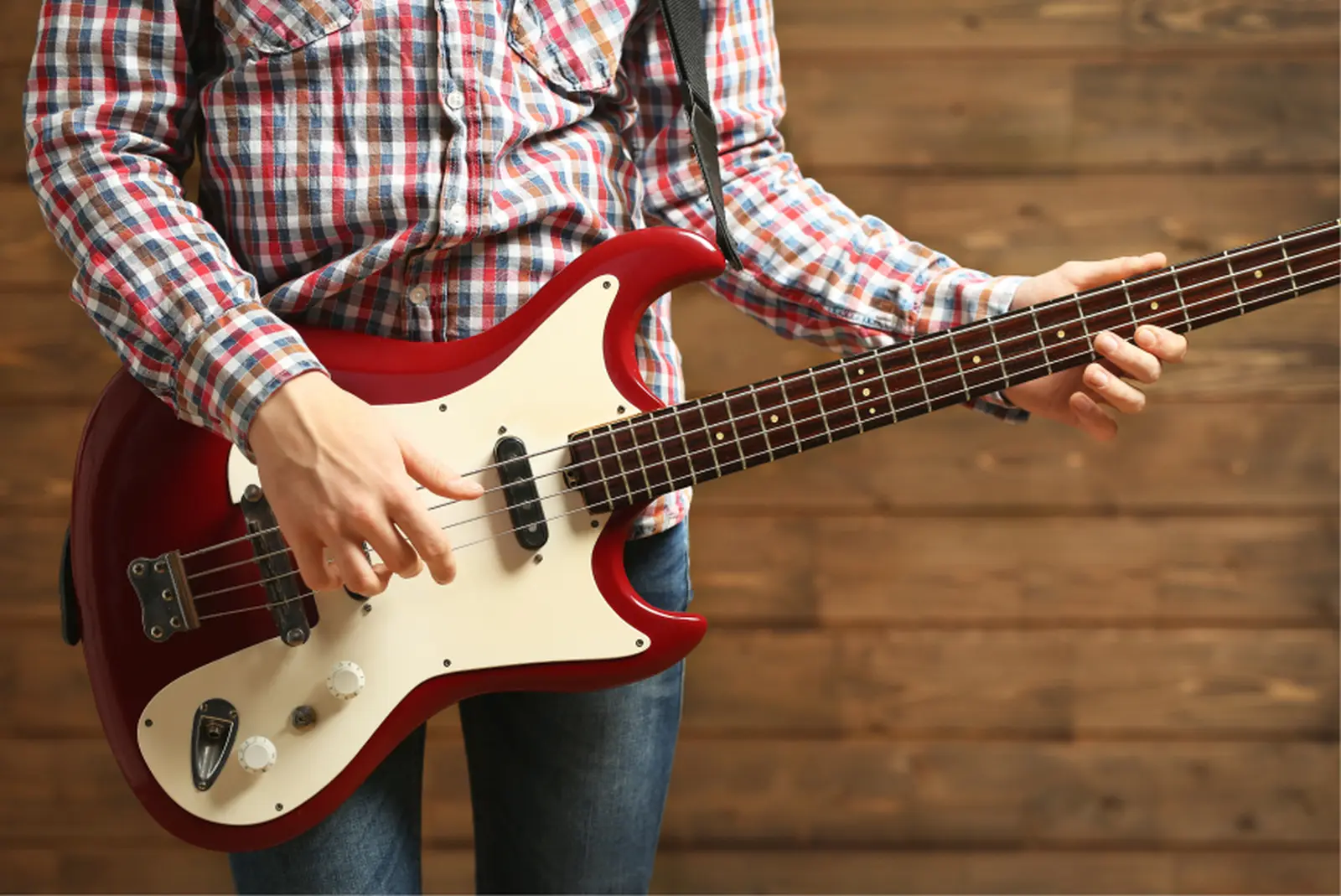
The History of the Bass Guitar: From the First Models to Today
Until the mid-twentieth century, the low notes in popular music came from the double bass, which is big, heavy and...
Gallery