How to Learn Hiragana, the First Japanese Syllabary
· Updated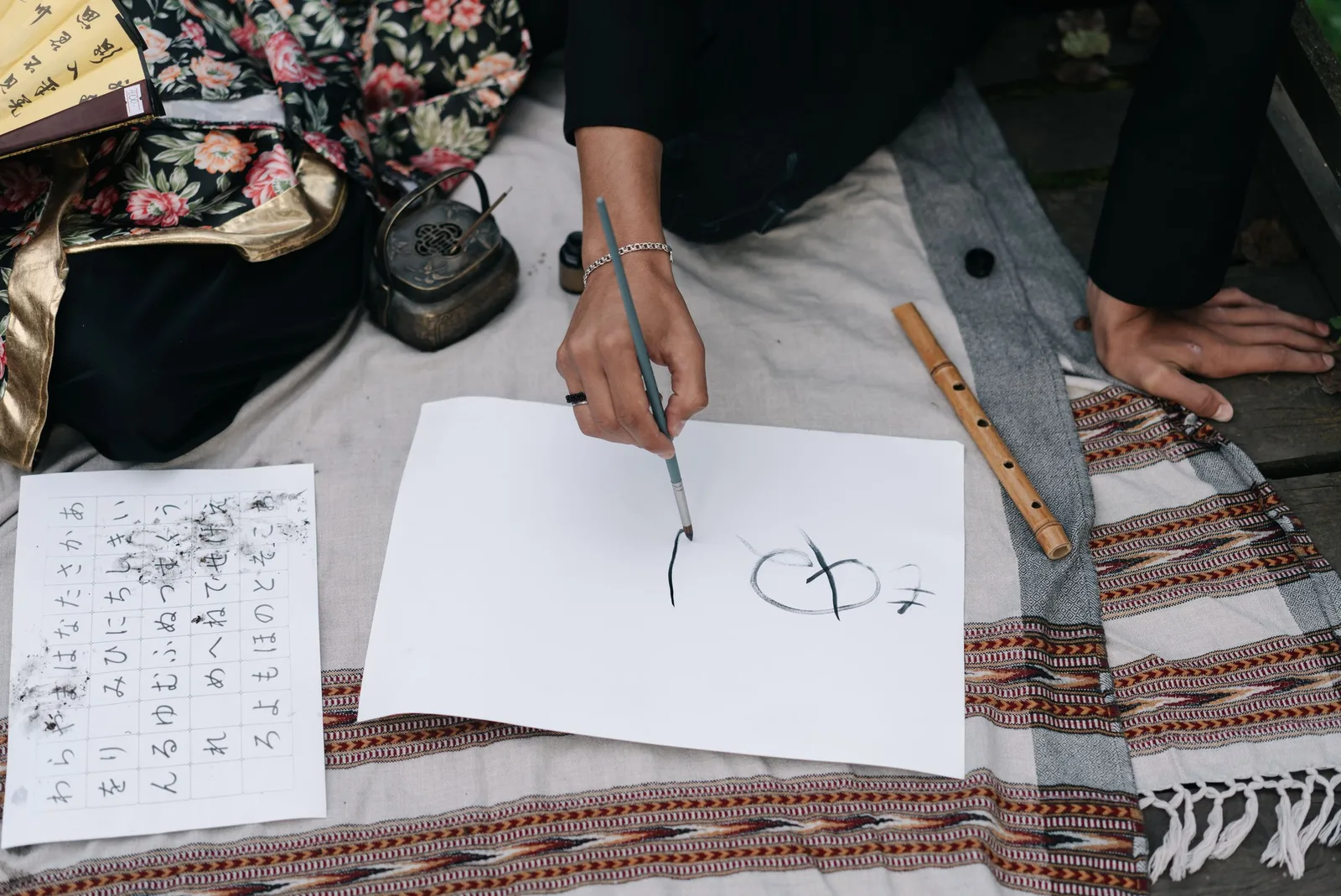
Hiragana is the first of the two Japanese syllabaries: Japanese children learn it first, and it is also used for reading aids printed above kanji. Below is what these characters are, how many there are, what marks and small forms they take and how to learn hiragana step by step.
What Hiragana Is
Hiragana is a syllabary: nearly every character stands for a syllable rather than a single sound, either a vowel (あ, “a”), a consonant plus a vowel (か, “ka”) or the nasal ん. The name means “ordinary” or “plain” kana. The characters grew out of cursive forms of kanji; for example, あ comes from 安. Hiragana is used for grammatical endings after kanji, for particles, for words that have no kanji or whose kanji is too complex, and for furigana, the reading guides above kanji.
How Many Characters There Are
Modern hiragana has 46 basic characters: five vowels, consonant-plus-vowel syllables and ん. They are easiest to learn from the gojūon chart, whose name means “fifty sounds”: its columns follow the vowels a, i, u, e and o, and its rows follow the consonants, from ka, sa, ta and na onward. Two more characters, ゐ and ゑ, survive only in a few names.
Marks and Small Characters
- Dakuten, two small strokes ゛, make a voiceless consonant voiced: k becomes g, s becomes z, t becomes d and h becomes b (か “ka” → が “ga”).
- Handakuten, a small circle ゜, turns h into p (は “ha” → ぱ “pa”).
- A small ゃ, ゅ or ょ after a character ending in i forms a blend: き + ゃ = きゃ “kya.”
- A small っ doubles the next consonant: きって “kitte.”
How to Learn Hiragana Step by Step
- Learn the chart row by row, five characters at a time: あいうえお, then かきくけこ and so on.
- Write each character by hand, following the stroke order.
- Review with spaced repetition flashcards, in an app or on paper.
- Read familiar words right away: ねこ “neko” is cat, and いぬ “inu” is dog.
- Once you read the basic characters confidently, add dakuten, handakuten and the small characters.
- Then move on to katakana and to texts with furigana, such as manga, covered in Manga as a Tool for Learning Japanese.
Hiragana in Our Course
Reading in our course begins with hiragana and katakana: first single characters and familiar words, then short dialogues and stories. Young children start by speaking and listening, and the teacher adds reading and writing once a child is ready. Where to begin Japanese from scratch is covered in Basics of the Japanese Language: First Steps for Beginners.
Our Japanese Course
Our teachers work with both children and adults, whether a student is starting from zero, wants to speak more fluently or is getting ready for an exam; each program is built around the student’s level and goals, and lessons also introduce Japan’s traditions and daily life. Lessons are open to students from age 5. A trial lesson costs $8: it is individual and lasts 45 minutes. More about the course is on the Japanese page.


