How to Help Your Child with Physics: Tips for Parents
· Updated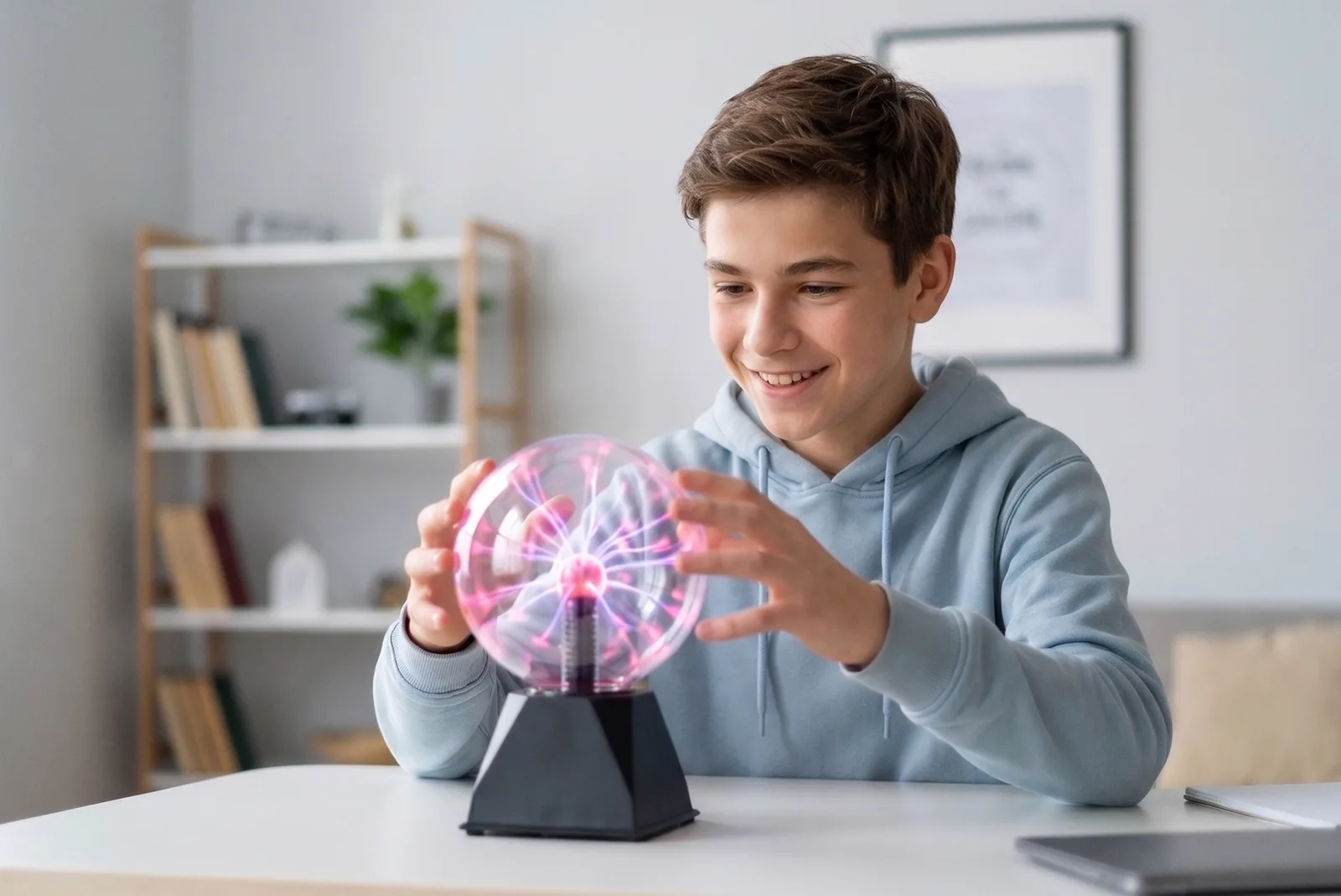
Many students find physics hard, and parents often do not know how to help, especially if their own school physics is a distant memory. The good news is that you do not need to be a physicist to support your child. Below is why physics can be tough, what you can do at home, how to handle homework and when to bring in a tutor.
Why Physics Feels Hard
- Topics build on each other: a new one depends on concepts, laws and calculation methods from earlier ones, so one gap leads to the next.
- Physics needs math. For the American AP Physics 1 course, for example, students are advised to have finished geometry and to be taking Algebra II at the same time.
- Everyday words take on special meanings in physics: force, power and pressure are three different things, and mass is not the same as weight.
How to Help at Home
- Agree with your child on a set time for independent study and help them keep to it.
- Set up the workspace with the school textbook, a notebook and something to write with, and before an online lesson test the camera, the microphone and the sound in the headphones.
- Praise effort and progress, and if a problem does not work out right away, allow time to think and try another way.
- Do not solve problems for your child. Ask them to explain their solution to you instead, since being able to explain it shows real understanding.
- Ask simple questions: What is unknown? What is given? Which law connects them?
- Connect physics to real life through experiments, gadgets and natural events you can talk about together.
Homework Without the Fights
The value of homework is debated. Research suggests it can help older students, especially those who struggle more, but it also causes stress for children and parents and can lead to arguments at home, and frequent criticism only adds to the tension. That is why the workload should be manageable and your help should stay calm.
When a Tutor Can Help
- Your child cannot follow a new topic because earlier ones were never fully understood.
- A quiz, test or exam is coming up.
- Homework ends in tears or arguments every time.
In our lessons, the teacher works from the program used at the child’s school, reviews the concepts and laws a new topic depends on and gives difficult topics extra time. The amount of practice between lessons is set with the school workload in mind. Families can choose help with one topic, exam preparation or support for the whole school year.
Simple experiments you can do together are collected in Easy Physics Experiments to Do Safely at Home, and a step-by-step method for problems that is easy to go through with your child in How to Solve Physics Problems: A Step-by-Step Method.
If your child attends an American school, see High School Physics in the US: Courses and AP Physics.
Our Physics Course
In our physics course, the teacher works from the curriculum of the student’s own school, Ukrainian or American, explains each topic and goes through examples together with the student, who then solves similar problems alone and walks through the solution. We help with homework and get students ready for quizzes, tests and exams. Lessons are open to students from age 13, and we suggest two lessons a week. A trial lesson costs $8: it is individual and lasts 45 minutes. More about the course is on the Physics page.


