


Online
Violin
Classes
In our online violin course, you will learn your favourite melodies, develop your playing technique, work on producing a clear tone and prepare to perform in online concerts!


Age recommendations are approximate: the child’s height and arm length should also be considered. For an initial check, place the violin on the child’s left shoulder and ask them to wrap the fingers of their left hand around the scroll. They should be able to reach it without strain, keeping a slight bend in the elbow.
The bow should match the violin’s size and feel comfortable in the child’s hand. An unsuitable bow can restrict freedom of movement and interfere with proper hand positioning.
Before buying, consult your teacher and try the violin at a music shop to make sure your child can hold it comfortably.


Trial Lesson
If you want to book a trial violin lesson, you need to schedule and pay $8.00.
The trial lesson is conducted individually and lasts for 45 minutes.

Subscription
If you enjoyed the trial lesson, you can purchase a subscription by making a prepayment for at least 4 lessons.
The price of a 4-lesson subscription is $60.00 (the cost of one lesson is $15.00).
Payment must be made at least 24 hours before the lesson's start time.

Discounts
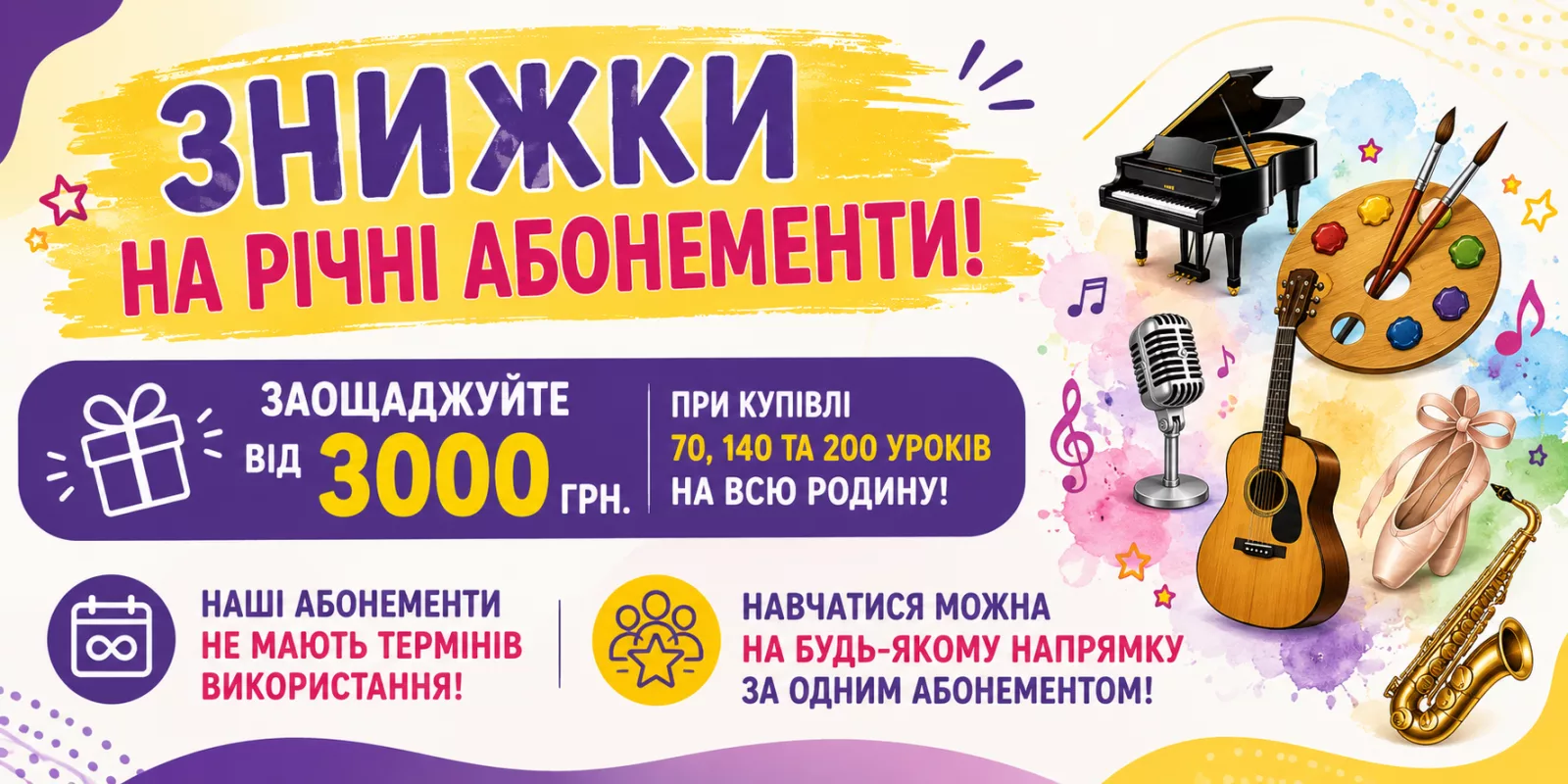
When you purchase 8 lessons or more, a discount applies. The more lessons, the more you save!
Course Overview
Our online violin program is designed for children aged five and older, as well as adults of all ages. During lessons, students learn classical repertoire and popular compositions, study music notation, and develop their performance skills. The program includes several levels of difficulty, from beginner to advanced, with a separate preparatory level for children aged 5 and older.
Individual violin lessons last 45 minutes and are available in Russian, Ukrainian, or English. Lesson schedules are arranged according to students' preferences and time zones, making it convenient to combine music lessons with school, work, and other activities.
Lessons take place online via Google Meet and Zoom. Our teachers hold higher education degrees in music and have extensive teaching and performance experience, including performing as members of orchestras.
Lesson frequency is determined individually, but we recommend taking two lessons per week. This schedule helps students make steady progress, reinforce their skills, and work consistently on their homework assignments.
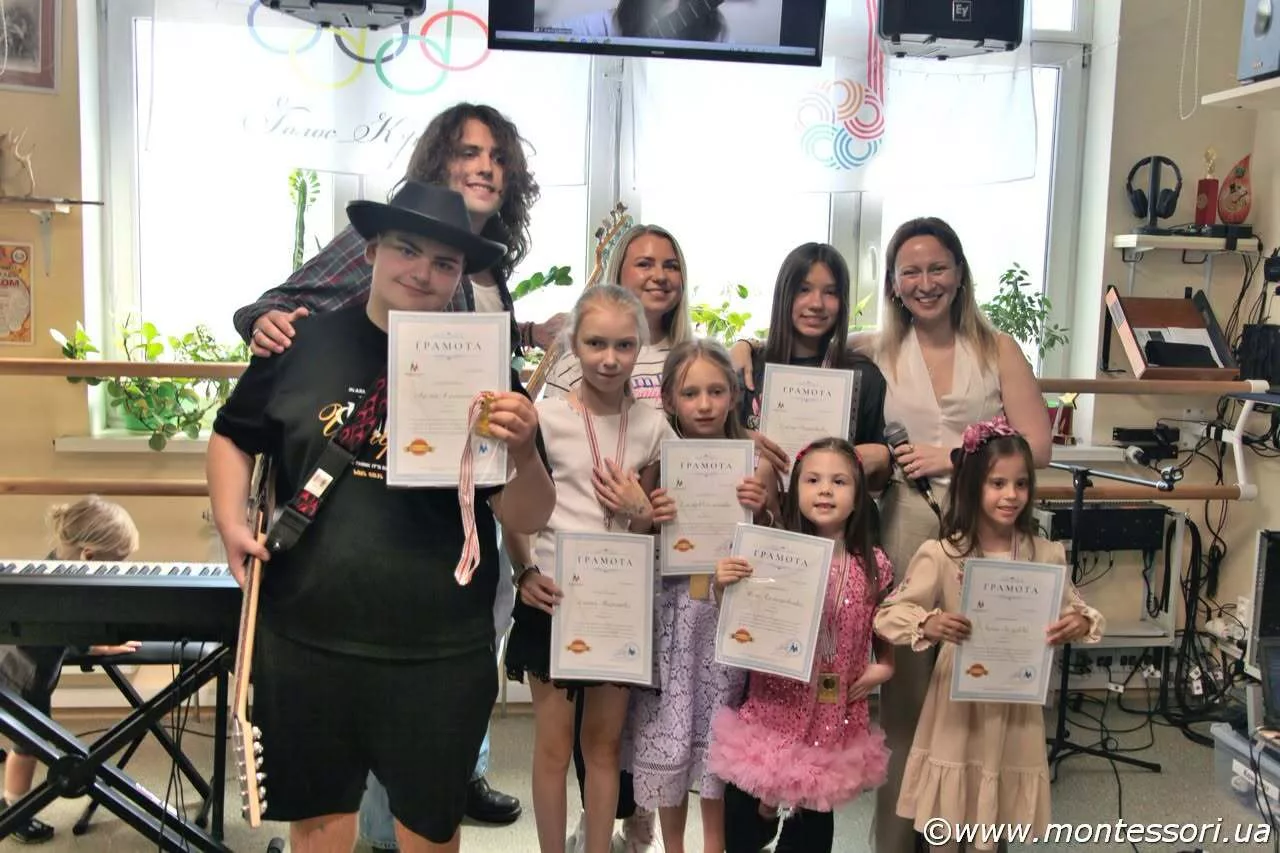
Montessori Center students perform in online concerts, participate in music competitions and the Music Olympiad, and receive diplomas and certificates for their achievements. Upon completing each level, students receive a certificate confirming their progress through the program, and after completing the entire course, they are awarded a diploma.
Teaching Methodology
The violin teaching methodology at Montessori Center is based on an individualized approach to each student. Teachers consider each student's age, skill level, musical interests, and learning pace, gradually introducing more challenging tasks.
At the beginning of the course, the teacher and student establish short-term goals, such as mastering essential playing techniques, developing musical ear training, learning selected pieces, and preparing for performances. Student progress is assessed through their work during lessons, mastery of musical repertoire, development of performance skills, and participation in online concerts and competitions. This approach allows teachers to evaluate not only technical abilities but also the development of musical independence and confidence.
Benefits of Our Teaching Methodology
1. Clear Goal Setting: teachers establish specific musical objectives so students understand what they are working on and what results they aim to achieve.
2. Individual Learning Pace: the program is adapted to each student's abilities and skill level, allowing sufficient time to master challenging techniques and musical pieces.
3. Performance Experience: participating in online concerts and competitions helps students apply their skills, manage performance anxiety, and gain valuable experience performing for an audience.
4. Learning at Any Age: the program is suitable for children and adults, regardless of their previous musical experience.
5. Opportunities for Further Development: after mastering fundamental skills, students progress to more challenging repertoire, refine their technique, and expand their performance abilities.
Montessori Center's teaching methodology is designed for students at all skill levels, from complete beginners to experienced musicians who wish to improve their playing.
Flexible scheduling, personalized repertoire selection, and gradually increasing challenges make learning comfortable and engaging. Students can focus on their personal musical goals and progress at a pace that suits them.
Special attention is given to developing independence, musical understanding, and a lasting interest in learning. Teachers help students not only master violin techniques but also understand musical compositions, work independently on their performances, and enjoy making music.
Preparatory Level
The preparatory level is designed for children aged 5–6 who are just beginning to explore the violin. During lessons, children learn how to hold the violin and bow correctly, practice basic hand movements, and develop their musical ear and sense of rhythm. Teachers use short exercises, simple melodies, and playful activities to gradually prepare children for further violin studies.
Beginner Level
At the beginner level, students learn the fundamentals of music notation, practice reading sheet music, and begin performing simple pieces. Particular attention is given to proper hand positioning, sound production, coordination, and essential bowing techniques. Students work on rhythm, intonation, and tone quality while gradually expanding their repertoire with classical and contemporary compositions.
Intermediate Level
At the intermediate level, students move on to more challenging musical pieces and further develop their performance technique. They learn new bowing techniques, improve finger dexterity, and work on shifting positions, intonation, and expressive playing. Teachers focus on musical phrasing, dynamics, and conveying the character of each composition.
Advanced Level
At the advanced level, students study technically demanding violin repertoire, refine their performance skills, and deepen their understanding of musical styles. Special attention is given to advanced technique, bowing, intonation, phrasing, and dynamic expression.
Students learn to analyze musical compositions independently, identify expressive techniques, and develop their own interpretations while respecting the composer's intentions. Repertoire studies include overcoming complex technical challenges and improving overall sound quality.
Throughout their studies, students have opportunities to participate in concerts and competitions, gaining valuable performance experience. By the end of the advanced level, they have expanded their repertoire, developed greater independence in learning musical pieces, and strengthened the skills needed for continued musical improvement.
Course Objectives
One of the main objectives of the course is to develop proper violin-playing technique. Students learn how to hold the instrument correctly, control the bow, coordinate hand movements, and produce a clear, expressive sound. As they progress, they master more advanced techniques required to perform a wide variety of musical repertoire.
Sound production is another important focus of the course. Students explore different violin bowing techniques, learn to control the volume and character of the sound, use dynamic variations, and express the mood of a musical piece.
Another essential objective is developing music-reading skills. Students gradually learn to navigate sheet music, understand musical symbols, study new compositions, and work independently on musical material.
The program also aims to broaden students' musical horizons. They explore compositions from different historical periods, genres, and styles while developing musical taste and expressive performance skills. Participation in concerts and competitions helps students evaluate their progress and gain stage experience. However, the primary goal of learning is not to compete with other musicians but to develop personal abilities and enjoy playing the violin.
Benefits of Violin Lessons
Playing the violin offers an opportunity to develop musical abilities and express emotions through music. Students can begin learning as children or adults, regardless of their previous experience. Regular lessons help improve not only performance skills but also concentration, motor coordination, memory, and creative thinking.
Fine Motor Skill Development. Playing the violin requires precise finger movements and coordinated use of both hands, helping develop coordination, flexibility, and dexterity.
Musical Ear Development. Working on intonation, tone quality, and musical phrasing helps students better distinguish pitches, intervals, and melodic patterns.
Emotional Expression. Performing favorite pieces allows students to express emotions through music, take a break from everyday concerns, and enjoy the creative process.
Self-Organization and Responsibility. Regular lessons and independent practice help students develop discipline, patience, and time-management skills.
Communication Skills. Participation in online concerts, competitions, and collaborative musical projects provides opportunities to communicate with other musicians, exchange experiences, and connect with people who share similar interests.
Self-Confidence. Mastering new pieces, overcoming technical challenges, and performing successfully help students recognize their progress and feel more confident in front of an audience.
Creative Development. Exploring different musical genres and styles broadens students' musical horizons, stimulates their imagination, and helps them develop an individual performance style.
Violin lessons provide opportunities for both musical and personal development. They help students discover their creative abilities, improve their performance skills, and find new ways to express themselves.
Whether you dream of pursuing a professional music career or simply want to learn to play for your own enjoyment, violin lessons can become an exciting and meaningful part of your life. Start your musical journey with Montessori Center today!
News


How Violin Lessons Are Conducted
Equipment: have your violin, bow and a computer or tablet with a camera and microphone ready. Leave enough space to move the bow freely. Your instrument and both hands should be visible on camera.
Internet connection: check your connection before the lesson. A stable internet connection will help you hear your teacher’s playing clearly.
Lesson platform: lessons take place on Zoom or Google Meet. Open the lesson link in advance, install the app if needed and allow access to your camera and microphone.
Sound: choose a quiet place so that both the violin and speech can be heard clearly. Headphones will help you hear your teacher’s explanations and musical examples more clearly.
Lesson link: we will send it in advance by email or through a messaging app. Before the lesson, check that you have received the message and that the link opens.
Sheet music: you will receive the lesson materials in digital format. Print them out and place them on a music stand, or open them on screen so you can read without turning your body while playing.
Camera position: hold your violin and bow and check the camera view. Your teacher should be able to see your face, upper body and both hands, including the full movement of the bow from frog to tip. Make sure the space is well lit.
Joining the lesson: open the Zoom or Google Meet link 5–10 minutes before the lesson. Check your camera and microphone, and have your instrument and sheet music ready so you can start on time.
Teacher’s guidance: your teacher will explain and demonstrate how to hold the violin and bow correctly, place your fingers and produce a clear tone. As they listen to your playing, they will suggest where to adjust your intonation, refine the rhythm or change your bow movement.
Questions: if a marking in the music is unclear or you find a technique difficult, ask for another explanation. You can pause at a challenging passage and work through it with your teacher.
Practice: you spend most of the lesson playing: doing exercises, learning melodies and working on pieces. You first practise difficult passages slowly, then try playing them at the intended tempo.
Performance example: your teacher will play a phrase on the violin so you can hear how it sounds and see how both hands work. If needed, they will demonstrate the fingering or bow movement separately.
Lesson review: together with your teacher, you will discuss what you have learnt and what to practise at home. Your teacher will identify exercises and passages for independent practice and explain what to pay attention to.
For home practice, your teacher will select sheet music and exercises, mark fingerings and bowings, and explain which passages to practise before the next lesson. If needed, they will suggest a recording of the piece to listen to or a video demonstrating bow and finger movements.
What melody would you like to play on the violin? In your lessons at Montessori Center, your teacher will help you choose a piece that suits your level and learn it step by step — from the first notes to an expressive performance.
Violin Teachers

Diana Rusanova
Violin

Svetlana Gerber
Violin

Kateryna Tesliuk
Violin
Violin Course Program
 Preparatory
level
Age: 5 - 6 years

Modules
Getting to know the violin and bow. Learning to hold the instrument, position the hands correctly and draw the bow across the string.
Playing open strings and repeating simple exercises demonstrated by the teacher. Learning short melodies.
 Beginner
level
Age: 7 years and older

Modules
Developing proper hand positioning and posture, and learning bow movements. Exercises for coordinating both hands and producing a clear tone.
Learning simple melodies. Practising finger placement on the strings, listening to your own playing and checking intonation.
Learning simple scales and exercises. Working on freedom of movement, accurate finger placement and smooth bow changes.
Learning basic bowing techniques: playing notes with separate bows and several notes in one bow stroke. Applying these techniques in simple pieces.
Learning easy classical pieces. Working on rhythm, phrasing and dynamics.
Preparing to play a chosen piece from beginning to end. Rehearsing and performing in an online concert.
 Intermediate
level
Age: 10 years and older

Modules
Working through simple pieces independently: reading notes and rhythmic patterns, and choosing fingerings and bowings with the teacher.
Learning pieces from different styles and periods. Working on musical character, phrasing and dynamics.
Studying more challenging exercises and études. Developing finger dexterity, learning to shift positions and refining bowing technique.
Preparing a concert programme: working on accurate intonation and expressive playing. Rehearsing and performing in an online concert or competition.
 Advanced
level
Age: 12 years and older

Modules
Playing with recorded accompaniment. Working on accurate entries, rhythm and coordination between the solo part and the accompaniment.
Preparing a solo piece for an online concert or competition. Working on accurate intonation, phrasing and confident playing.
Developing finger dexterity and accurate position shifts. Learning pieces with complex combinations of bowing techniques.
Preparing a concert programme featuring pieces in different styles. Rehearsing, performing in an online concert or competition and discussing the results with the teacher.
The violin course is suitable for children aged 5 and above and adults of any age. The programme includes preparatory, beginner, intermediate and advanced levels. The preparatory level for children aged 5–6 introduces the violin and bow, first exercises and short melodies. Students can start at the beginner level with no previous musical experience. For those who already play, the teacher will help choose a programme suited to their experience and skills. Students receive a certificate upon completing each level.
Sign up for a trial violin lesson! Your teacher will show you how to hold the instrument and bow and introduce your first exercises. If you already play the violin, a trial lesson will help identify which skills to develop and which pieces to start with.
Course Schedule
We teach every day, including weekends
To coordinate the day of the week and the time for your lesson, please write to us, and the administrator will arrange a convenient schedule for you!Contact Us


Ольга Попова

Review language: Russian
Марина Соловьева
Review language: Russian
Дмитрий И.
Review language: Russian
Мария
Review language: Russian
Ірина
Review language: Ukrainian
Вікторія
Review language: Ukrainian
Марина
Review language: Ukrainian
Тетяна
Review language: Ukrainian
Sebastián Moreno
Review language: Spanish
Vicente Rojas
Review language: Spanish
Frequently Asked Questions (FAQ)
Helpful Articles

From Notes to Performances: Strategies for Effective Lessons
Mastering the violin through online lessons opens up a new dimension in musical education, allowing students of all ages to...

Violin Technologies: Using Apps and Programs for Learning
In today's world, technology is closely intertwined with education, opening new horizons in music learning. This is especially true for...

Understanding Musical Terms
Mastering any musical instrument, including the violin, starts not only with practical skills but also with a deep understanding of...

Violin Tales: Fascinating Facts About the Violin
The violin is one of the most magical and mysterious musical instruments, with a history spanning hundreds of years. Today,...

Setting Goals and Achieving Success in Violin Playing
Playing the violin is not only a fascinating art requiring patience and diligence but also a remarkable way to achieve...

Violin Repertoire for Beginners: The Best Pieces to Start With
Choosing the right repertoire for beginner violinists plays a crucial role in motivation and the development of musical skills. Online...

Tuning for Success: How to Prepare for Online Violin Lessons
In the digital age, online violin lessons are becoming increasingly popular among students of all ages. Thanks to their accessibility...

Bow Secrets: Improving Your Playing Technique
Mastering the violin requires the development of numerous skills, but perfecting bow technique is particularly crucial. The bow is the...

How Musical Works Shape Mastery
Mastering musical instruments, such as the violin, doesn't happen overnight. It's the result of lengthy, directed learning, where musical compositions...


