The Suzuki Method: Learning the Violin Like a Mother Tongue
· Updated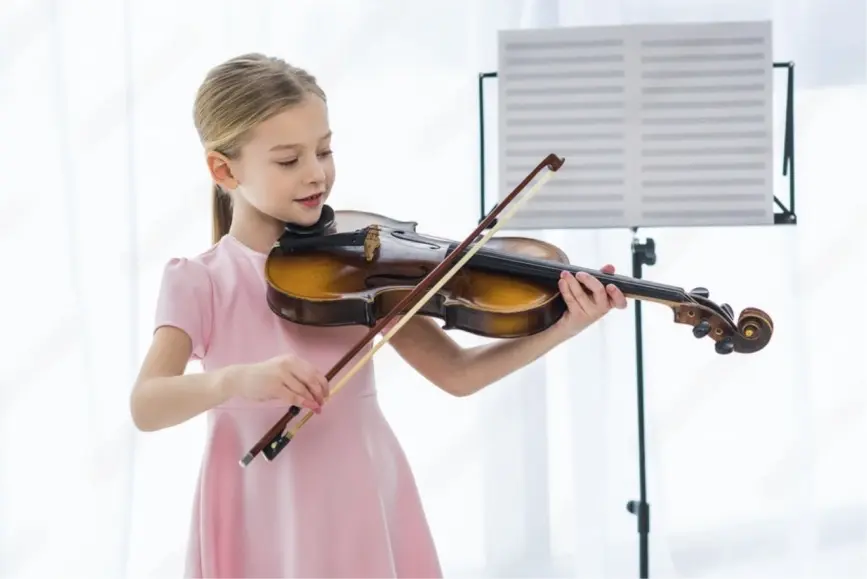
How far can someone go with the violin, and how early should they start? The Japanese violinist and teacher Shinichi Suzuki had a clear answer: anyone can learn to play well if they grow up in the right surroundings. Here is where his method came from, how it is organized and how it differs from the usual way of teaching. How to set up regular practice is covered in From Notes to Performances: Strategies for Effective Lessons.
Who Suzuki Was
Shinichi Suzuki was born in Nagoya on October 17, 1898. His father had founded Japan’s first violin factory, and the boy worked there from childhood. He taught himself the violin at 17, after hearing Mischa Elman’s recording of Schubert’s Ave Maria, listening to records and trying to copy them. He went on to study in Tokyo and then spent eight years studying in Berlin. Suzuki died on January 26, 1998; five years earlier, in 1993, his name had been put forward for the Nobel Peace Prize.
The Idea Behind the Method
Suzuki noticed how quickly children pick up their first language, while adults struggle even with another dialect of their own. If a child can master a mother tongue, he reasoned, the same child can master an instrument. He called his approach Talent Education, and it is often described as the mother-tongue method. Suzuki was the first to argue that preschoolers could learn the violin, provided the steps were small and the violin was made smaller to suit the child. In his view, the best time to begin was between three and five. His aim was not to produce child prodigies but children with noble hearts.
How Lessons Work
Students first learn to play by ear and only later to read music, since children speak long before they read. Every day they listen to recordings of the pieces they are working on, play their whole repertoire from memory and keep revisiting everything learned so far. There are no entrance auditions, but there is plenty of group playing and performing in public. A parent of a young pupil sits in on lessons, takes notes and oversees practice at home every day.
The Repertoire
The Suzuki violin course comes in ten volumes. The first opens with Suzuki’s own variations on Twinkle, Twinkle, Little Star, and the last two contain violin concertos by Mozart. The early volumes are arrangements of folk tunes and of pieces by Bach, Handel, Beethoven, Dvořák, Brahms and other composers. Good pieces to start with are covered in Violin Repertoire for Beginners: The Best Pieces to Start With.
How to Get Started
In our violin course, students learn to hold the violin and bow correctly, master the basic bow strokes and clean intonation, read music and learn classical pieces and modern melodies, and a piece they have prepared can be performed at an online concert. Lessons are open to students from age 5. A trial lesson costs $8.00: it is individual and lasts 45 minutes. More about the course is on the Violin page.


