Tuning for Success: How to Prepare for Online Violin Lessons
· Updated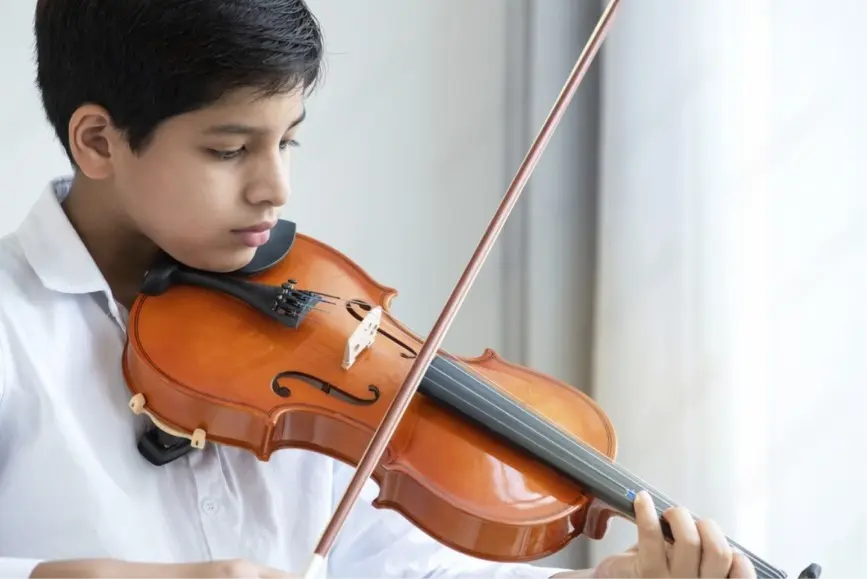
An online violin lesson takes place over a video call, so you prepare not only the instrument but also the camera, the sound and your practice space. Below is what to do in advance, how to position the camera and what a lesson in our course looks like.
What You Need
A violin, a bow and a computer or tablet with a camera and a microphone. Leave enough room around you for the bow to move freely. Lessons take place on Zoom or Google Meet, so install the app beforehand and allow access to the camera and microphone.
Connection and Sound
Check your internet before the lesson: with a stable connection, you will hear your teacher’s playing clearly. Pick a quiet spot so that both the violin and your voice come through well; headphones make the explanations and musical examples easier to hear.
Camera and Lighting
Pick up the violin and bow and check the frame: the teacher needs to see your face, your upper body and both hands, including the full length of each bow stroke. Make sure the lighting is good.
Sheet Music
Lesson materials are sent electronically. Print them and put them on a music stand, or open them on a screen where you can read without turning while you play.
The Link and Timing
The lesson link is sent in advance by email or messenger, so check that it has arrived and opens. Join 5–10 minutes before the start, test the camera and microphone, and get your instrument and music ready so you can begin on time.
What Happens in the Lesson
- The teacher explains and shows how to hold the violin and bow, place your fingers and get a clean sound, and, while listening to you, points out where to fix intonation, rhythm or bowing.
- If a marking in the music is unclear or a technique is not working, ask for another explanation; you can go through a tricky passage together.
- You spend most of the lesson playing: exercises, tunes and pieces. Difficult passages are played slowly first and then at the right tempo.
- The teacher plays a phrase so you can hear how it should sound and see what both hands are doing.
- At the end, you sum up together what went well and what to review at home.
After the Lesson
The teacher picks music and exercises for home, marks fingerings and bowings, and explains which passages to review before the next lesson, and when needed sends a recording of the piece or a video of the bow and finger movements. How to organize your home practice is explained in From Notes to Performances: Strategies for Effective Lessons.
Our Violin Course
In our violin course, students learn to hold the violin and bow correctly, master the basic bow strokes and clean intonation, read music and learn classical pieces and modern melodies, and a piece they have prepared can be performed at an online concert. Lessons are open to students from age 5. A trial lesson costs $8.00: it is individual and lasts 45 minutes. More about the course is on the Violin page.


