Polymer Clay: How to Sculpt and Bake It
· Updated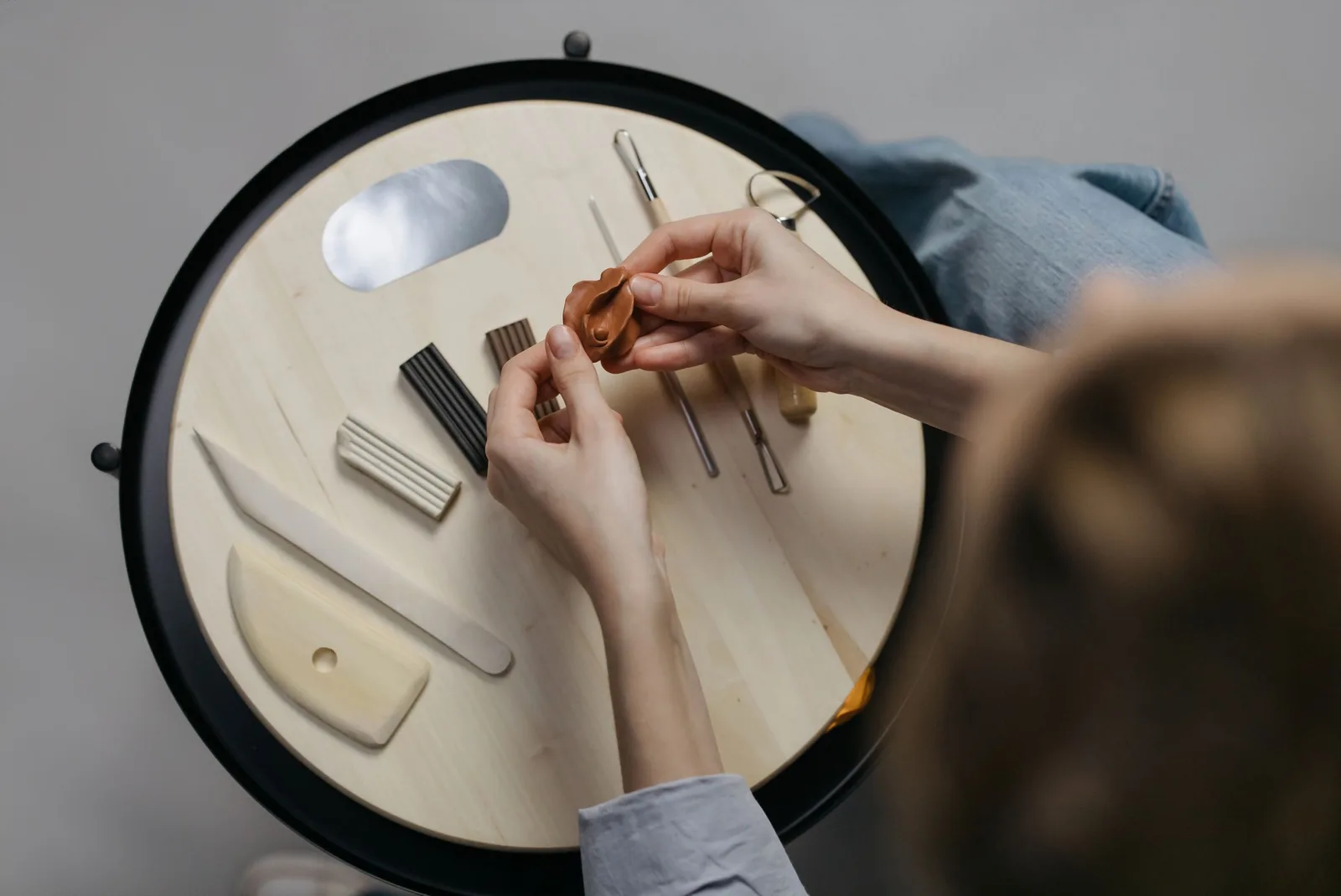
Polymer clay is used to make jewelry, figurines and small parts that turn hard after baking in an ordinary home oven. Below is what the material is, how to prepare, shape and bake it and which safety rules to follow.
What Polymer Clay Is
Despite the name, it usually contains no actual clay: it is a pliable mass of PVC (polyvinyl chloride) with a liquid plasticizer. It is called clay because you work with it in a similar way, shaping it and then hardening it with heat. In 1939, such a compound was brought to the attention of Käthe Kruse, a German maker of dolls; her daughter Sophie, nicknamed Fifi, began sculpting with it, and the material was later sold as FIMO, short for “Fifi’s Modeling compound.”
Preparation
Before you start, knead the clay by hand or roll it between rollers until it is soft and even, a step called conditioning. Many artists use a manual pasta machine for this: it rolls out even sheets and helps blend colors. Colors can be mixed to create smooth gradients.
How to Sculpt
- Polymer clay does not dry in the air and stays soft until baked, so you can keep working on a piece for days.
- Press pieces together firmly with no trapped air; liquid polymer clay works as glue.
- Work on a clean, smooth surface, since light-colored clay picks up dust and traces of other colors.
How to Bake
Polymer clay cures at 129–135 °C (265–275 °F), for about 15 minutes per 6 mm (1/4 in) of thickness. That is far lower than for firing ordinary clay, so a home oven is enough. The main rule is to follow the instructions on the package exactly. The clay keeps its shape in the oven, and good brands barely shrink.
Safety
- Do not exceed the temperature and time on the package. Burnt clay can give off a little hydrogen chloride gas, with a smell and irritation of the eyes and nose.
- Do not make dishes or cups for food and drink from polymer clay, and keep your clay tools out of the kitchen.
- The clay contains plasticizers, and some of them are restricted, with limits in force in the EU and the US since 2009. Choose a brand approved for children and wash your hands after working.
- An adult should do the baking for a child.
Polymer Clay or Ordinary Clay?
Ordinary clay is fired at much higher temperatures in a special kiln, while polymer clay hardens in a home oven and suits small, colorful pieces. In our course, students sculpt with clay and plasticine and work with plaster, which are convenient materials to start with. Materials and first techniques are covered in Basics of Modeling: Where to Start for a Beginner, and sculpting as a hobby for adults in Sculpting for Adults: Hobby or Profession?
Our Modeling and Sculpture Course
In our sculpting lessons, students work with clay, plasticine and plaster: they learn to shape the material, join pieces and use sculpting tools, starting with simple figures and gradually moving on to compositions. Lessons are open to students from age 5. A trial lesson costs $8: it is individual and lasts 45 minutes. More about the course is on the Modeling and Sculpture page.


