Stretching for Dance: Exercises for Beginners
· Updated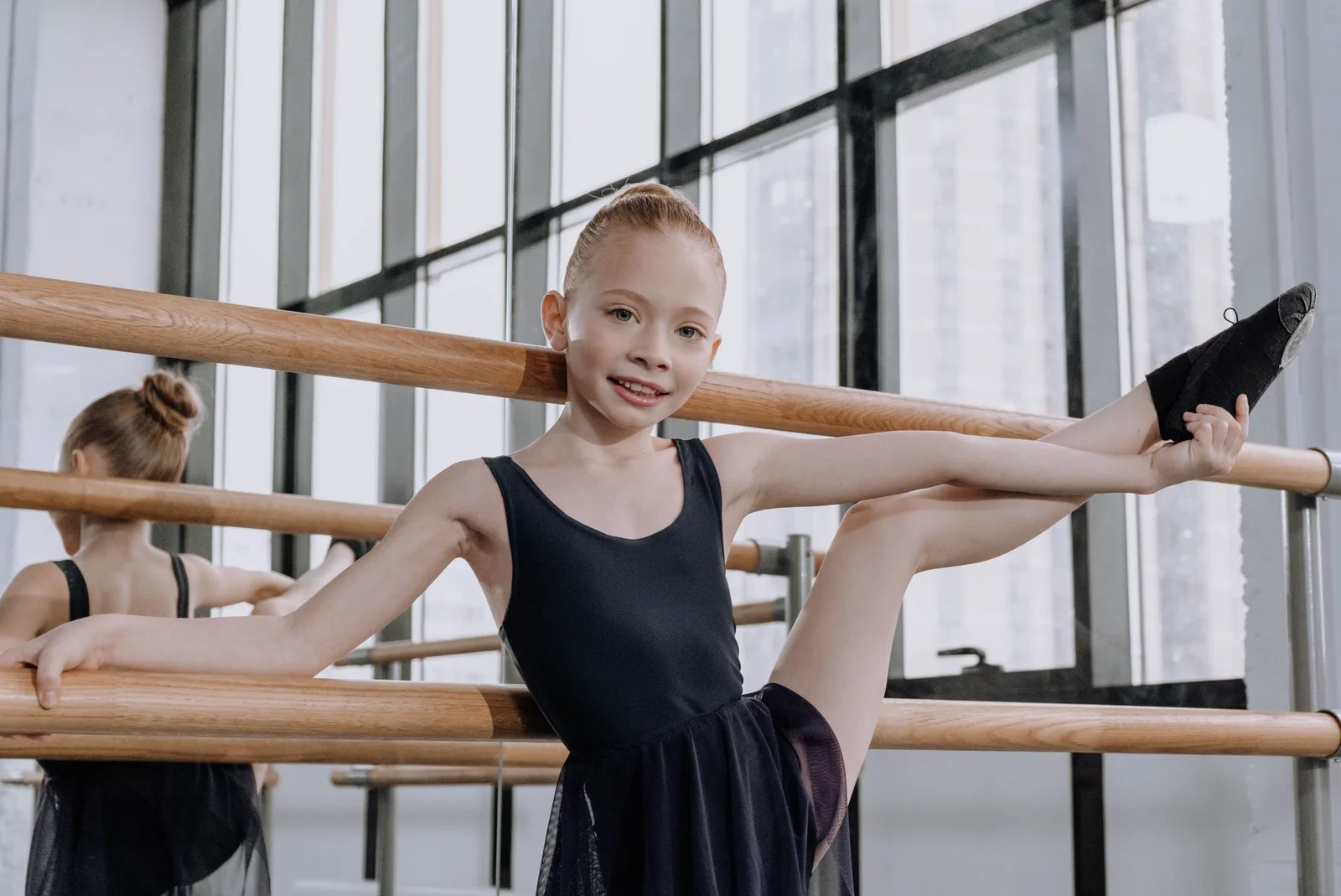
Stretching helps dancers move more freely and feel their bodies better. But stretching is a skill too, and doing it wrong can cause harm. Below are the kinds of stretching, when to do each, simple exercises for beginners and safety rules.
Why Dancers Stretch
Stretching leaves a feeling of greater flexibility, range of motion and muscle control. Athletes usually stretch before training, as part of the warm-up, and afterward, hoping to lower the risk of injury and perform better.
Static and Dynamic Stretching
- Static: you take a position and hold it calmly without moving.
- Dynamic: the muscles lengthen through slow, controlled movement, as in lunges.
- Ballistic: fast bouncing and swinging that uses momentum to push a muscle past its usual range. Beginners should skip it.
What to Do When
Before dancing, warm up: first raise your pulse gradually, then move your joints, then do dynamic stretches. Long static stretching before exertion, more than a minute in one position, can temporarily reduce muscle strength and power. So save static stretching for the end of the session, where it does more than dynamic stretching to increase range of motion.
Exercises for Beginners
For the warm-up:
- marching in place, gradually speeding up;
- circles with the shoulders, arms and wrists, plus slow head tilts;
- forward lunges, alternating legs;
- smooth leg swings to the front and side while holding a support, with no jerking.
After the session:
- a seated forward bend over straight legs for the back of the thighs;
- standing heel-to-buttock while holding a support for the front of the thighs;
- the butterfly, sitting with the soles together and knees out;
- hands against a wall with one leg back for the calves;
- hands clasped behind the back for the chest and shoulders.
How to organize practice at home, warm-up included, is covered in How to Organize Home Workouts for Modern Dance.
Safety Rules
- Stretch to a light pull, not to pain, and without bouncing.
- Stretch only warm muscles.
- Stretching done wrong can lead to unstable joints and damaged ligaments and tendons, so learn new exercises with a teacher.
- Consistency beats records: a little, but often.
Stretching in Lessons
During a lesson, the teacher sees the student on screen and can correct body position. Adults starting from scratch will find Modern Dance for Adults: It’s Never Too Late to Start useful.
Our Contemporary Dance Course
In our contemporary dance course, students get to know elements of hip-hop, jazz and contemporary dance and learn to tell the styles apart by technique and manner. The teacher chooses exercises, music and dance sequences to suit each student’s age, level and interests. Lessons are open to students from age 5. A trial lesson costs $8: it is individual and lasts 45 minutes. More about the course is on the Contemporary Dance page.


