The Heartbeat of the Band: The Role of the Drummer
· Updated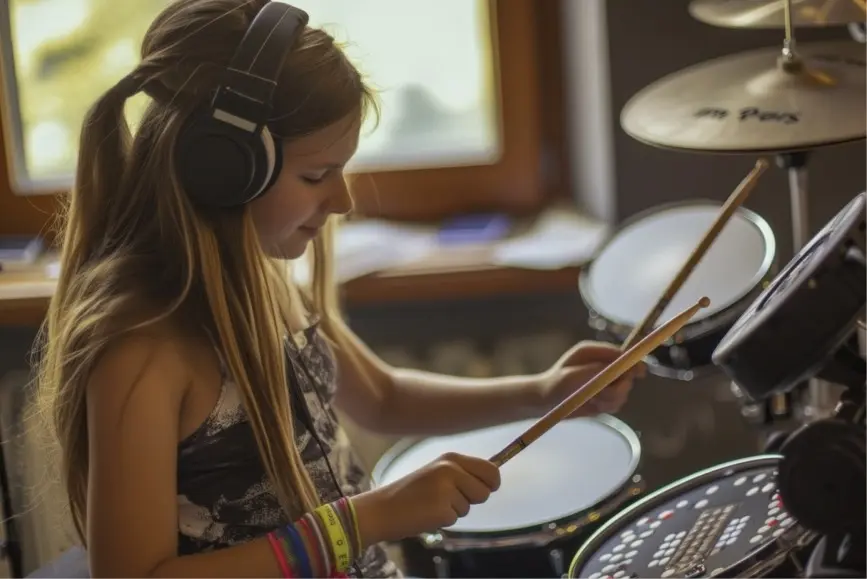
The drummer is often called the heart of the band, and with good reason: as long as the drummer plays steadily, everyone else can lean on that rhythm. Here is what a drummer actually does in a group, point by point, with examples from well-known recordings.
Keeping the Pulse with the Bass
Drums and bass form the core of the rhythm section, which gives the band its rhythm, harmonic support and steady pulse while the lead players and the singer carry the tune. In today’s pop, rock and jazz groups, the rhythm section is usually a drummer, a bassist and one or more guitar or keyboard players.
Setting the Groove
In 4/4 time, beats one and three are the strong beats and beats two and four are the weak ones. The backbeat is an accent on exactly those weak beats, two and four, and in popular music today it usually falls on the snare drum. Stressing the weak beats is a hallmark of rock and roll and ska, and much of what makes rhythm and blues so danceable comes from the backbeat.
Some drummers play the backbeat a hair late to make the rhythm feel more laid-back. This was especially common in rock and soul between the late 1960s and the mid-1970s: listen to the Beatles’ “And Your Bird Can Sing” or the Jimi Hendrix Experience’s “Hey Joe.” Rolling Stones drummer Charlie Watts often played this way too.
Shaping the Mood
The character of the music also depends on what the drummer plays on. A steady pattern is usually kept on the ride cymbal or the hi-hat, while the crash cymbal is the loudest accent on the kit: drummers use it for climaxes, the moment the vocals come in and sudden shifts in mood, often together with a kick on the bass drum.
Marking the Transitions
Before a new section of a song, the drummer often plays a fill, a brief break from the main groove that works like a tiny solo. A fill tells everyone that a phrase is ending, yet the tempo stays the same, and the main pattern comes right back afterward. There are other ways to signal a new section too, such as moving from the hi-hat to the ride.
Fills can be improvised, or they can be part of the song itself: the Eagles, for instance, play the same fills at every show.
Leading the Others
In the studio and on stage, drummers often keep time with a click, a metronome signal in their headphones. Sometimes only the drummer hears the click, and the whole band follows the drummer’s tempo.
Trying New Things
- The solo. Gene Krupa’s solo on the 1937 Benny Goodman recording of “Sing, Sing, Sing” turned the drummer from an accompanist into a soloist.
- Two bass drums. Keith Moon of the Who was among the first rock drummers to use two bass drums on a regular basis.
- Electronics. In 1997, Roland released the TD-10 electronic kit with mesh pads that feel close to real drums.
Legendary drummers and recordings worth hearing are covered in Masters of Rhythm: A Look at Legendary Drummers of the World.
How to Get Started
Playing in a group is learned step by step: first with a metronome, then with recordings and other musicians, as described in Drumbeat Together: Learning to Play with Other Musicians. In our lessons, students learn their parts with a backing track, so they get used to hearing the other instruments, following the shape of the song and playing their part from beginning to end.
In our drum course, students learn to sit correctly at the drums, hold the sticks and use both pedals, read drum notation, keep time with a metronome and play fills, and learn parts from songs in different styles, which they then play over a backing track. Once a part is ready, students can perform it at one of our online concerts or competitions. Lessons are open to students from age 8. A trial lesson costs $8: it is individual and lasts 45 minutes. More about the course is on the Drums page.


