The Recorder Revival: From Dolmetsch to Brüggen
· Updated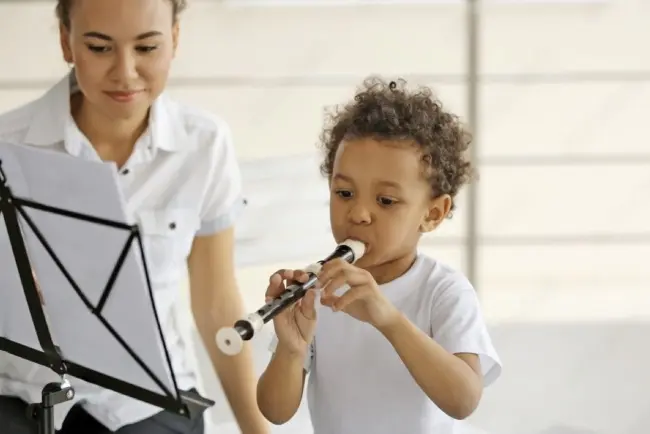
By the nineteenth century the recorder had almost vanished from musical life, yet in the twentieth it became one of the most widespread instruments again. Here is how that happened and who brought it back to the stage. Where the recorder turns up in modern music is covered in The Recorder in Contemporary Music: Unexpected Examples.
Why a Revival Was Needed
In the late eighteenth century other instruments pushed the recorder aside, and the craft of making it was all but lost: the duct flutes of that time and of the nineteenth century were built mainly for amateurs and teaching, and with less care than before. One of the first groups to play recorders again was Germany’s Bogenhauser Künstlerkapelle, which from 1890 to 1939 performed music of many eras on antique instruments. Even so, the recorder then appealed chiefly to those with a historical interest.
Arnold Dolmetsch
The recorder’s success in the twentieth century is often credited to Arnold Dolmetsch. The story goes that a lost bag of antique instruments is what got him building recorders himself. In 1919 he became the first in the twentieth century to build recorders for sale, and by the 1930s his family firm, run by his son Carl, was producing them in large numbers. It was Dolmetsch who introduced the “English” fingering that became the standard for Baroque-style recorders. He was not alone, though: in Germany, Willibald Gurlitt, Werner Danckerts and Gustav Scheck worked on the revival independently.
The Virtuosos
In the 1920s Carl Dolmetsch was among the earliest recorder virtuosos, and he began commissioning new works for the instrument from composers. Later, largely thanks to Kees Otten and the Dutch school around him, the recorder came to be accepted as a serious solo instrument. Among those who returned it to the concert stage in the later twentieth century were Frans Brüggen, who recorded most of the historical repertoire, Hans-Martin Linde and David Munrow.
New Music
The revival has produced nearly double the recorder repertoire of all earlier periods combined. Composers include Paul Hindemith, Luciano Berio, Benjamin Britten, Michael Tippett and Leonard Bernstein. And in 2012 Charlotte Barbour-Condini made recorder history as the first player of the instrument in a BBC Young Musician of the Year final. The best-known works for the recorder are covered in What Recorder Players Play: From van Eyck to Linde.
How to Get Started
In our recorder course, students learn to hold the instrument properly and control their breathing, read notes and rhythms, and play favorite melodies and pieces in different styles, with the option of performing at online concerts. Lessons are open to students from age 5. A trial lesson costs $8: it is individual and lasts 45 minutes. More about the course is on the Recorder page.


