What Saxophones Are Made Of: Brass, Silver and Lacquer
· Updated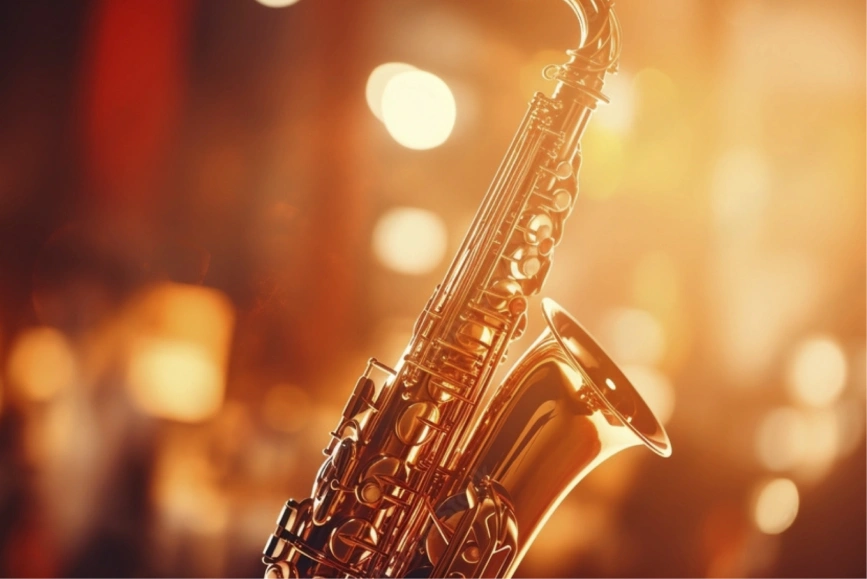
The saxophone is a woodwind, yet its body is metal. Here is what a saxophone, its keys and its small parts are made of, and how it is finished. How to choose your first saxophone is covered in Choosing the Right Saxophone: A Guide for Beginners.
A Brass Body
Ever since the first saxophones, the body and the key cups have been formed from sheet brass, which can be shaped into complicated forms. The key mechanism is made from other kinds of brass. For looks and tone, makers sometimes swap ordinary yellow brass for alloys richer in copper.
Silver, Nickel Silver and Bronze
From the 1930s until the early 1960s, King gave some saxophones a sterling-silver neck and bell. Yanagisawa of Japan brought the idea back in the 1980s and later made instruments entirely of silver. Some Keilwerth and P. Mauriat models have bodies of nickel silver, a copper, nickel and zinc alloy more often found in flutes. Yanagisawa also turned to phosphor bronze for some models, in search of a darker, vintage-style sound compared with its brass horns.
Small Parts
The buttons under the fingertips are usually plastic, or mother of pearl in the traditional style. Rods, screws and springs are of steel, either blued or stainless. Felt, cork, leather and synthetic buffers quiet the keys and help the mechanism work precisely.
Lacquer and Plating
Most often the body and keys get a thin coat of clear or tinted acrylic lacquer, which stops the brass from oxidizing and keeps it shiny. Some models can be ordered silver- or gold-plated; gold is costly because a layer of silver has to go underneath it. Cheap early saxophones sometimes had nickel-plated bodies, and nickel is now common on the keys of student models, where a tough finish is needed. In recent years, chemical treatment of the bare metal has also been used instead of lacquer or plating. How people begin learning the saxophone is covered in Saxophone for Beginners: Where to Start.
How to Get Started
In our saxophone course, students work on breathing, lip position on the mouthpiece and finger technique, learn to read music and study pieces in different styles, and a piece they have prepared can be performed at an online concert. Lessons are open to students from age 8. A trial lesson costs $8: it is individual and lasts 45 minutes. More about the course is on the Saxophone page.


