The Flute for Beginners: Your First Weeks of Lessons
· Updated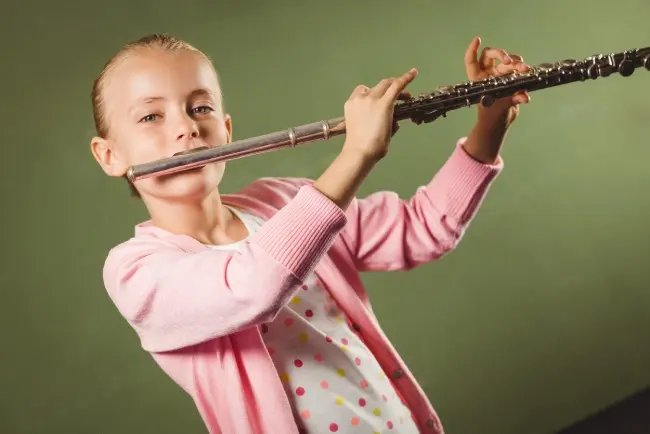
The first weeks with a flute shape a lot: this is when posture, lip position and practice habits take hold. Here is what to prepare and what to work on, week by week, so the start feels calm and clear.
Before the First Lesson
- The instrument. Beginners usually start on a concert flute in C. If you do not have one yet, the teacher will help you choose; what to look for when buying is covered in Choosing and Caring for a Flute: Practical Tips.
- Your lesson spot. Place the computer or tablet so the teacher can see your face, both hands and the whole flute, and leave room to move freely.
- Sheet music. Lesson materials arrive in advance: print them or open them on a screen so you do not have to tilt your head.
Week 1. A Sound on the Headjoint
A flute has three parts: the headjoint, the body and the foot joint. Learn to put it together and take it apart without pressing on the keys. The first sound comes from the headjoint alone: keep the mouth corners loose and let the upper lip aim the air across the edge of the hole. Aim for a steady sound without a hiss.
Week 2. Posture and First Notes
Assemble the flute and learn to hold it with your shoulders down, head level and hands relaxed. The teacher will show you the finger positions and the first notes. Play them as long tones, keeping the sound the same from start to finish.
Week 3. Rhythm and Articulation
Add notes, note values and rests. Learn to start notes with the tongue for separate sounds, and to play smoothly without it. Play a simple tune of 4 or 5 notes.
Week 4. Your First Piece
Work through a short piece phrase by phrase: notes, rhythm, fingerings and breathing spots. Play the tricky transitions slowly at first. The goal is to play the piece all the way through, and later at an online concert.
Practicing at Home
- How much. At first, about 20 minutes a day is a good start; we recommend two lessons a week.
- Breathing. Long tones and exhale exercises are the base of an even tone; see Breathing Techniques for Flutists: Improving Your Sound for details.
- Breaks. Beginners’ lip muscles tire quickly, so rest instead of pushing through.
- After playing. Wipe the moisture out of the flute and put it in its case.
How to Get Started
In our flute course, students learn to hold the instrument correctly, set their lips and hands, work on breathing and an even tone, read music and learn pieces in different styles. Lessons are open to students from age 7. A trial lesson costs $8: it is individual and lasts 45 minutes. More about the course is on the Flute page.


