Cello vs. Double Bass: How They Differ
· Updated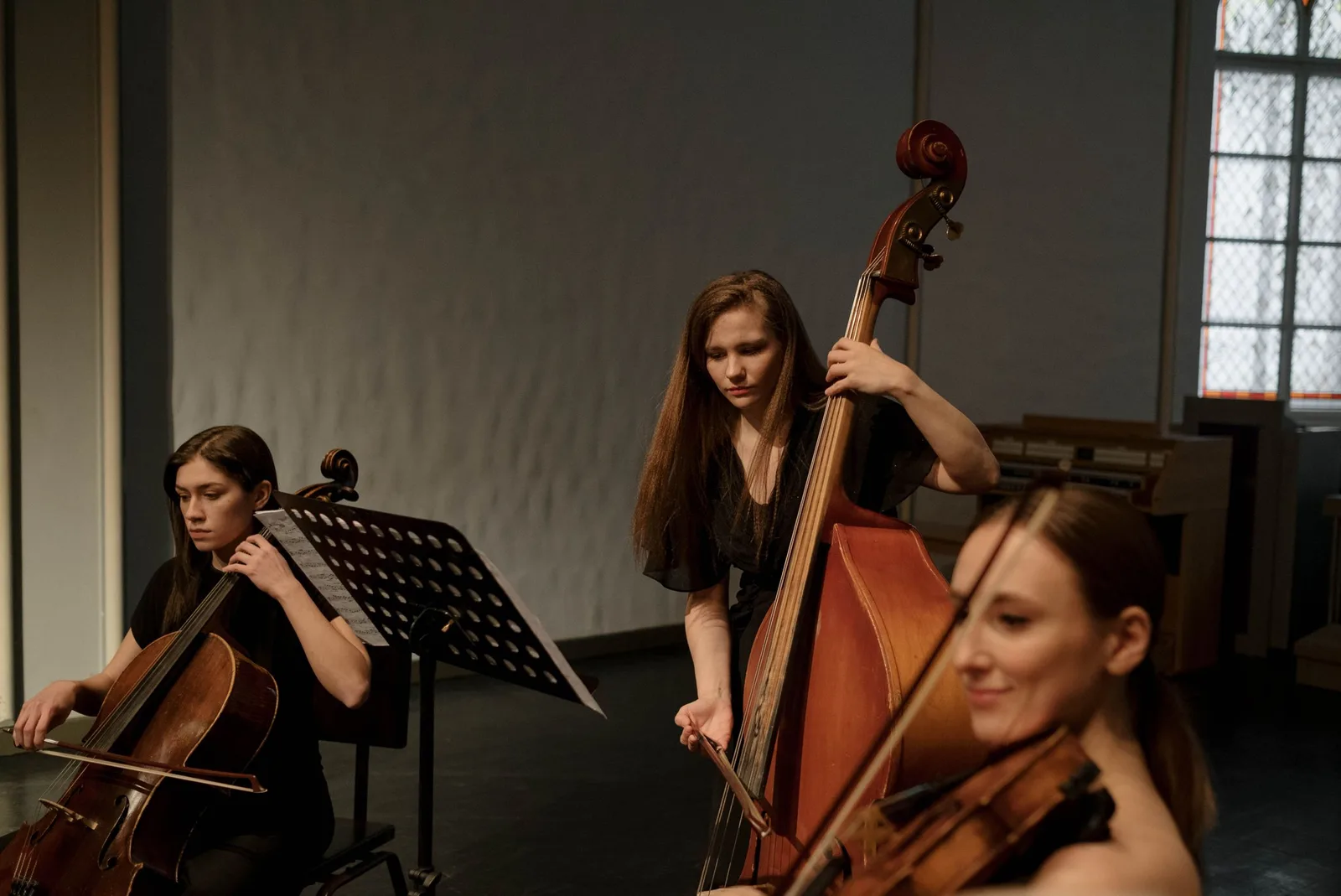
From a distance, the cello and the double bass look alike: both are large bowed instruments with four strings and an endpin resting on the floor. Yet they sound different, are tuned differently and are held differently. Below are the main differences and which one to choose first.
Size and Playing Position
The double bass is the biggest and deepest bowed instrument in today’s symphony orchestra, usually about 180 cm (6 ft) from scroll to endpin. Bassists play standing or perched on a tall stool, with the instrument leaning against them. The cello is smaller and played seated, with the endpin on the floor carrying its weight.
Tuning and Sound
- The cello is tuned in fifths: C, G, D and A, from the lowest string up. It is a mid-to-low instrument, and in solo music it covers everything from bass to soprano.
- Among today’s bowed instruments, only the double bass uses fourths, as a bass guitar does: E, A, D and G. In the orchestra it often doubles the cello line an octave lower, which is where the name comes from.
Notation
Cello parts are usually written in bass clef, with tenor and treble clef for high passages. Bass parts are transposed: the music is written an octave above the sounding pitch to avoid piles of ledger lines below the staff.
Family Tree
The cello belongs to the violin family, and its Italian name means “little violone.” The double bass sits between the violin and the old viola da gamba: most basses have sloping viol-style shoulders, and scholars still argue over which family it comes from.
Where You Hear Them
Both play in orchestras and chamber music; in quartets and orchestras the cello often takes the bass or tenor line, with the basses doubling it an octave lower. The cello has a large solo repertoire and many concertos. Beyond classical music, the bass is at home in jazz, blues, rock and roll, country and tango, where it is often plucked, or played pizzicato.
Which to Start With
If you are drawn to solo and classical music, the cello is the natural start; if jazz and band playing appeal more, try the bass. For children, the cello works earlier, since it is smaller and comes in fractional sizes to match their height. Choosing a first cello is covered in Choosing Your First Cello: Tips for Beginners, and strings in Cello Strings: What They Are Made Of and How to Choose.
Our Cello Course
In our cello course, students learn posture, hand position and bowing, work on an even sound and clean intonation, learn to read music and study classical pieces and modern melodies, and a piece they have prepared can be performed at an online concert. Lessons are open to students from age 8. A trial lesson costs $8: it is individual and lasts 45 minutes. More about the course is on the Cello page.


