Online
Piano
Classes
On the online piano course, you’ll learn classical, jazz, and popular pieces. You’ll perform in online concerts and take part in competitions!



Trial Lesson
If you want to book a trial piano lesson, you need to schedule and pay $8.00.
The trial lesson is conducted individually and lasts for 45 minutes.

Subscription
If you enjoyed the trial lesson, you can purchase a subscription by making a prepayment for at least 4 lessons.
The price of a 4-lesson subscription is $60.00 (the cost of one lesson is $15.00).
Payment must be made at least 24 hours before the lesson's start time.

Discounts
When you purchase 8 lessons or more, a discount applies. The more lessons, the more you save!
Course Overview
The online piano course is open to children aged 5 and older, as well as adults. Students learn to read music, develop piano playing techniques, and study pieces in different styles, from classical music to jazz and contemporary music. The programme includes a preparatory level for children aged 5–6, followed by beginner, intermediate, and advanced levels.
Each individual lesson lasts 45 minutes. Lessons are available in Russian, Ukrainian, or English. We agree on the schedule and language of instruction before the course begins.
Lessons take place on Google Meet or Zoom. The teacher demonstrates musical examples, listens to the student play, explains techniques in detail, and helps with difficult passages. Our teachers have higher music qualifications and teaching experience; many are also active performers.
You can choose how often to have lessons based on your schedule. We recommend two lessons a week to maintain a good pace and keep the material fresh between lessons.
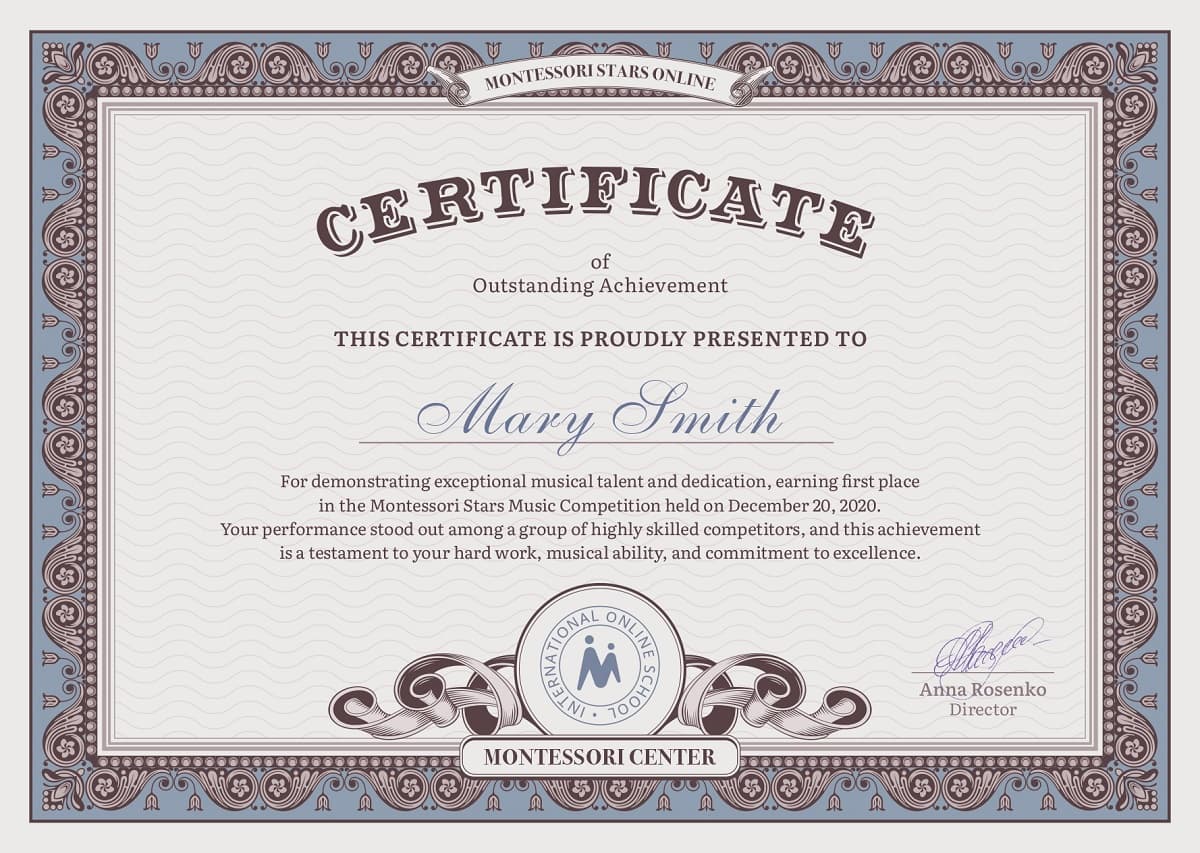
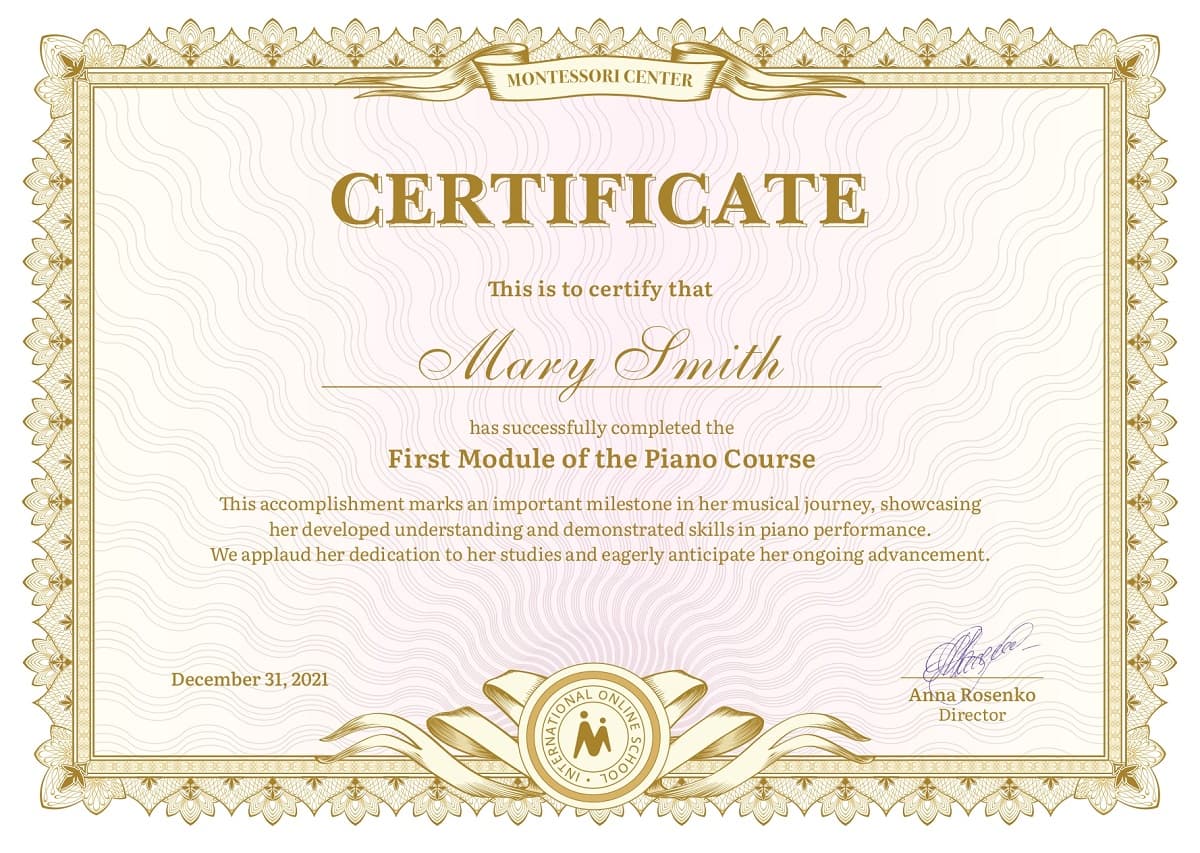
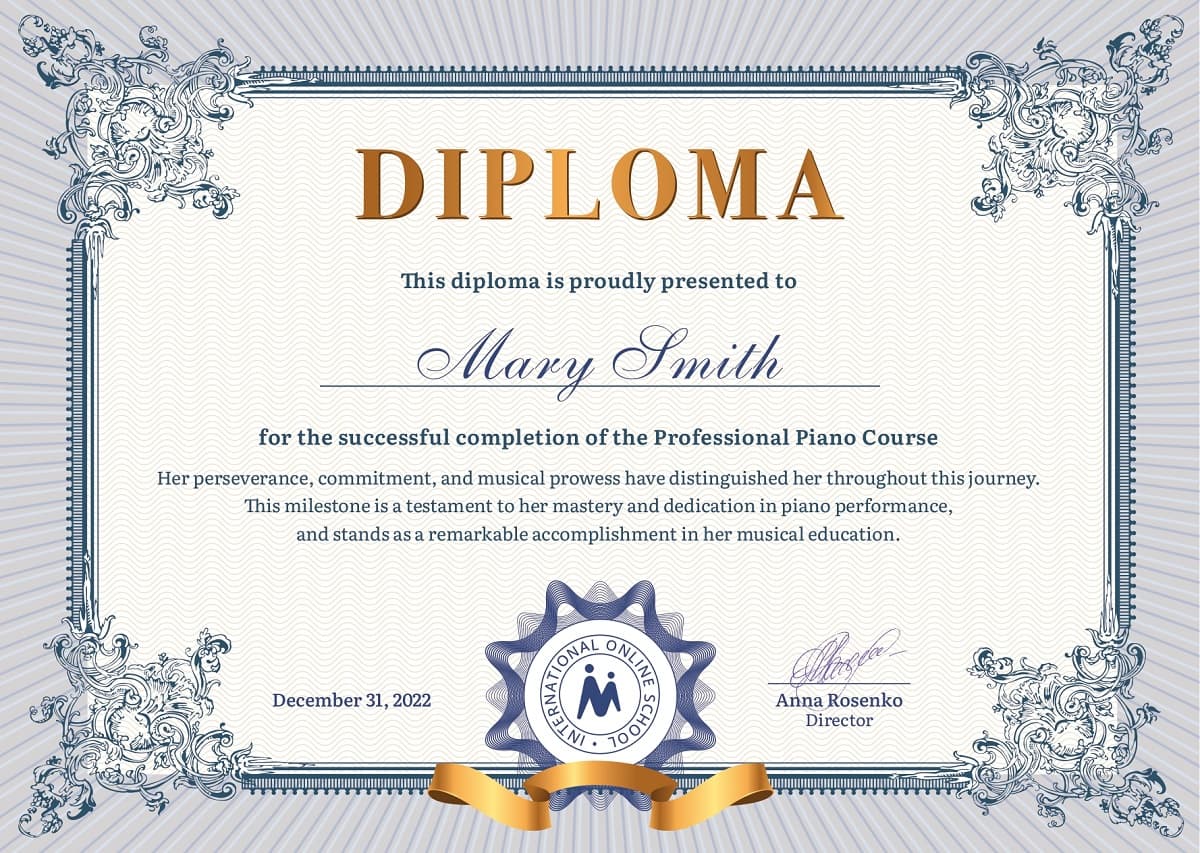
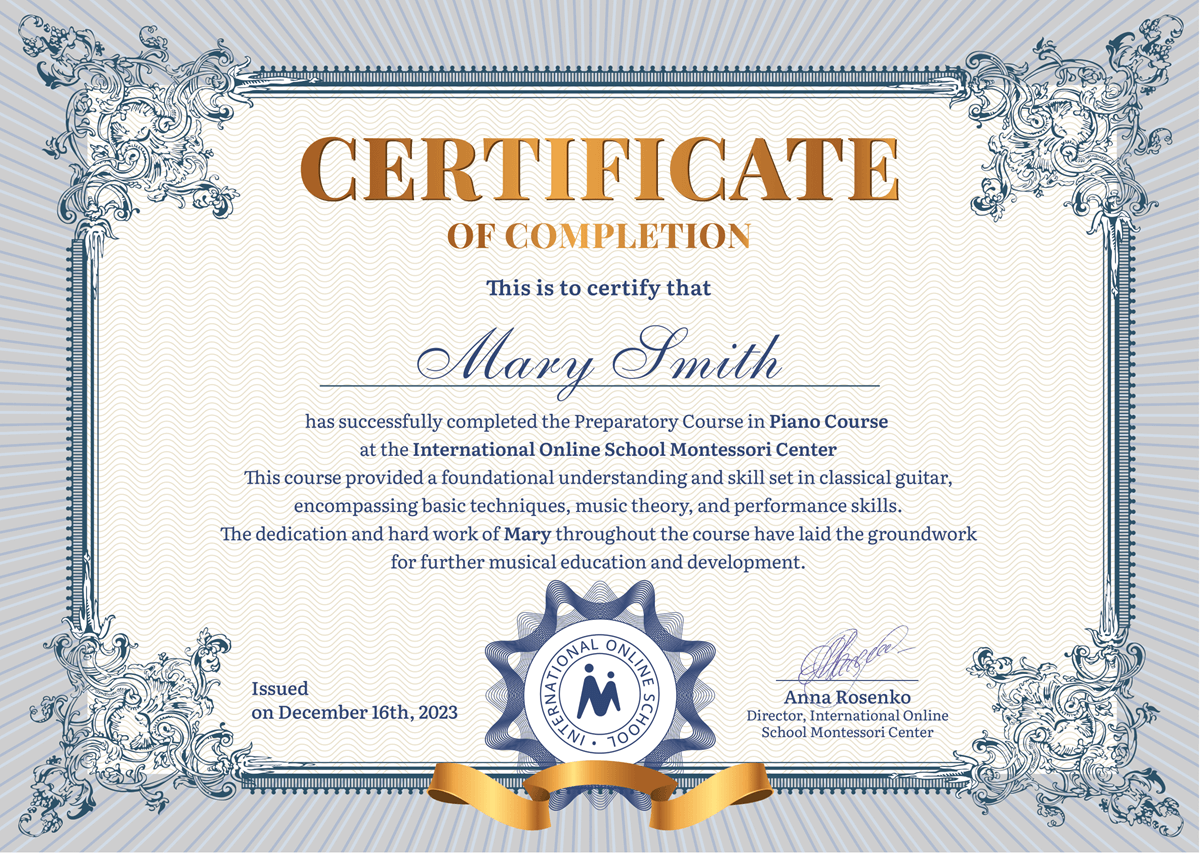
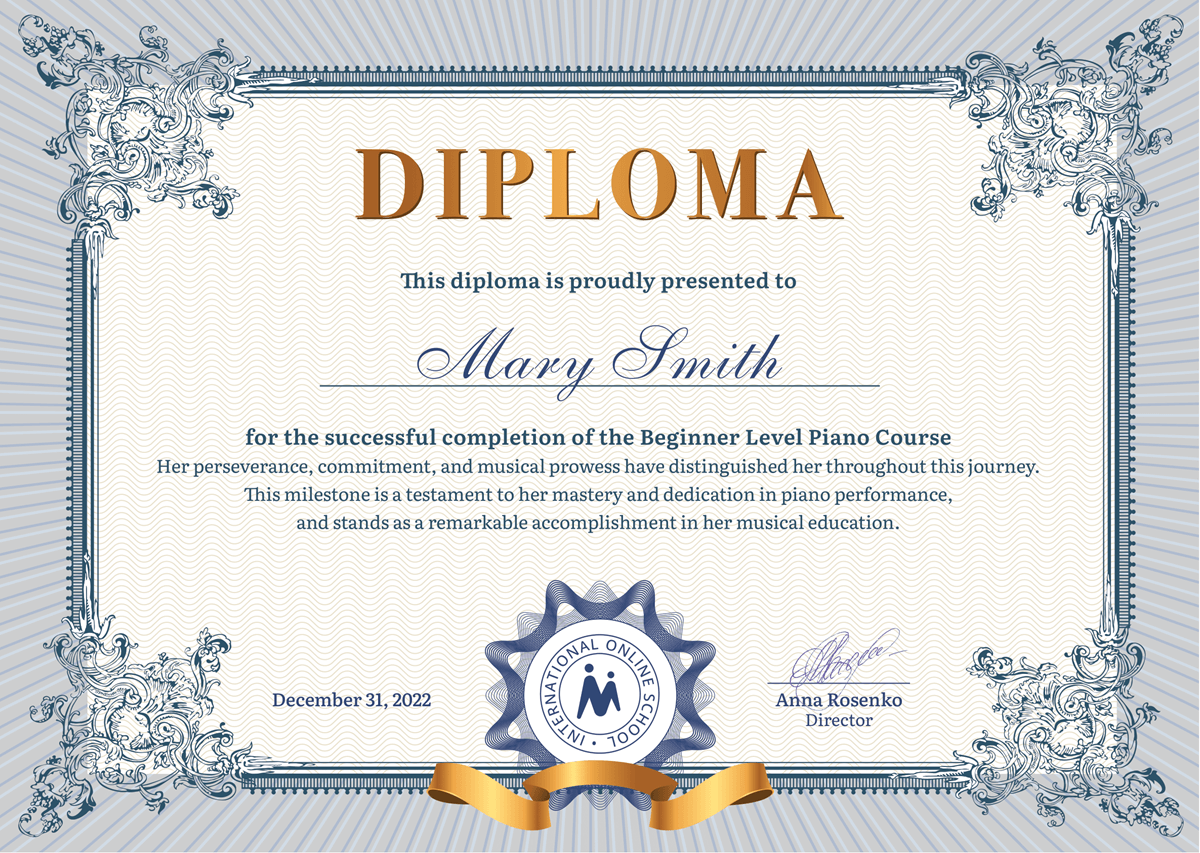
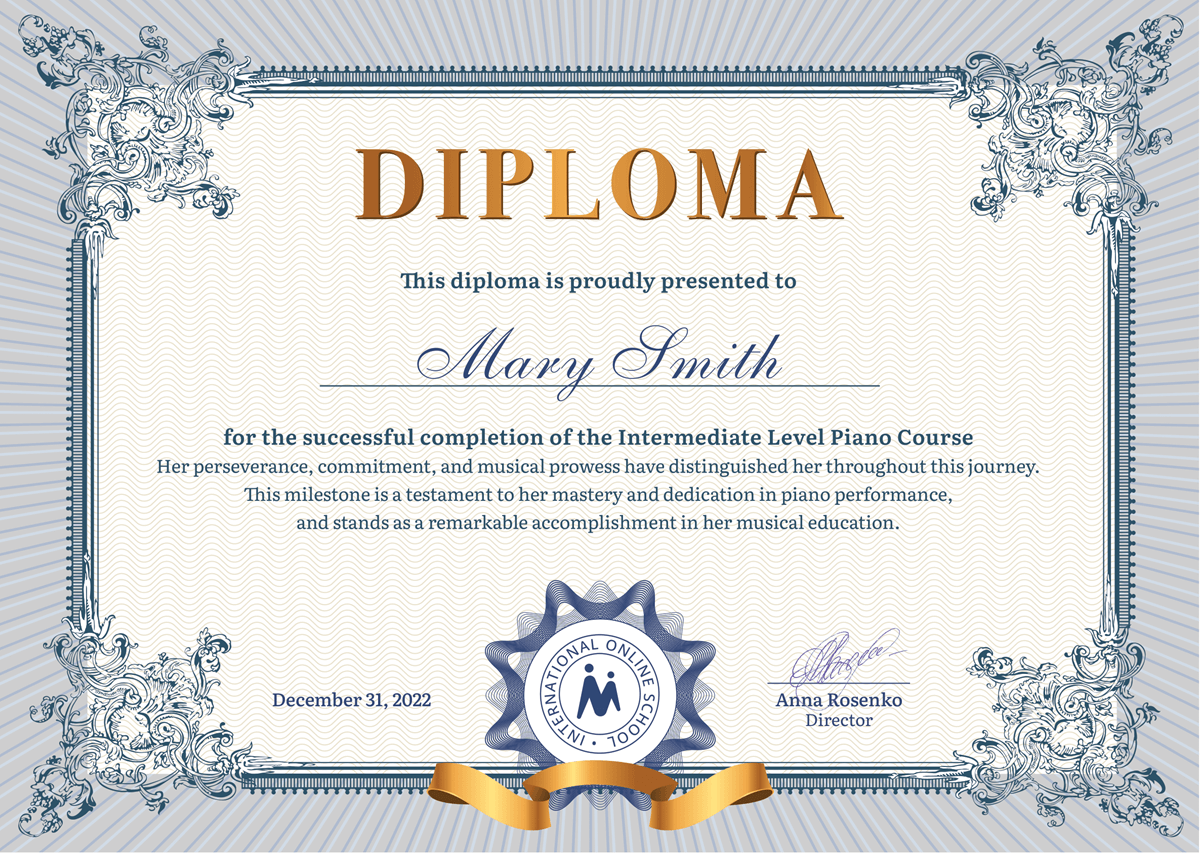
Students perform in online concerts and may take part in competitions if they wish. Everyone receives certificates of recognition and diplomas following concerts and competitions. The school awards a certificate after each module and a diploma after each level.
Teaching Method
Montessori Center’s piano teaching method is built around specific musical goals. At the start of the course, the teacher finds out what the student can already do and suggests pieces suited to their level. Together, they plan the stages of learning: reading the score, mastering the necessary techniques, practising difficult passages, and preparing a piece for performance.
Students move to the next level as they master the material, without a fixed timeframe. They can perform a prepared piece at an online concert or in a competition. For these events, the teacher helps them choose repertoire and prepare to play for an audience.
Benefits of Our Teaching Method
Clear tasks: the teacher shows students what to practise, whether it is the rhythm, fingering, or a particular section of a piece.
Individual pace: students can spend more time on a challenging programme and study it for as long as they need.
Practice without exams: students apply the techniques they learn to the pieces they study. They can share the results of their work at an online concert or competition.
For children and adults: the teacher selects exercises and repertoire based on each student’s age, experience, and interests.
Further study: after completing the school’s programme, students can continue lessons with our teachers and move on to more challenging, professional-level repertoire.
Preparatory Level
The preparatory level is designed for children aged 5–6. Children explore the keyboard, learn to distinguish high and low sounds, repeat simple rhythms, and play short melodies. The teacher gradually introduces their first notes and shows them how to position their hands while playing. Activities are chosen so children can try each new idea on the instrument right away.
Beginner Level
At the beginner level, students learn to read music, study note values and rhythmic patterns, and play with both hands. They work through short pieces, learn the principles of fingering, and practise playing with a steady rhythm. Gradually, their repertoire includes pieces with more challenging scores. By the end of this level, a student can work out a simple piece independently and play it from beginning to end.
Intermediate Level
At the intermediate level, pieces become longer and more varied. Students work on hand coordination, finger dexterity, and tone quality. They learn to recognise musical phrases and changes in dynamics. The teacher helps them understand the character of each piece and choose techniques that bring it out in their playing. Students gradually tackle more challenging repertoire and learn to identify passages that need more practice.
Advanced Level
At the advanced level, students work on demanding pieces and pay closer attention to the details of performance. They study each piece’s style, consider phrasing, dynamics, and tempo, and refine their technique and touch.
Preparing a piece involves independent work with the score and discussion of musical choices with the teacher. Students also learn about music history and how particular works were created, helping them better understand the music’s character and the composer’s intentions.
Every student can prepare a programme for an online concert or competition. The teacher helps them get their pieces ready for performance and discuss the results afterwards. After completing this level, students can continue their studies and work on professional-level repertoire.
Course Goals
Piano technique: develop hand coordination and finger dexterity, learn piano playing techniques, and work on tone quality.
Reading music: learn to read notation and study pieces independently, gradually progressing to more challenging works.
Repertoire: learn to perform music in different styles, including classical pieces, jazz, and popular music.
Expressive playing: work on rhythmic accuracy, phrasing, and dynamics to convey the character of each piece more vividly.
Performance experience: prepare pieces for performance and take part in online concerts and competitions.
Benefits of Piano Lessons
Musical ear: it develops gradually through playing the piano and listening to music. Over time, students begin to imagine how a piece should sound and work toward that sound in their own playing.
Sense of rhythm: working with note values helps students maintain a steady tempo and play musical phrases with rhythmic accuracy.
Hand coordination: playing with both hands often involves making different movements at the same time. Students develop this skill gradually, beginning with simple pieces for two hands.
Attention to the score: when learning a piece, students follow the notes, rhythm, fingering, and dynamic markings. Over time, they learn to notice these details and reflect them in their playing.
Musical memory: as students learn a piece, they remember its melody, rhythm, and harmony. Eventually, they may be able to perform a familiar piece from memory.
Playing solo and with others: the piano can provide both melody and accompaniment. These skills can later be used in a duet or to accompany a singer.
Exploring different music: by studying classical, jazz, and contemporary pieces, students hear how composers use rhythm, harmony, and the sound of the instrument in different ways.
Independent practice: students learn to divide a piece into smaller sections, identify difficult passages, and practise them before the next lesson.
Performance experience: preparing for an online concert or competition gives students a chance to play a complete piece for an audience and learn to manage performance nerves.
At the first lesson, the teacher will ask about your musical experience, listen to you play, or help you take your first steps at the piano. Together, you will choose pieces you enjoy and begin working on them.
News


How Piano Lessons Are Conducted
Equipment: you’ll need a piano or keyboard, as well as a computer or tablet with a camera and microphone.
Internet connection: a stable connection is needed for video lessons with your teacher. Check your connection before the lesson.
Video platform: lessons take place on Zoom or Google Meet. Install the app you’ll be using in advance and check that your camera and microphone work.
Sound: position your device so your teacher can hear you play clearly. Check the audio before the lesson and adjust the instrument’s volume if needed.
Lesson link: we’ll send it in advance by email or through your preferred messaging app. Before the lesson, check that you’ve received it.
Sheet music: print it before the lesson or open it on a separate screen.
Camera position: place the computer or tablet beside the student, at keyboard height or slightly above it. The teacher should be able to see the student’s face, hands, and keys.
Joining the lesson: open the lesson link 5–10 minutes early to check the video and sound.
Feedback: the teacher explains new techniques, listens to you play, and tells you what to work on.
Questions: ask any questions you have during the lesson. Your teacher will explain things in detail and help you work through anything you find difficult.
Practice: you’ll spend most of the lesson playing: learning a new piece or working on one you already know. Your teacher listens and offers guidance as you play.
Teacher demonstration: your teacher plays a piece or part of it so you can hear how it sounds and notice details of the performance.
End of the lesson: you’ll discuss what you accomplished, what to practise at home, and where to begin next time.
After the lesson, your teacher will send you the sheet music and suggest which passages to practise at home. If needed, you can listen to a recording of the piece to become more familiar with how it sounds.
In your online lessons, you’ll learn musical pieces with your teacher. Over time, you’ll build a repertoire of pieces you can play for family and friends or at a school online concert.
Piano Teachers

Snezhana Mamchich
Piano

Maria Fedorova
Piano

Natalia Rekhtina
Piano, Singing

Olga Ogiychuk
Piano

Olha Shovkoplias
Piano, Singing

Alexandra Stychuk
Piano, Singing

Sofiya Pysarenko
Piano, Singing

Maryna Maiboroda
Piano

Viktoriia Derii
Piano, Singing
Piano Course Program
 Preparatory
level
Preparatory
level
Age: 5 - 6 years
Modules
First Notes and Simple Melodies
Play and Learn: Fun Piano Pieces
Learning to Play with Both Hands
First Musical Online Concert
 Beginner
level
Beginner
level
Age: 7 years and older
Modules
Music theory basics
Playing skills and simple melodies
Developing musical ear and sense of rhythm
Learning simple musical pieces
Learning solo pieces with different moods
Preparing for and giving a solo performance
 Intermediate
level
Intermediate
level
Age: 10 years and older
Modules
More advanced music notation and theory
Learning a range of playing techniques and improving performance skills
Learning pieces of intermediate difficulty
Preparing for and performing in an online concert
 Advanced
level
Advanced
level
Age: 12 years and older
Modules
Developing expressive playing through phrasing, dynamics, and the character of a piece.
Learning more challenging pieces and refining playing technique.
Exploring music from different periods and styles and how to perform it.
Preparing a solo program and performing at a school online concert.
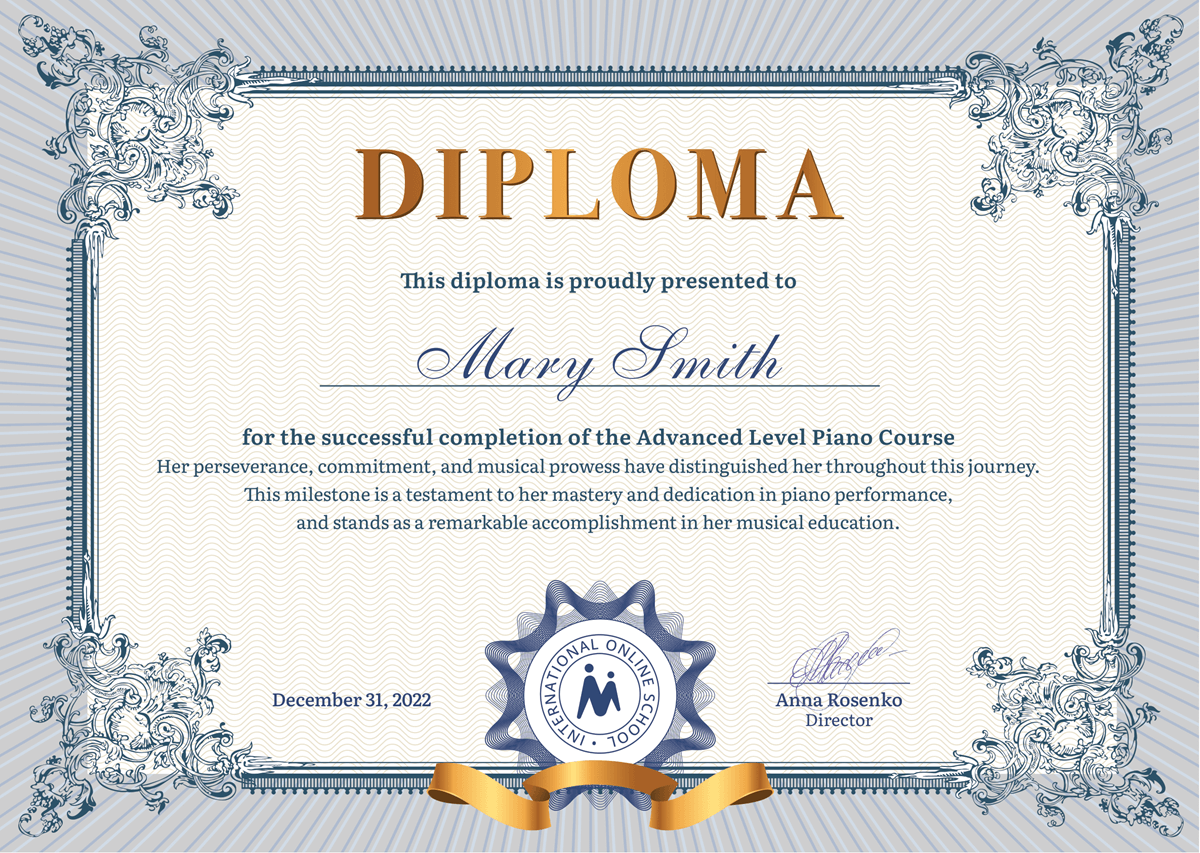
The piano course includes a preparatory level for children aged 5–6, followed by beginner, intermediate, and advanced levels for students aged 7 and older and for adults. If you haven’t studied music before, you’ll start at the beginner level. Students with prior experience may start at the intermediate or advanced level after the teacher assesses their skills. The school awards a diploma upon completion of each level.
Book a trial lesson: meet your teacher, play a familiar melody, or try the piano for the first time.
Course Schedule
We teach every day, including weekends
To coordinate the day of the week and the time for your lesson, please write to us, and the administrator will arrange a convenient schedule for you!Contact Us


Philip Danvers

Oscar Rojas
Ophelia Wren
Nina Berger
Maria Efimova
Xavier Blanc
Наталья Кузнецова
Review language: Russian
Петр
Review language: Russian
Алексей Новиков
Review language: Russian
Вероника
Review language: Russian
Frequently Asked Questions (FAQ)
From Bach to the Beatles: The Influence of Different Eras on Piano Performance
The piano, a symbol of the universality of the musical world, has experienced numerous historical eras, reflecting their essence in...
Overcoming Challenges in Online Piano Lessons: Tips for Parents
In today's digital age, many aspects of life are transitioning online, and piano instruction is no exception. However, online learning...
Playing Together: Engaging Parents in the Process of Online Piano Learning
You may have heard that music education can foster the development of various skills in a child, such as creative...
How to Choose Suitable Repertoire for a Beginner Pianist
Choosing repertoire for a beginner pianist is an important step towards musical mastery. Well-selected pieces will not only help develop...
Pianist Secrets: How Incredible Results in Piano Playing Are Achieved
The piano is a unique instrument capable of creating magnificent musical masterpieces. But behind each touch of the keys lies...
Online Piano: Between Traditions and Technologies
With the advent of online education, including musical instruction, many parents began to wonder: how do traditions and new technologies...
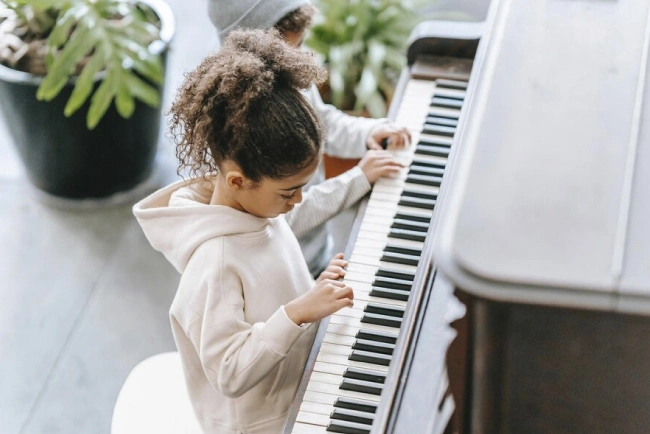
Technical Aspects of Online Piano Lessons: Setting up Sound, Camera, and Microphone
Online piano lessons offer us new horizons for learning, but they also present a set of technical challenges. The quality...
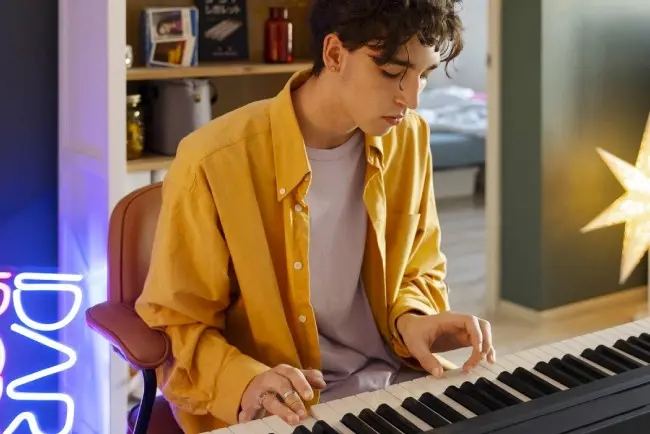
Top 5 Exercises for Developing Finger Technique
Playing the piano is an art that requires not only musical ear but also refined technique. One of the key...
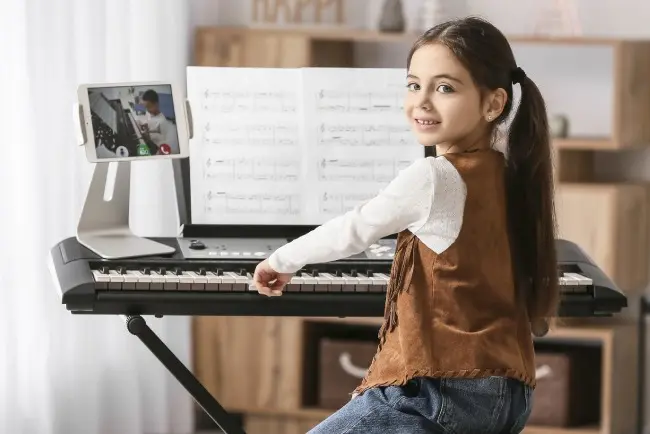
How to Support Your Child’s Motivation During Online Piano Learning
Online learning has opened up new opportunities for many families. However, it can also present challenges in maintaining children's motivation....