Online
Classical Guitar
Classes
On the classical guitar course, you’ll learn your favorite pieces, develop your playing technique, and prepare to perform in online concerts.





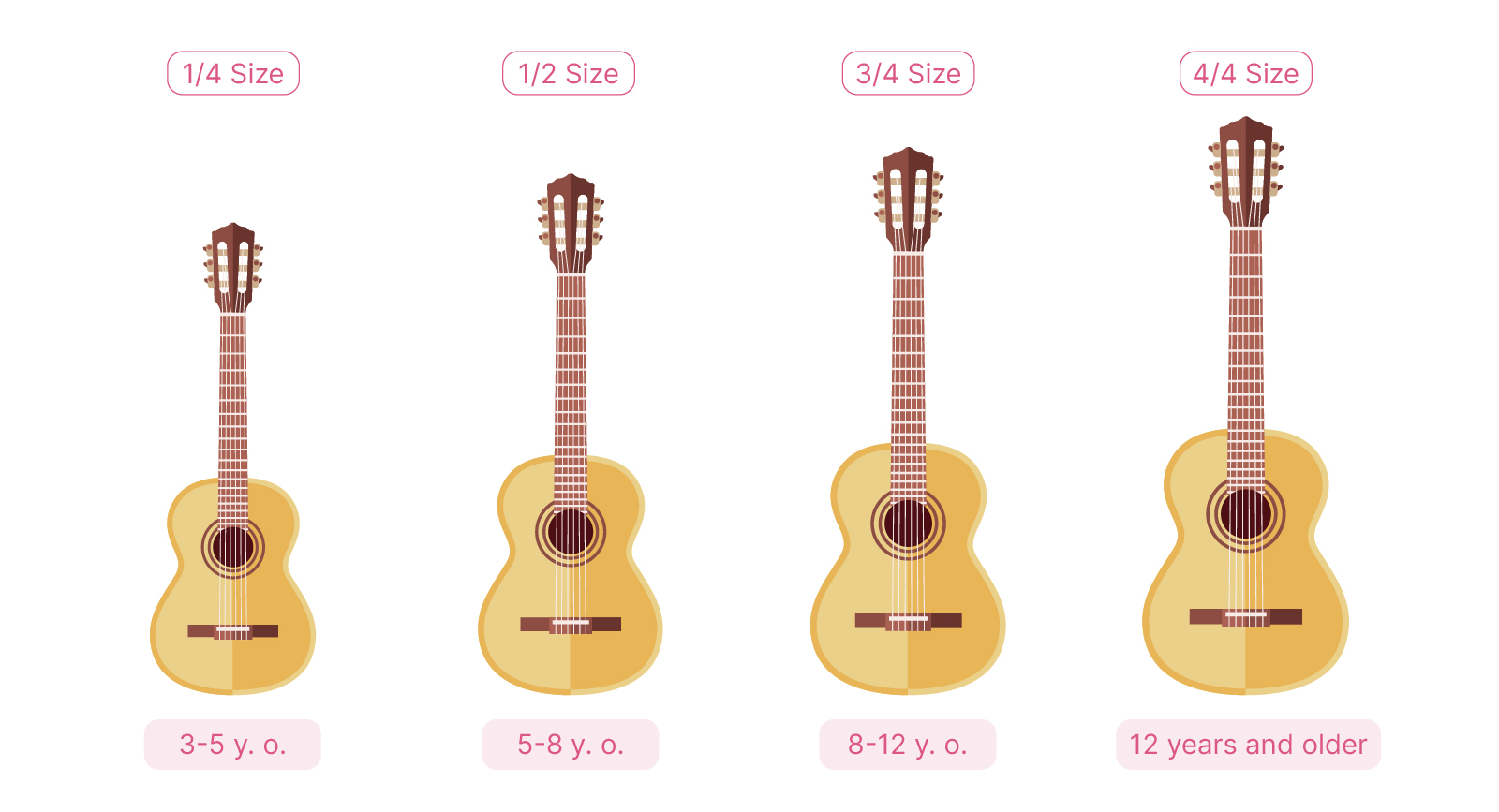
As you gain playing experience, it will become easier to compare instruments and choose a guitar based on its sound and how comfortable it feels to play.



Trial Lesson
If you want to book a trial classical guitar lesson, you need to schedule and pay $8.00.
The trial lesson is conducted individually and lasts for 45 minutes.

Subscription
If you enjoyed the trial lesson, you can purchase a subscription by making a prepayment for at least 4 lessons.
The price of a 4-lesson subscription is $60.00 (the cost of one lesson is $15.00).
Payment must be made at least 24 hours before the lesson's start time.

Discounts
When you purchase 8 lessons or more, a discount applies. The more lessons, the more you save!
Course Overview
The online classical guitar course is designed for children aged 6 and over and adults. Students develop playing techniques, learn to read music, and study classical, jazz, and contemporary pieces. The programme includes beginner, intermediate, and advanced levels. A preparatory level is available for children aged 6 and over.
Each individual lesson lasts 45 minutes. Lessons can be taught in Russian, Ukrainian, or English. We agree on the schedule and teaching language before lessons begin.
Lessons take place on Google Meet or Zoom. The teacher demonstrates playing techniques, listens to the student’s performance, and helps them work through difficult passages. Our teachers hold university degrees in music and have teaching experience; many also maintain an active concert performance schedule.
You can choose how often to have lessons to fit your schedule. We recommend two lessons a week so you can work regularly with your teacher and retain material from previous lessons. It is important to make time for independent practice between lessons.
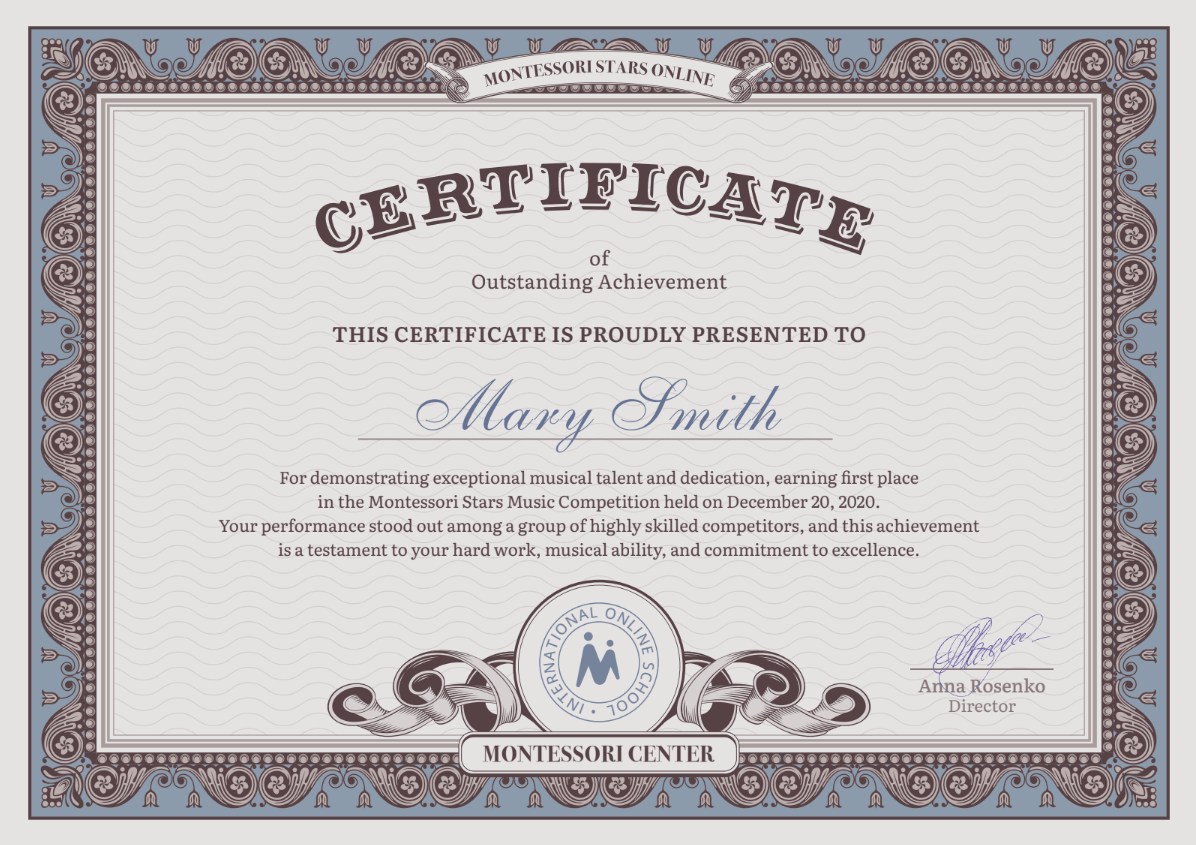
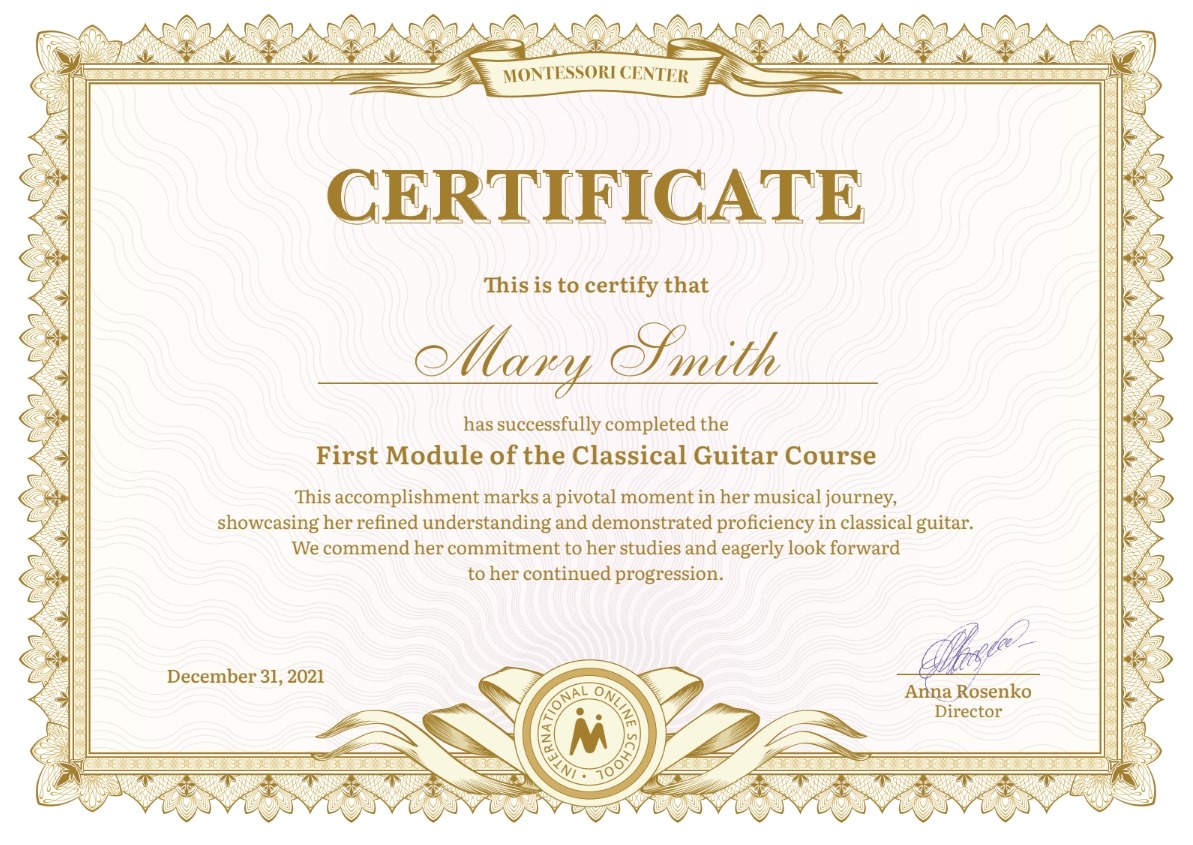
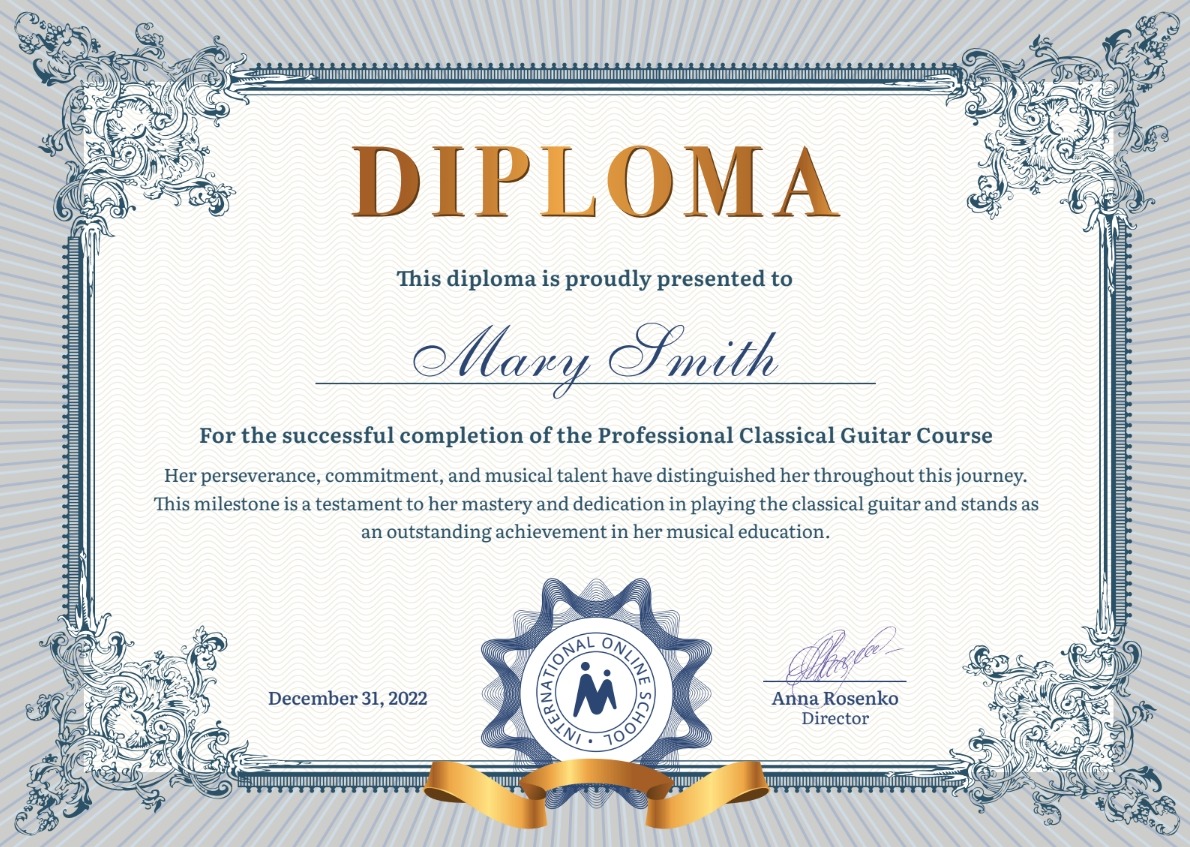
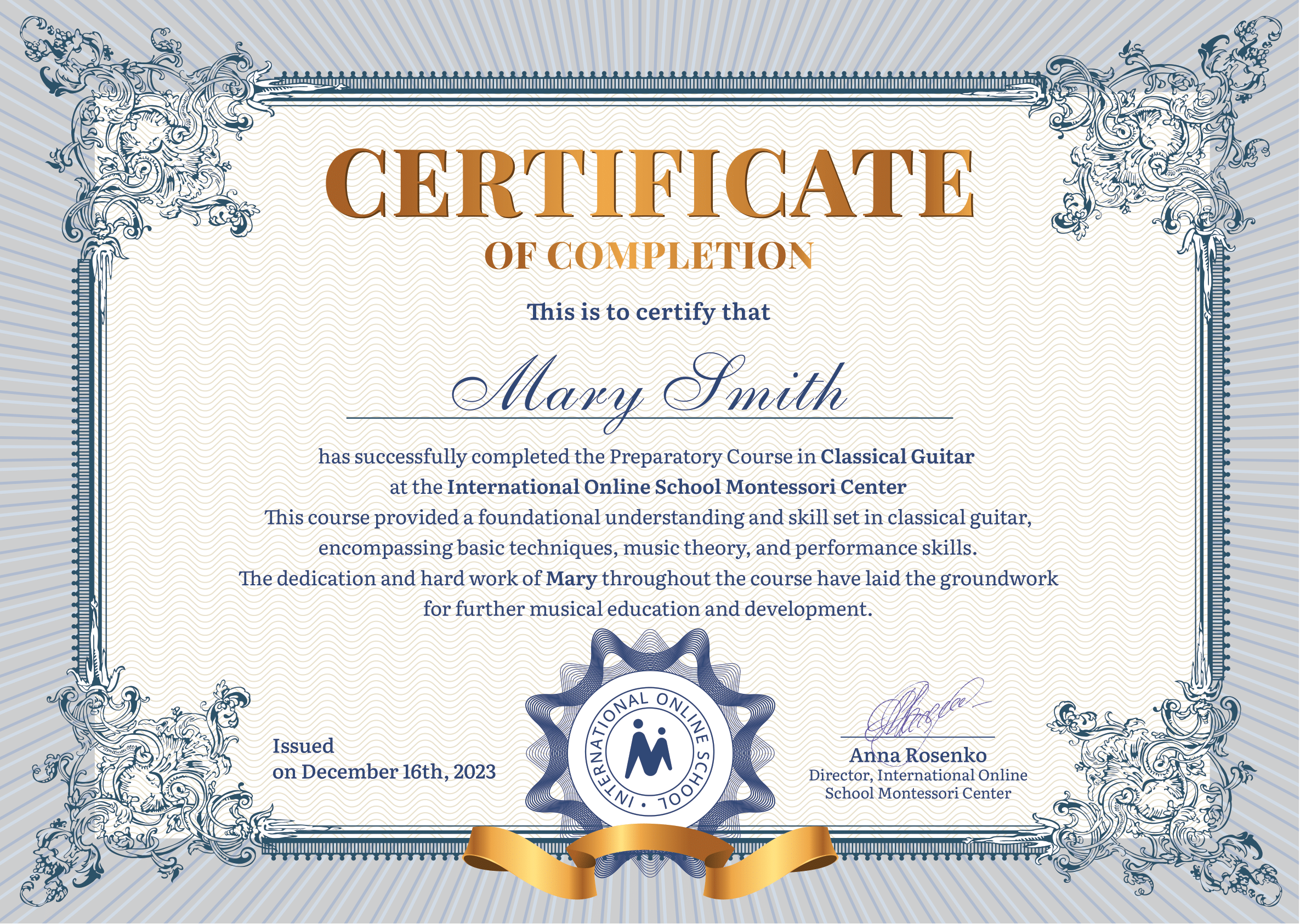
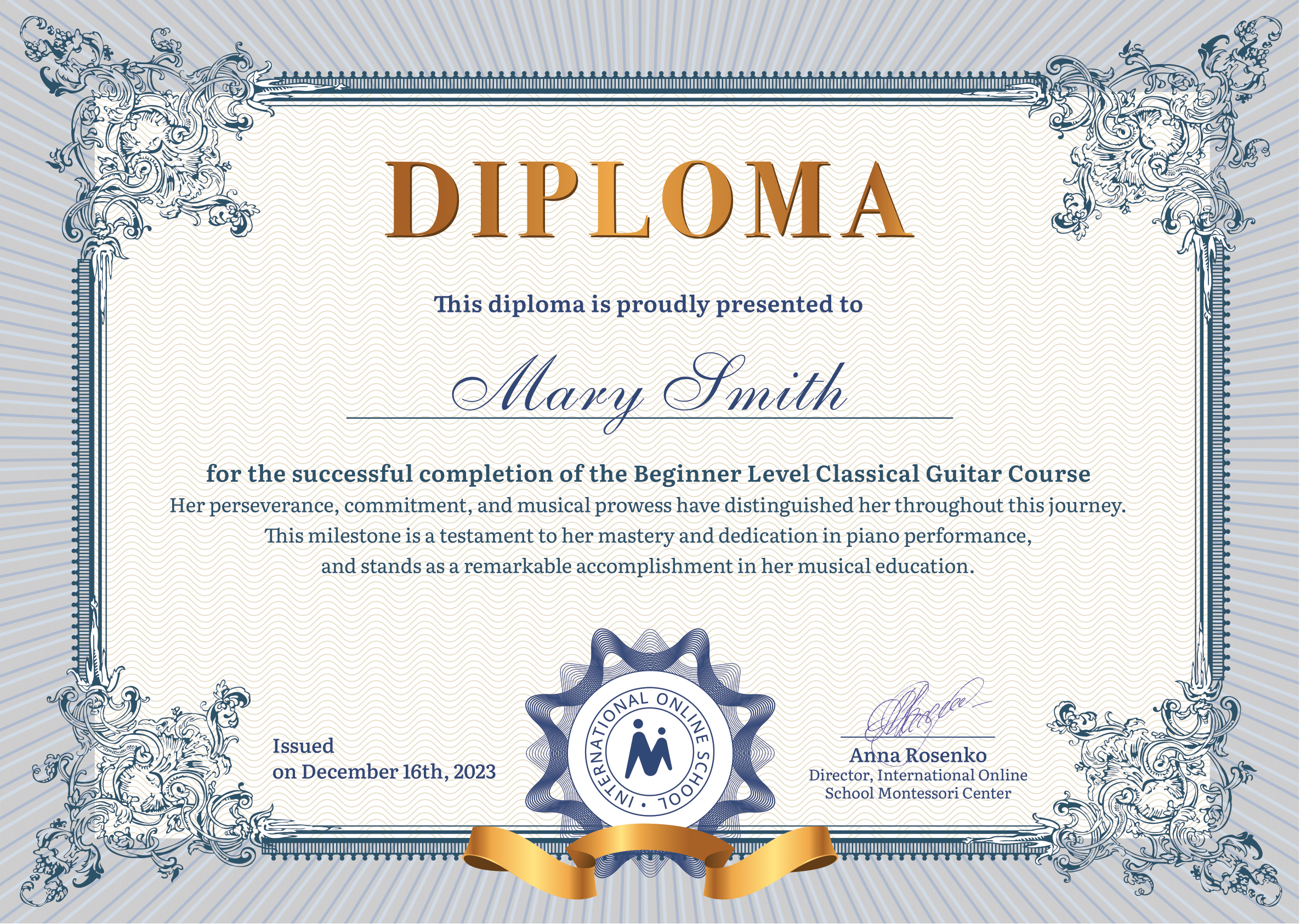
Students perform in online concerts, take part in competitions and masterclasses, and receive diplomas and certificates for their participation. The school awards a certificate upon completion of each module and level.
Our Teaching Approach
On the online classical guitar course, the teacher selects a programme based on the student’s level and musical interests. Each piece is approached in stages: reading the score, choosing fingerings, learning playing techniques, and developing expressive performance.
Students progress to the next level as they master the material, without a fixed deadline. Instead of taking exams, they can perform the pieces they have learned at an online concert or competition. The teacher helps select a performance programme and discusses the results with the student afterwards.
Benefits of Our Teaching Approach
Clear tasks: the teacher explains what needs practice and demonstrates exercises that help students work through difficult passages in a piece.
Individual pace: students can take the time they need to learn a new technique or piece.
Performance experience: online concerts and competitions provide opportunities to prepare a programme and perform it for an audience.
For children and adults: tasks and repertoire are selected according to the student’s age, experience, and interests.
Further study: after completing all modules, students can continue lessons with our teachers and work on professional-level repertoire.
Preparatory Level
At the preparatory level, children get to know the instrument and learn how to hold the guitar and position their hands correctly. From the first lessons, they try producing sounds, repeat simple rhythms, and play short melodies. The teacher gradually introduces musical notation and selects tasks that can be tried on the instrument straight away. Particular attention is given to hand coordination and freedom of movement while playing.
Beginner Level
At the beginner level, students learn to read music, understand note values and rhythmic patterns, and become familiar with tablature. They learn to locate notes on the fretboard, choose fingerings, and control the movements of both hands. The repertoire includes short classical and contemporary pieces. By the end of this level, students can perform several simple pieces and work through an easy melody independently.
Intermediate Level
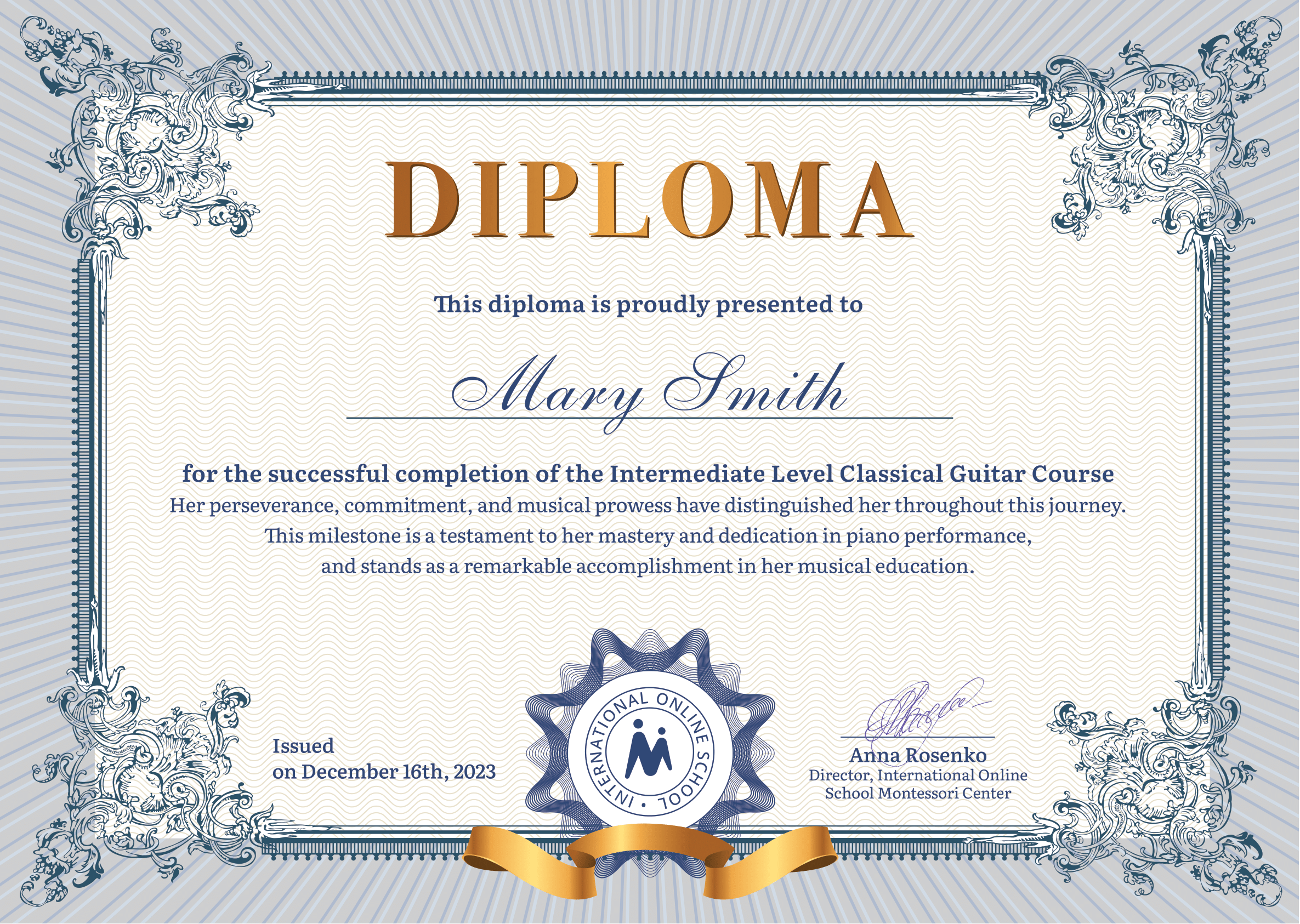
At the intermediate level, pieces become more challenging and varied. Students develop finger agility, learn new techniques, and work towards an even, clean sound. More attention is given to musical phrases, dynamics, and the balance between melody and accompaniment. The teacher helps students understand the character of a piece and convey it through their playing. Gradually, students learn to identify passages that need more work and choose ways to practise them.
Advanced Level
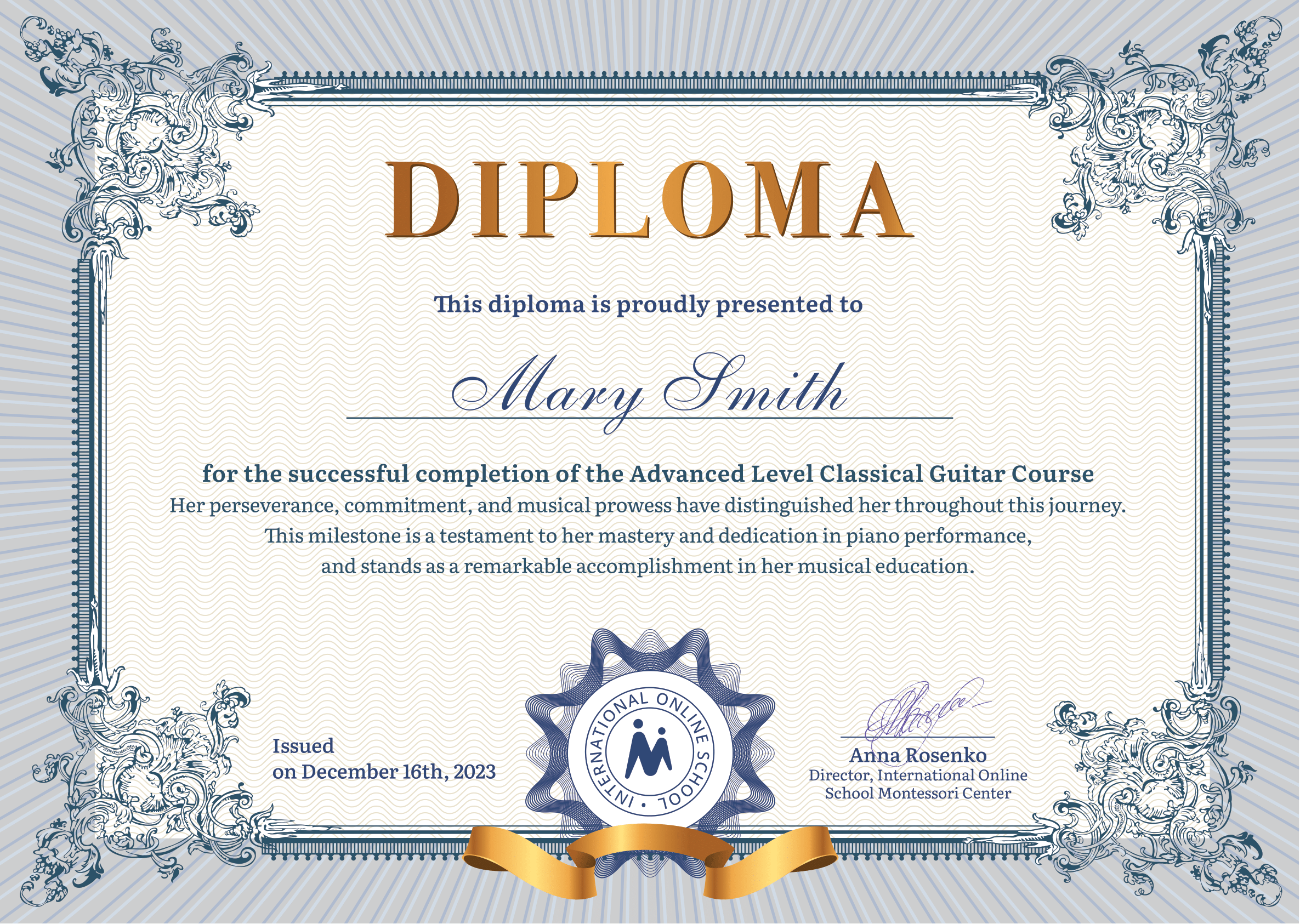
At the advanced level, students learn challenging pieces and refine their playing technique. They study the features of different musical styles, plan phrasing, dynamics, and tempo, and explore nuances of tone.
Preparing a piece involves independent work with the score, choosing fingerings, and discussing interpretative decisions with the teacher. Lessons also draw on music theory, harmony, and the background of the pieces to help students understand their form and the composer’s intentions.
Students can prepare a solo programme for an online concert or competition. The teacher helps them develop a cohesive performance, paying attention both to difficult passages and to the overall character of the music. After completing this level, students can continue lessons and move on to professional-level repertoire.
Course Goals
Playing technique: learn proper hand positioning and classical guitar techniques, develop finger agility, and work on tone quality.
Music reading: learn to read sheet music, understand musical markings, and work through pieces independently, gradually progressing to more challenging music.
Repertoire: learn pieces in different styles, working on rhythm, phrasing, and dynamics to convey the character of the music.
Independent practice: learn to plan practice sessions at home, work through difficult passages, and assess your playing by listening carefully.
Performance experience: prepare pieces for performance, take part in online concerts and competitions, and learn to manage nerves when playing for an audience.
Benefits of Guitar Lessons
Hand coordination: when playing the guitar, the hands perform different tasks: the left hand presses the strings against the fretboard, while the right hand produces the sound. Starting with simple exercises, students gradually learn to coordinate their movements.
Developing a musical ear: playing the guitar and listening to music gradually improve students’ ability to recognise pitch in both melody and accompaniment, notice inaccuracies, and achieve the sound they want in their own playing.
Sense of rhythm: working with note values and rhythmic patterns helps students maintain a steady tempo, play phrases accurately, and observe rests.
Musical memory: as students learn a piece, they memorise its melody, rhythm, harmony, and sequence of movements. As they become more familiar with the piece, they can begin playing it from memory.
Independence: practising at home teaches students to divide their time between exercises and pieces, identify difficult passages, and work on them before the next lesson.
Exploring different music: classical, jazz, and contemporary pieces introduce students to different rhythms, harmonies, and playing techniques. Gradually, they discover music they particularly enjoy listening to and playing.
Expressive playing: the same phrase can be played in different ways by changing the dynamics, tempo, and accents. Students try different interpretations and work with the teacher to choose those that suit the character of the piece.
Performing for an audience: preparing for online concerts and competitions helps students learn to play a complete piece for listeners and manage performance nerves.
Time for music: lessons offer an opportunity to take a break from everyday tasks and focus on favourite pieces. Over time, students build a repertoire they can play for themselves, family, and friends.
At your first lesson, you’ll meet your teacher and discuss the music you’d like to play. If you already have experience, you can perform a familiar piece. If you’re starting from scratch, your teacher will show you how to hold the guitar correctly, and you’ll begin learning your first melodies right from the first lesson.
News


How Classical Guitar Lessons Are Conducted
Equipment: you’ll need a guitar and a computer or tablet with a camera and microphone. Position your device so your teacher can see both hands and the instrument.
Internet connection: you’ll need a stable internet connection for your online lesson with the teacher. Check your connection before the lesson.
Video platform: lessons take place on Zoom or Google Meet. Install the required app in advance and check your camera and microphone.
Sound: headphones will help you hear your teacher’s explanations and playing more clearly. At the start of the lesson, check that your teacher can hear both you and your guitar clearly.
Lesson link: we’ll send it in advance by email or through your preferred messaging app. Before the lesson, check that you’ve received it.
Sheet music: print it out before the lesson or display it on a screen where you can easily read it while playing.
Device placement: place your laptop or tablet in front of you. Your teacher should be able to see your face, both hands, and your guitar.
Joining the lesson: use the link to join Zoom or Google Meet 5–10 minutes before the lesson starts to check your video and sound.
Feedback: your teacher explains how to hold the guitar and position your hands correctly, demonstrates exercises, and helps you learn pieces. As they listen to your playing, they point out what needs more work.
Questions: ask if a technique or task is unclear. Your teacher will explain it again and help you understand.
Practice: you’ll spend most of the lesson playing: practising exercises, working through a new piece, or continuing with a familiar one. Your teacher listens and offers guidance throughout the lesson.
Teacher demonstration: your teacher plays a piece or a short passage so you can hear the intended sound and see how the technique is performed.
Wrapping up: at the end of the lesson, you’ll discuss what you’ve accomplished, which exercises and passages to practise at home, and what to learn independently before your next lesson.
Your teacher will select sheet music and materials for practice at home, suggest recordings to listen to, and explain what to work on before your next lesson.
Start with a melody you’ve always wanted to play. Your teacher will find sheet music suited to your level, and you’ll begin learning the piece during your lessons.
Classical Guitar Teachers

Artem Ostroverkh
Classical Guitar, Electric Guitar, Ukulele, Bass Guitar

Igor Yaremenko
Classical Guitar, Electric Guitar, Ukulele, Bass Guitar

Anzhelika Udod
Classical Guitar, Electric Guitar, Ukulele, Bass Guitar

Nikita Demidov
Classical Guitar, Electric Guitar, Ukulele, Bass Guitar
Classical Guitar Course Program
 Preparatory
level
Preparatory
level
Age: 6 years and older
Modules
Learning the basics of tone production
Learning to play simple melodies on open strings
 Beginner
level
Beginner
level
Age: 7 years and older
Modules
Developing proper hand position and learning playing techniques
Learning to read music and play simple pieces
Playing simple pieces in different styles
Developing playing technique — speed and accuracy
Improving coordination and playing technique
Preparing for and performing in an online concert
 Intermediate
level
Intermediate
level
Age: 10 years and older
Modules
Developing expressive playing through phrasing, dynamics and the character of the piece.
Learning intermediate pieces and developing new playing techniques.
Working on melody and accompaniment: learning to bring out the melody and listen to each musical voice.
Preparing solo pieces and performing in an online concert or competition.
 Advanced
level
Advanced
level
Age: 12 years and older
Modules
Learning pieces from different periods and styles and exploring how to perform them.
Working on challenging pieces: refining technique, choosing fingerings and developing expressive playing.
Preparing a concert programme: rehearsing, playing pieces from start to finish and building confidence before performing.
Performing in an online concert or competition and discussing the results with your teacher.
The classical guitar course includes a preparatory level for children aged 6 and over, as well as beginner, intermediate and advanced levels for students aged 7 and over and adults. If you have never played the guitar, you will start at the beginner level. For students with experience, the teacher will assess their skills and recommend a suitable level. The school awards a diploma upon completion of each level.
Book a trial lesson to meet your teacher, play a familiar piece or start learning your first melody on the guitar.
Course Schedule
We teach every day, including weekends
To coordinate the day of the week and the time for your lesson, please write to us, and the administrator will arrange a convenient schedule for you!Contact Us



Joanna Reid

Iris
Ian
Alex
Георгий
Review language: Russian
Максим Трофимов
Review language: Russian
Иван Ф.
Review language: Russian
Вера П.
Review language: Russian
Елена
Review language: Russian
Роман В.
Review language: Russian
Frequently Asked Questions (FAQ)

Music Theory for Guitarists: Is It Necessary?
The question of the necessity of musical theory for guitarists sparks much debate. Some believe that theory limits creativity, while...

Guitar Improvisation: From Basics to Creativity
Guitar improvisation is an art that opens endless possibilities for self-expression. For many guitarists, the path to free improvisation begins...

Advantages of Individual Online Guitar Lessons for Children
Individual online guitar lessons present a unique educational opportunity for children. This learning format offers a range of advantages that...

Performance Psychology: How to Overcome Stage Fright
Stage fright is a common phenomenon among musicians of all ages and levels. Here are some tips that an online...
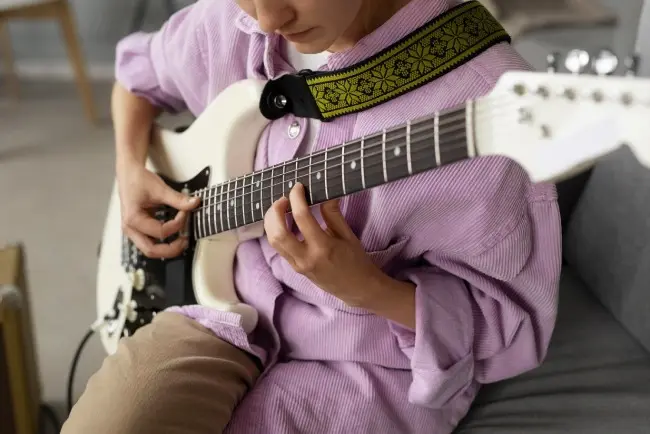
Playing Jazz on Guitar: First Steps
Jazz is an exciting and expressive genre that can be learned in guitar lessons for children and adults, including online...
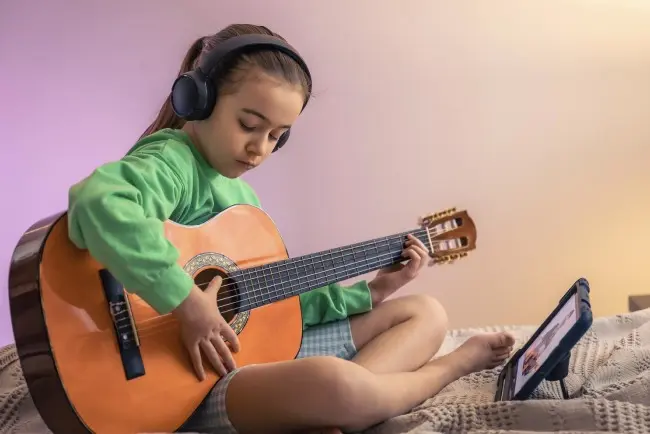
5 Key Principles for Effective Online Guitar Lessons
Effective online guitar lessons can be a catalyst for achieving your musical goals. Here are five key principles that every...

Fingerstyle Secrets: How to Play Songs with Your Fingers
Fingerstyle is a guitar playing technique where songs are played using fingers instead of a pick. This style allows the...
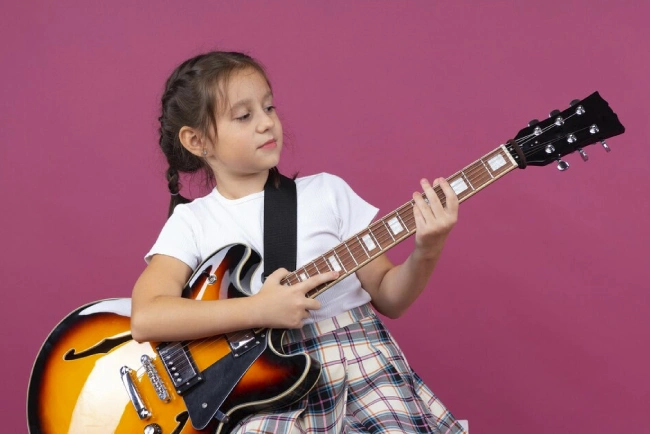
Finger Exercises: Dexterity and Strength for Guitarists
Finger dexterity and strength are crucial for guitarists of all levels. Developing these qualities improves technique, accelerates progress, and helps...

Tips for Composing Music on the Guitar for Beginners
Creating your own music on the guitar is an exciting process that opens up unlimited possibilities for self-expression. Whether you're...
Gallery