Learning the Notes: Basics for Playing the Recorder
· Updated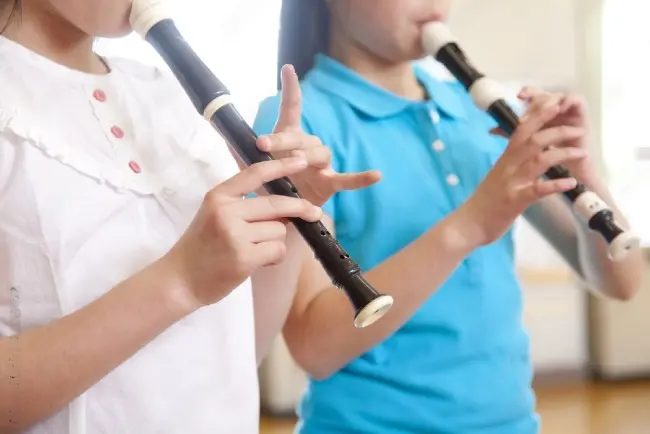
The recorder is one of the most accessible instruments for a first encounter with written music, and schools have used it for a long time. Here is how the holes work, which notes to learn first and what else to know about reading music.
How the Holes Work
A recorder has seven holes on the front and one on the back for the thumb. They are numbered with the back hole as 0 and the front holes from 1, nearest the beak, to 7. The left hand goes on top: its thumb closes hole 0, while its first three fingers close holes 1, 2 and 3. The right hand goes below, with the index, middle, ring and little fingers on holes 4 to 7. Beginners usually start on the soprano recorder, whose lowest note is C5.
Fingerings for the First Notes
- B: holes 0 and 1 covered.
- A: holes 0, 1 and 2 covered.
- G: holes 0, 1, 2 and 3 covered, the whole left hand.
Recorders come with baroque or German fingering. There is no difference on the first notes; the clearest one is F, fingered 0 123 4 67 on a baroque soprano and 0 123 4 on a German one. It is best to check with the teacher which system to buy.
Reading Music
- The staff: five lines and the four spaces between them.
- Note values and rests: whole, half, quarter and eighth notes, plus rests of the same lengths.
- Accidentals: a sharp raises a note by a half step, a flat lowers it, and a natural cancels both.
- Rhythm and meter: count aloud or play with a metronome.
First Tunes
With just three notes, B, A and G, you can already play simple songs; the English “Hot Cross Buns,” for one, has long been used in music teaching. Learn a new tune in small sections: notes and rhythm first, then fingering, with hard spots played slowly. How to organize practice at home is covered in How to Practice the Recorder at Home: Effective Methods.
How to Get Started
In our recorder course, students learn to hold the instrument properly and control their breathing, read notes and rhythms, and play favorite melodies and pieces in different styles, with the option of performing at online concerts. Lessons are open to students from age 5. A trial lesson costs $8: it is individual and lasts 45 minutes. More about the course is on the Recorder page.


