How Saxophone Lessons Impact Child Development
· Updated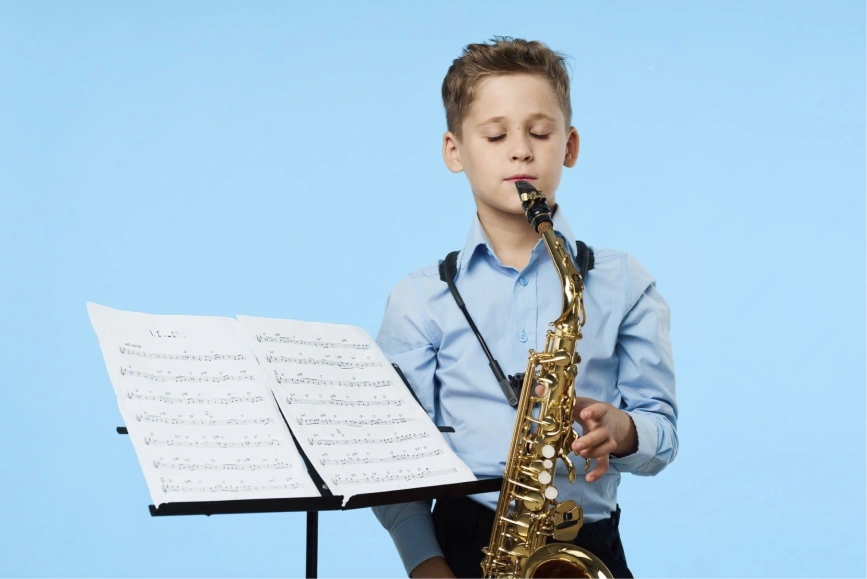
Adolphe Sax, a Belgian maker of instruments, created the saxophone in the early 1840s, and today it is heard in jazz, pop, orchestras and wind bands. What do lessons give a child? Here is an answer without grand promises, based on what playing the instrument involves.
- Musical skills. Children learn to produce an even tone, read notes and rhythms, and understand tempo and dynamics markings.
- Coordination. Breath, lips on the mouthpiece and fingers on the keys all work at once, which is constant practice in coordinated movement.
- Breathing. A wind instrument teaches you to take in air and make it last through a whole musical phrase.
- Focus. You have to follow the notes, the sound and the count at the same time.
- A habit of regular work. Progress comes from short but frequent practice, a good lesson in self-discipline.
- Confidence. A prepared piece can be played at a concert, and performing for an audience is an experience that is learned too.
- Connecting through music. The saxophone is a regular in jazz bands and wind ensembles, so in time a child can play with others.
From What Age and How Lessons Work
At our school, children can start the saxophone from age 8. Beginners usually choose the alto saxophone, the most common type; if a child prefers the sound of the soprano, tenor or baritone, the choice is discussed with the teacher. Lessons are one-on-one, online and 45 minutes long. Why saxophonists read transposed music is explained in Why the Saxophone Sounds Different from Its Written Notes.
How to Get Started
In our saxophone course, students work on breathing, lip position on the mouthpiece and finger technique, learn to read music and study pieces in different styles, and a piece they have prepared can be performed at an online concert. Lessons are open to students from age 8. A trial lesson costs $8: it is individual and lasts 45 minutes. More about the course is on the Saxophone page.


