Online
Singing
Classes
In our vocal course, you’ll sing your favorite songs and gradually discover what your voice can do. Performing in an online concert can help you feel more confident, both on stage and in everyday life!






Trial Lesson
If you want to book a trial singing lesson, you need to schedule and pay $8.00.
The trial lesson is conducted individually and lasts for 45 minutes.

Subscription
If you enjoyed the trial lesson, you can purchase a subscription by making a prepayment for at least 4 lessons.
The price of a 4-lesson subscription is $60.00 (the cost of one lesson is $15.00).
Payment must be made at least 24 hours before the lesson's start time.

Discounts
When you purchase 8 lessons or more, a discount applies. The more lessons, the more you save!
Course Overview
Our online vocal course is for children aged 5 and older and for adults. Students work on breathing, pitch, and vocal tone, learn songs in different styles, and are introduced to reading music. There is a preparatory level for children aged 5–6, followed by beginner, intermediate, and advanced levels.
Each private lesson lasts 45 minutes. Lessons are available in Russian, Ukrainian, or English. We agree on the schedule and language of instruction before lessons begin.
Lessons take place on Google Meet or Zoom. The teacher demonstrates vocal exercises, listens to the student, and helps them work on a song. Our teachers have university degrees in music and teaching experience; many continue to perform.
You can choose how often to have lessons based on your schedule. We recommend two lessons a week, leaving time between them to review exercises, learn lyrics, and work on a song independently.
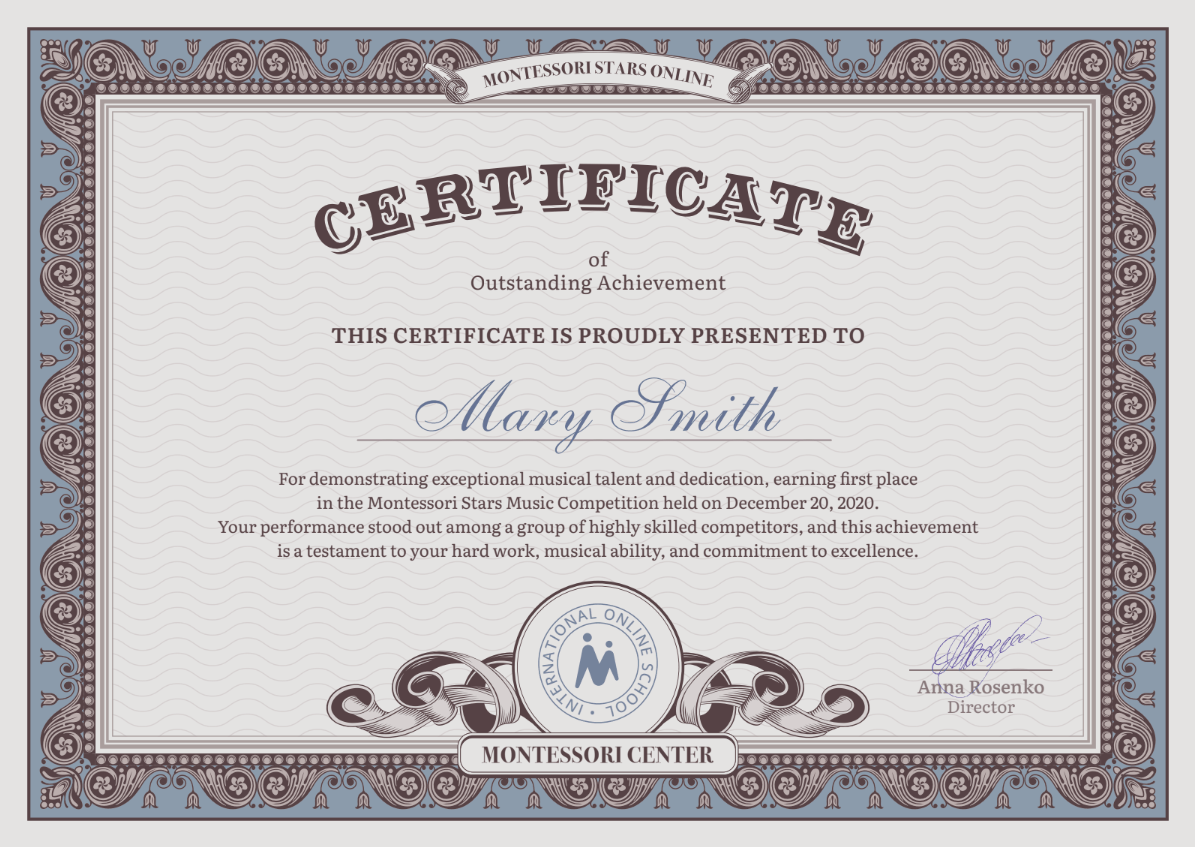
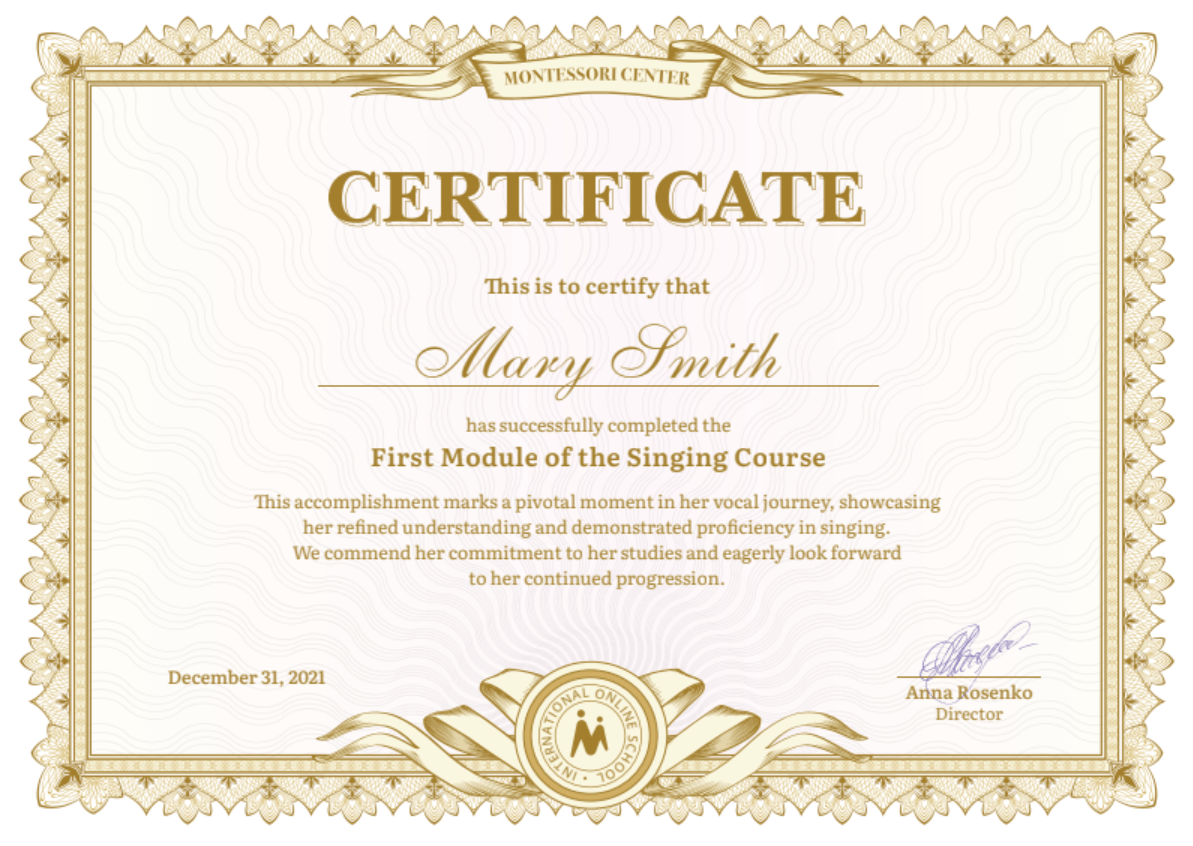
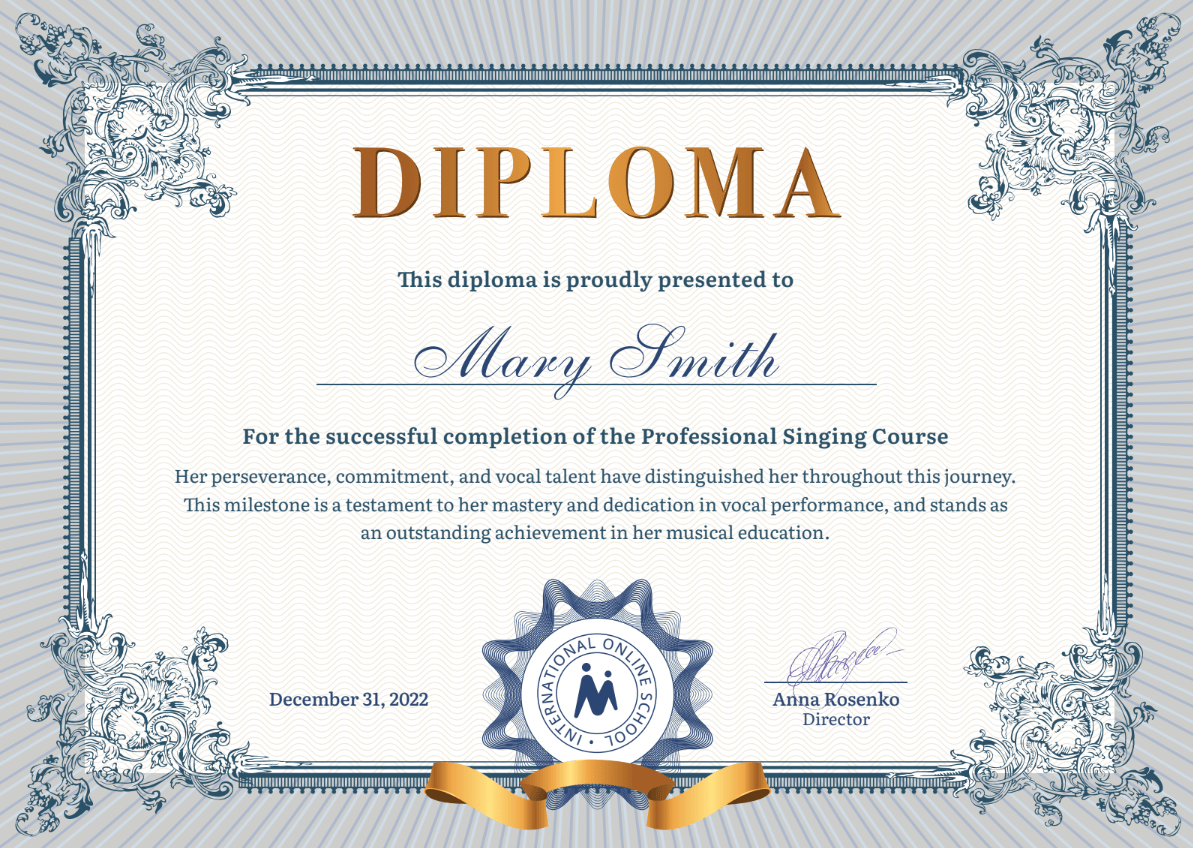
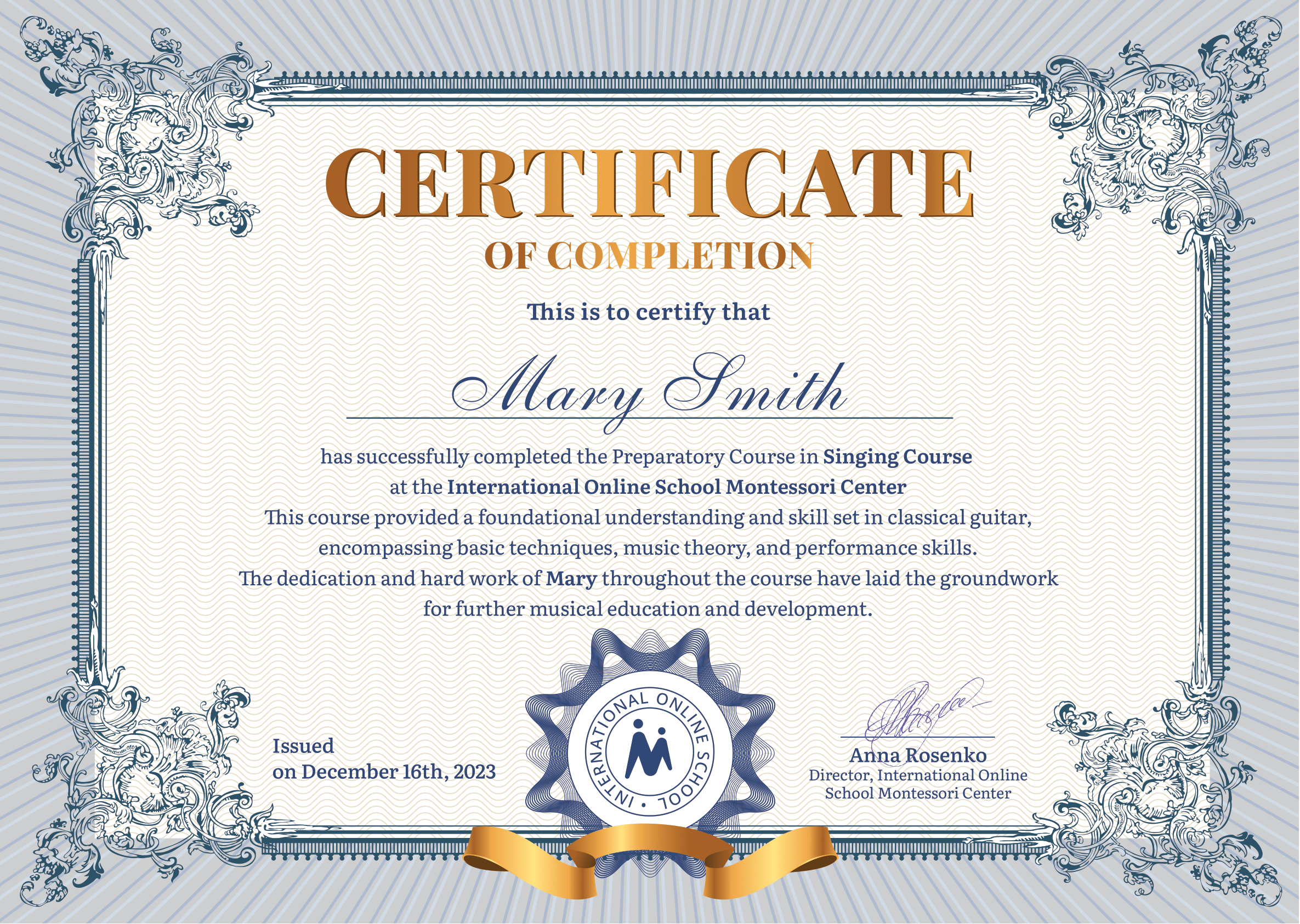
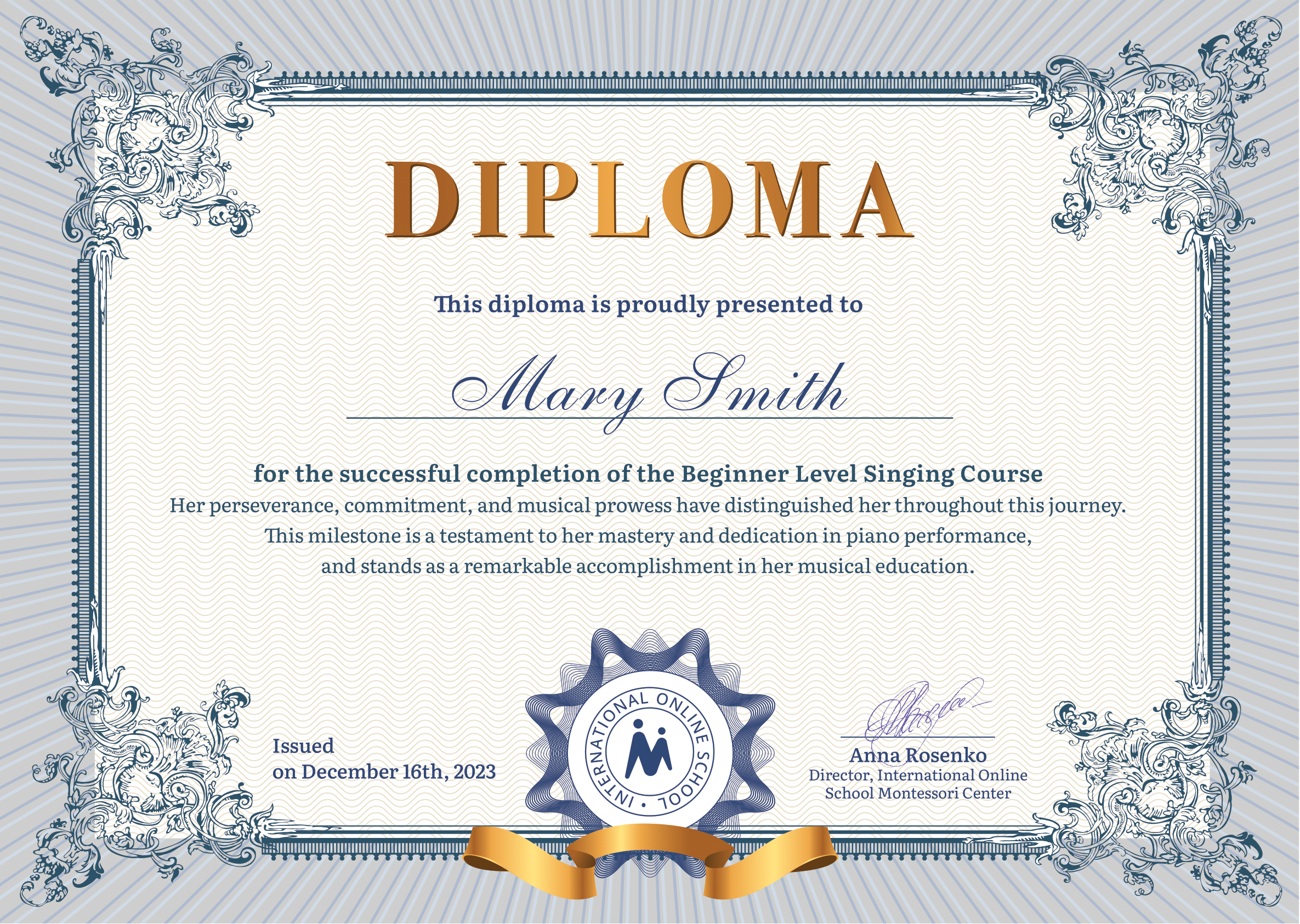
Students perform at online concerts and take part in competitions. They receive certificates and diplomas for their performances. The school also awards a certificate after each module and a diploma after each level.
Teaching Approach
In the vocal course, the teacher tailors the program to each student’s voice, experience, and musical interests. Together, they choose songs and work on the skills needed to perform them: breathing, pitch, vocal tone, and delivery. Students move to the next level as they master the material, without a fixed timetable. They can perform a prepared song at an online concert or competition.
Benefits of Our Teaching Approach
Clear goals: the teacher explains what to work on in the chosen song and which techniques will help.
Individual pace: students can spend more time on a difficult passage and practise it over several lessons.
No exams: students can perform a prepared song at an online concert or competition.
For children and adults: the teacher adapts the program to each student’s age and interests.
Continued learning: after completing all the modules, students can continue studying with our teachers and work on professional-level repertoire.
Preparatory Level
The preparatory level is for children aged 5–6. Children sing short songs, repeat melodies and rhythms, and learn to listen to themselves and their teacher. Simple exercises introduce them to breathing and clear pronunciation while singing. Activities are chosen to suit their age, making their first steps in singing enjoyable and manageable.
Beginner Level
At the beginner level, students learn their first vocal exercises. They practise taking a breath before a phrase, singing melodies in tune, and pronouncing words clearly. The teacher introduces notes and rhythm through the songs they are learning. By the end of the level, students can sing several simple songs and know how to practise them independently before the next lesson.
Intermediate Level
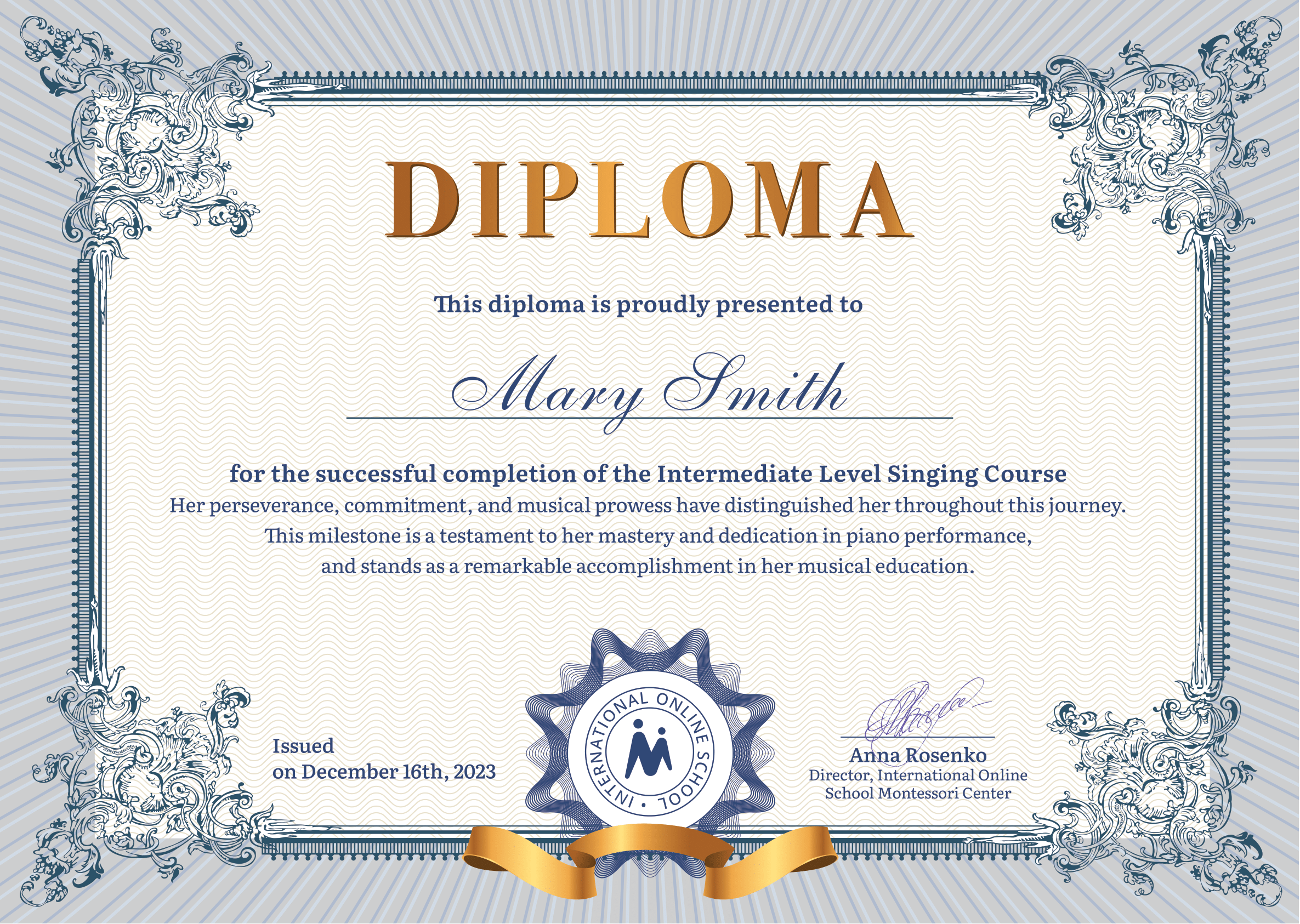
At the intermediate level, the repertoire becomes more varied, and songs call for more detailed work on the voice. Students expand their vocal range, improve their pitch accuracy, and learn to manage their breath throughout a phrase. In lessons, they try different ways of singing the same passage to bring out the song’s character. The teacher also helps them prepare a piece for performance.
Advanced Level
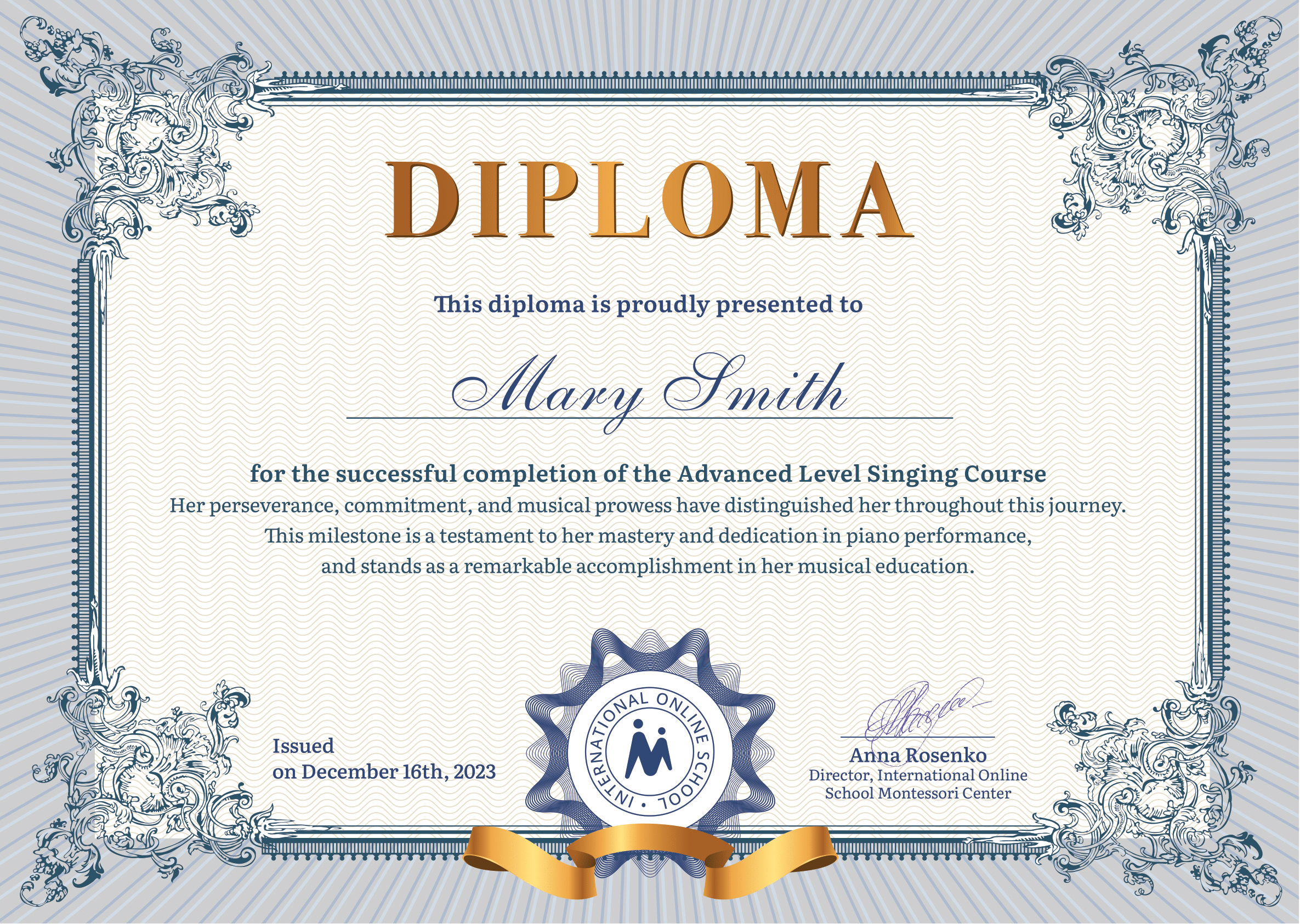
At the advanced level, students work on more challenging repertoire. They explore the characteristics of a chosen style, consider phrasing, dynamics, and delivery, and learn to maintain the quality of their sound throughout a piece.
Working on a song includes studying its melody and lyrics independently and discussing performance choices with the teacher. Students learn to notice which passages sound convincing and which need more work.
The teacher helps students put together a program and prepare to perform for an audience. After completing this level, they can continue taking lessons, including work on professional-level repertoire.
Course Goals
Vocal technique: learn to control breathing and work on pitch accuracy and vocal tone.
Reading music: learn to read sheet music and work through the melody of a new song.
Repertoire: learn songs in different styles and bring out their character in performance.
Independent practice: review exercises, learn lyrics, and prepare songs between lessons.
Performance experience: prepare songs for performance and take part in online concerts and competitions.
Benefits of Vocal Lessons
Musical ear: singing and listening to music gradually develop a student’s ear. They begin to hear melodies and harmonies more clearly, notice inaccuracies in their own singing, and correct them.
Sense of rhythm: students learn to feel the rhythm of the music, come in at the right moment, and sing a song’s rhythm accurately.
Working with the voice: vocal exercises help students discover what their voices can do and learn to use them with greater control.
Diction: students pay attention to pronunciation as they work with lyrics, an important part of singing.
Musical memory: as students learn a piece, they remember its melody, rhythm, and lyrics. Over time, they can sing it without prompts or mistakes.
Confidence in performance: preparing for an online concert gives students a chance to sing for an audience and gain experience that may help them beyond the stage.
Exploring music: songs in different styles help students hear how melody, rhythm, and vocal delivery can vary. They can choose music they enjoy singing.
Self-expression: the same song can be performed in different ways. Students explore a sound and delivery that suit the music and feel natural to them.
In your first lesson, you’ll meet your teacher, talk about the music you love, try some introductory vocal exercises, and begin learning a song you’ve chosen.
News


How Singing Lessons Are Conducted
Equipment: you’ll need a tablet or smartphone with a camera and microphone for online lessons.
Internet connection: a stable internet connection is needed for video lessons with your teacher. Check your connection before the lesson.
Video platform: lessons take place on Zoom or Google Meet. Install the app you’ll be using in advance and check that your camera and microphone work.
Sound: headphones will help you hear your teacher and the accompaniment more clearly. Choose a quiet place for your lesson so background noise doesn’t interfere with listening and singing.
>Lesson link: we’ll send it in advance by email. Before the lesson, check that you’ve received it.
Favorite songs: send us links to songs you’d like to learn. This will help your teacher choose repertoire that suits your interests.
Device placement: place your tablet or smartphone in front of you so your teacher can see your face while you sing.
Joining the lesson: open the lesson link in Zoom or Google Meet 5–10 minutes before the start to check the video and sound.
Feedback: your teacher explains how to do vocal exercises, listens to your singing, and suggests what to focus on.
Questions: ask if a technique or task is unclear. Your teacher will explain it again and help you understand.
Practice: you’ll spend most of the lesson singing: doing exercises, learning a new song, or continuing to work on a familiar one.
Teacher demonstration: your teacher demonstrates vocal techniques and sings individual passages so you can hear how they can be performed and try them yourself.
End of the lesson: you’ll discuss your progress, receive tasks to practise at home, and plan the next lesson.
Your teacher will select sheet music and recordings for home practice and explain which exercises and passages of the song to work on before your next lesson.
You can start singing lessons without any previous musical training. Bring a favorite song, and your teacher will help you decide where to begin working on your performance.
Singing Teachers

Natalia Rekhtina
Singing, Piano

Olha Shovkoplias
Singing, Piano

Tatyana Dimitrova
Singing

Tatyana Lomanova
Singing

Alexandra Stychuk
Singing, Piano

Sofiya Pysarenko
Singing, Piano

Ekaterina Koroleva
Singing

Kateryna Antonova
Singing

Viktoriia Derii
Singing, Piano
Singing Course Program
 Preparatory
level
Preparatory
level
Age: 5 - 6 years
Modules
Introductory vocal and breathing exercises
Learning to sing children’s songs
Working on pitch accuracy and diction
Preparing for and performing in an online concert
 Beginner
level
Beginner
level
Age: 7 years and older
Modules
Developing vocal technique
Learning songs with a narrow vocal range
Developing a musical ear, sense of rhythm, and vocal range
Learning to use a microphone and audio equipment
Learning solo songs with different moods and characters
Preparing for and performing in an online concert
 Intermediate
level
Intermediate
level
Age: 10 years and older
Modules
Exercises to expand vocal range
Developing your distinctive vocal sound
Learning intermediate-level repertoire
Working on expression and stage presence. Online concert or competition.
 Advanced
level
Advanced
level
Age: 12 years and older
Modules
Learning vocal techniques across different styles. Practising a cappella singing.
Working on challenging vocal pieces: technique, phrasing, and dynamics.
Developing your own performance style.
Learning songs in different languages and preparing to perform in online concerts and competitions.
The singing course is designed for children aged 5 and older and for adults. It includes four levels: preparatory, beginner, intermediate, and advanced. Children aged 5–6 start at the preparatory level, while older children and adults with no prior experience begin at the beginner level. If you’ve taken singing lessons before, your teacher will assess your skills and recommend a suitable level. The school awards a diploma upon completion of each level.
Book a \trial lesson\ to meet your teacher and start singing your favorite songs.
Course Schedule
We teach every day, including weekends
To coordinate the day of the week and the time for your lesson, please write to us, and the administrator will arrange a convenient schedule for you!Contact Us



Дарья Кононова

Review language: Russian
Евгений
Review language: Russian
Олександра
Review language: Ukrainian
Злата
Review language: Ukrainian
Оксана
Review language: Ukrainian
Тетяна
Review language: Ukrainian
Elías Bermúdez
Review language: Spanish
Esteban Núñez
Review language: Spanish
Mateo
Review language: Spanish
Frequently Asked Questions (FAQ)
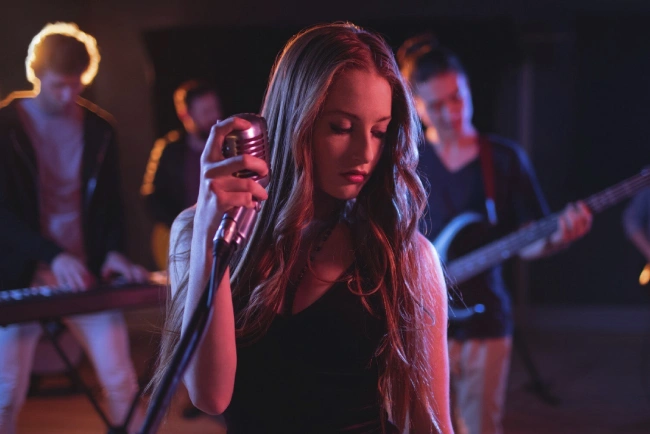
Vocal Lessons — Benefits for Children and Adults: From Cognitive Development to Emotional Harmony
Singing is the harmony of the soul and body. This gift of nature is a universal language that brings together...
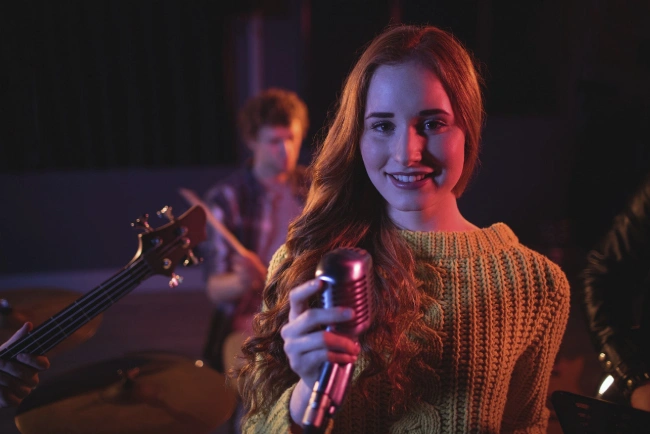
Little Stars on the Big Stage: A Child’s Journey into the World of Singing
Spotlights, fans, applause... For many children, singing becomes not only a hobby but also an opportunity to showcase their talents....
Vocal Exercises and Games: Making the Learning Process Fun!
Learning to sing can be not only beneficial and enriching but also engaging. Through play, kids absorb information better and...
Self-Organization and Regular Training: Creating an Effective Vocal Practice Regime
Many budding singers struggle with maintaining regularity and consistency in their vocal practice. Without proper self-organization and a clear schedule,...

Singing Lessons via Zoom: Creating a Mini Vocal Studio at Home
The digital era has made pursuits and hobbies incredibly convenient for people without leaving their homes. Zoom and Google Meet,...

Stimulating a Child’s Interest in Singing: Tips and Tricks for Moms
Singing is not just a wonderful hobby; it's also an opportunity to nurture a child's emotional, social, and intellectual spheres....
Secrets of Mastery: How to Breathe Properly While Singing
Singing is an art that requires not only vocal skills but also a deep understanding of breathing mechanisms. After all,...
Pop or Classical Vocals: Which Path to Choose at the Start of Your Musical Journey?
Anyone deciding to start vocal training faces the choice of singing style: pop or classical. This choice can determine the...

Vocal Lessons for Teens: Features, Tips, and Recommendations
The teenage years are a period of intense physiological and psychological changes. At this stage, vocal lessons can serve not...